Watchmaking requires precision, patience, and the right environment. However, many beginners assume they must spend thousands of dollars before they can start working on watches. While professional workshops often contain expensive equipment, a functional watchmaker workbench does not require a huge investment.
Instead, a well-planned setup focuses on ergonomics, lighting, essential tools, and organization. Therefore, you can build an effective workspace without overspending. With careful choices and gradual upgrades, hobbyists and aspiring watchmakers can assemble a practical bench that supports accurate work.
This guide explains how to build a functional watchmaker workbench on a realistic budget. In addition, it outlines which tools matter most, how to organize your workspace, and where to save money without compromising quality.
Why The Workbench Matters In Watchmaking
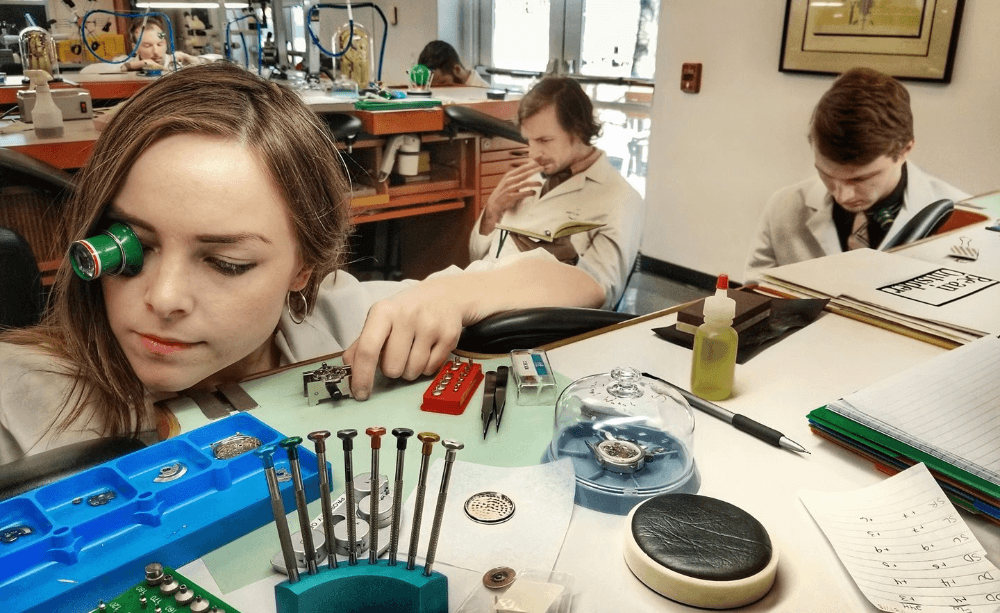
A watchmaker’s workbench does more than hold tools. It creates a controlled environment where small components remain visible, organized, and protected from contamination.
Watch movements contain tiny screws, springs, and jewels. Therefore, a cluttered or poorly lit workspace increases the risk of losing parts or damaging delicate components. In contrast, a properly designed bench improves efficiency and precision.
Moreover, watchmaking requires long periods of focused work. As a result, ergonomics and comfort play an important role. A stable surface, good lighting, and organized tools reduce fatigue and help maintain concentration.
Even on a budget, thoughtful planning can produce a workspace that supports professional-level care and attention.
Choosing The Right Desk Or Bench
The desk forms the foundation of your watchmaking workspace. However, it does not need to be a specialized watchmaker bench at the beginning.
Many hobbyists start with a solid desk or table that meets three key requirements.
Stability
First, the surface must remain stable. Watchmaking requires delicate movements, and even small vibrations can disrupt work.
Therefore, choose a desk with a sturdy frame and minimal wobble. Heavy wooden desks often perform well because their weight provides natural stability.
Adequate Workspace
Second, the desk must provide enough space for tools, trays, and lighting. However, it should not feel excessively large.
A workspace around 80–120 cm wide usually works well for beginners. This size allows tools to remain within reach while still leaving room for movement.
Comfortable Height
Finally, desk height affects posture and comfort. Ideally, the work surface should allow your forearms to rest comfortably while you sit upright.
If the desk height does not match your chair, adjustable seating can compensate.
Lighting: The Most Important Upgrade
Lighting dramatically affects watchmaking accuracy. Therefore, it often becomes the most important investment in a budget workbench.
Tiny screws and gears require excellent visibility. Poor lighting increases eye strain and slows down work.
Task Lighting
A bright LED task lamp positioned above the bench significantly improves visibility. Adjustable lamps allow you to direct light exactly where needed.
Look for lamps with:
- Adjustable arms
- Neutral white light (around 4000–5000K)
- Diffused lighting to reduce shadows
Good lighting reduces mistakes and improves comfort during long sessions.
Magnification Lighting
Many watchmakers also use lamps that include magnifiers. However, beginners often prefer head-mounted loupes instead because they offer flexibility and cost less.
Therefore, combining a bright lamp with a loupe usually creates an effective and affordable solution.
Essential Tools For A Budget Watchmaker Bench
Although watchmaking tools vary widely, beginners only need a core set of essentials. Therefore, you should focus on tools that support the most common tasks.
Below is a list of basic tools that create a functional starting setup.
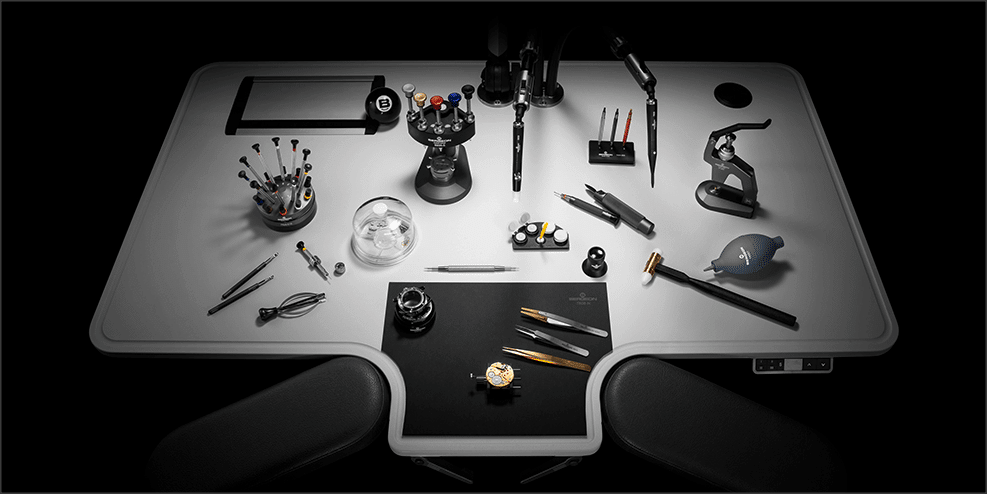
Core Watchmaker Tools
| Tool | Purpose |
|---|---|
| Watchmaker screwdrivers | Removing and installing screws |
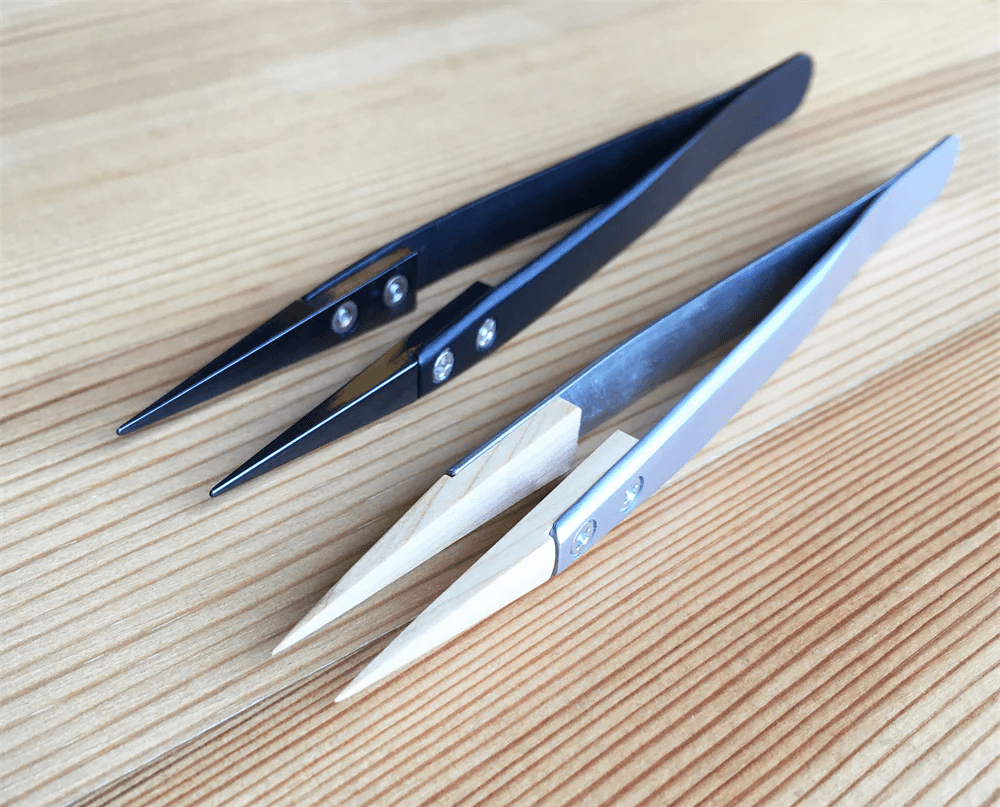
| Tweezers | Handling small components |
| Case opener | Opening watch cases |
| Movement holder | Securing the movement |
| Hand remover | Removing watch hands |
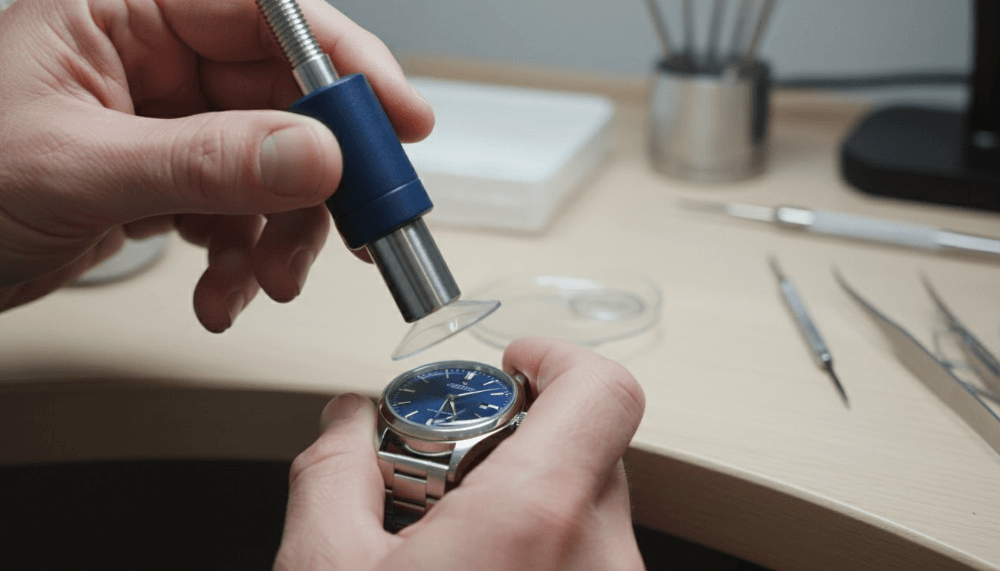
| Hand press | Installing watch hands |
| Spring bar tool | Removing bracelets and straps |
| Loupe | Magnification for detailed work |
These tools allow you to perform many basic watch-repair tasks, such as battery replacement, bracelet adjustments, and simple movement work.
Workspace Accessories
Additional accessories help improve workflow.
Examples include:
- Parts trays
- Movement cushions
- Rodico cleaning compound
- Dust blower
- Pegwood sticks
Although these items cost relatively little, they significantly improve work efficiency.
Organizing The Workspace Efficiently
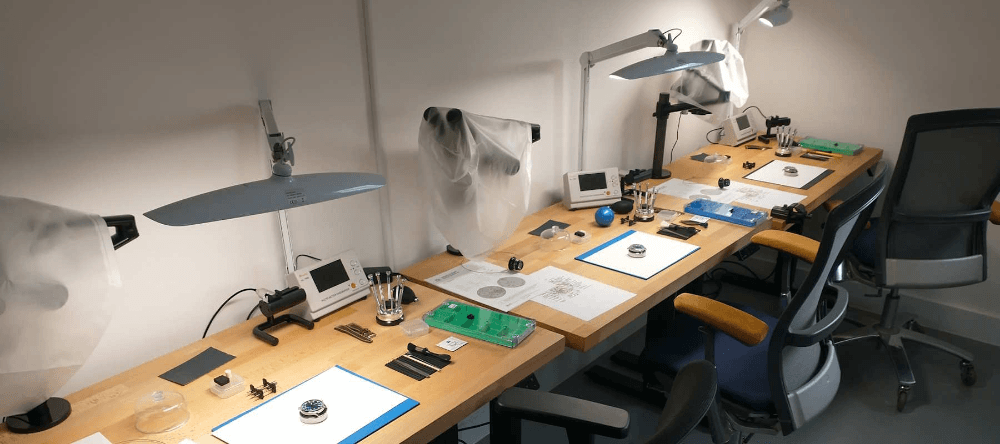
Organization matters just as much as tools. Therefore, a good bench layout should keep essential items within reach while preventing clutter.
A simple layout often works best.
For example:
- Place the movement holder in the center of the workspace
- Keep screwdrivers and tweezers on the dominant hand side
- Store trays and small parts containers nearby
- Position lighting directly above the work area
This arrangement reduces unnecessary movement and allows a smoother workflow.
Additionally, small drawer organizers or tool stands help keep tools visible and accessible.
Budget-Friendly Tool Buying Strategies
Watchmaking tools vary greatly in price. Some professional tools cost hundreds of dollars each. However, beginners do not need top-tier equipment immediately.
Instead, focus on a balanced strategy.
Buy Quality For Critical Tools
Certain tools require good quality because they interact directly with delicate components.
These include:
- Screwdrivers
- Tweezers
- Movement holders
High-quality versions of these tools provide better control and reduce the risk of damaging parts.
Save On Non-Critical Items
Other items can be more budget-friendly.
Examples include:
- Storage containers
- Mats
- Tool organizers
These accessories rarely affect precision work, so affordable options usually work well.
Upgrade Gradually
Instead of buying everything at once, expand your toolkit gradually. As your skills improve, you will identify which tools deserve upgrades.
This approach spreads costs over time while ensuring that every purchase serves a real need.
Keeping The Bench Clean And Dust-Free
Dust remains one of the biggest enemies of watchmaking. Even small particles can interfere with delicate components.
Therefore, maintaining a clean workspace is essential.
Several habits help prevent contamination.
- Wipe the bench regularly.
- Store tools properly after use
- Use dust covers for movements
- Avoid food or drinks near the workspace
In addition, many watchmakers use bench mats that catch small parts and protect the work surface.
Ergonomics And Comfort
Watchmaking often involves long periods of focused work. Therefore, ergonomic comfort should never be ignored.
A comfortable chair with good back support helps maintain posture. Additionally, proper bench height reduces wrist strain and shoulder fatigue.
Consider the following adjustments:
- Use an adjustable chair
- Position lighting to reduce shadows
- Keep frequently used tools close
- Maintain upright posture
Small ergonomic improvements can dramatically increase productivity and reduce fatigue.
Useful Upgrades For The Future
Once your basic workspace functions well, several upgrades can enhance efficiency.
These upgrades may include:
- Ultrasonic cleaners
- Timing machines
- Professional polishing equipment
- Specialized case holders
However, beginners should treat these tools as future investments rather than immediate necessities.
Learning core watchmaking skills matters far more than owning advanced equipment.
Example Budget Workbench Setup
The following example shows how a beginner might allocate a modest budget.
| Item | Estimated Budget Range |
|---|---|
| Desk or table | $100–$200 |
| LED task lamp | $40–$80 |
| Screwdriver set | $60–$120 |
| Tweezers | $20–$50 |
| Movement holder | $20–$40 |
| Loupe | $10–$30 |
| Basic accessories | $40–$80 |
A complete starter workbench can often be assembled for a few hundred dollars.
Therefore, starting watchmaking does not require a large financial commitment.
Final Thoughts
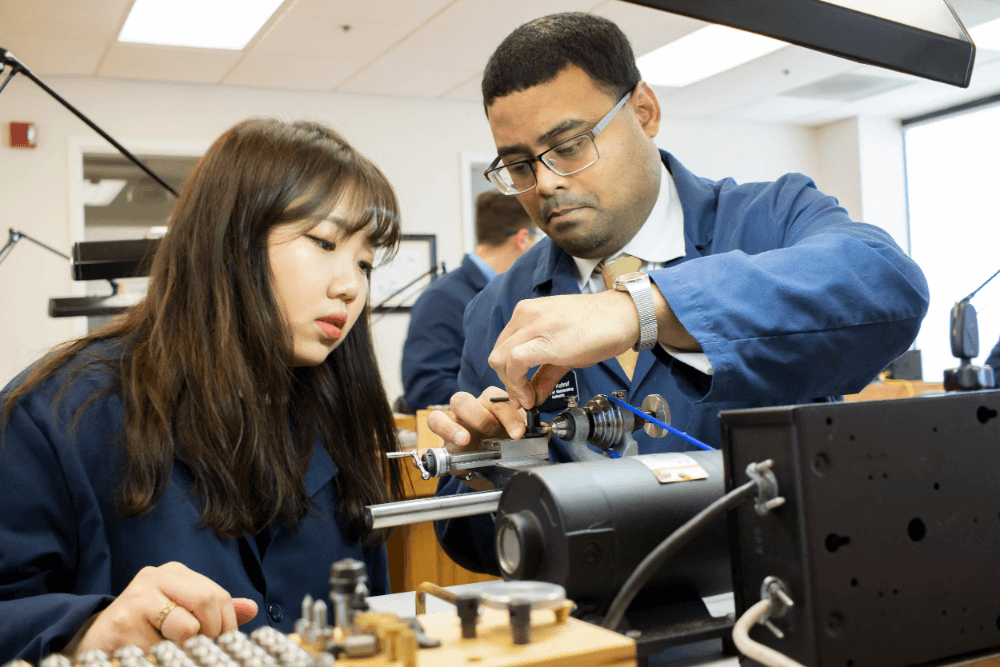
Building a functional watchmaker workbench on a realistic budget is entirely possible. By focusing on essential tools, good lighting, and thoughtful organization, beginners can create a workspace that supports accurate and enjoyable watch repair.
Although professional workshops contain specialized equipment, skill and attention matter far more than expensive tools. Therefore, a carefully planned budget setup can provide everything needed to begin learning watchmaking.
Over time, you can upgrade tools, improve organization, and expand capabilities. However, the most important step is simply creating a workspace where you can practice, experiment, and develop your skills.
With patience and careful planning, even a modest watchmaking bench can become the foundation for years of rewarding work.