Watch polishing can dramatically improve the appearance of a worn watch. Scratches disappear, surfaces regain shine, and the case often looks refreshed. However, the quality of polishing varies significantly depending on who performs the work. While many enthusiasts attempt DIY polishing at home, professional watchmakers and refinishing specialists usually achieve far superior results.
The difference does not come down to polishing alone. Instead, professionals follow structured processes, use specialized tools, and apply precise finishing techniques. Meanwhile, DIY polishing often relies on simple tools, limited experience, and less controlled material removal.
Therefore, understanding the differences between professional and DIY watch polishing results can help watch owners decide when home polishing is safe and when professional restoration is the better choice.
Why Watch Polishing Requires Precision
At first glance, polishing appears simple. After all, the process involves smoothing metal surfaces until scratches disappear. However, watch polishing requires far greater precision than many people expect.
Watch cases contain complex shapes, sharp edges, brushed surfaces, and polished areas. Therefore, polishing must remove scratches while preserving the case’s original geometry. If polishing removes too much material, the watch can lose its crisp lines and distinctive design features.
Additionally, modern watches often combine several finishing styles. For example, many cases feature polished sides and brushed lugs. Consequently, the refinishing process must accurately recreate those finishes. Professional watchmakers understand these finishing transitions and restore them carefully.
In contrast, DIY polishing often treats the entire surface the same way. As a result, it may erase original textures or blur important design details.
Tools Used In Professional Watch Polishing
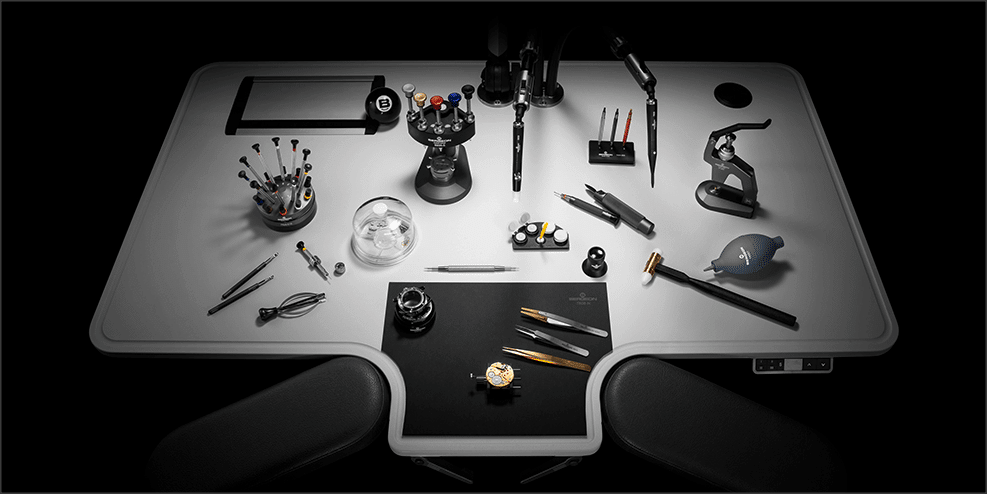
Professional watch refinishing requires specialized equipment designed specifically for delicate metal work. These tools allow watchmakers to control pressure, speed, and polishing direction.
Common professional tools include:
| Tool | Purpose |
|---|---|
| Polishing machines | Controlled polishing of metal surfaces |
| Multiple polishing wheels | Different stages of polishing |
| Abrasive wheels | Controlled scratch removal |
| Brushing wheels | Recreating satin finishes |
| Masking fixtures | Protecting surfaces during finishing |
Each tool plays a specific role during the restoration process. Therefore, professionals rarely rely on a single polishing compound or wheel. Instead, they follow a progression of abrasives and compounds that gradually refine the surface.
Because these tools allow precise control, professionals can remove scratches while preserving case geometry.
Tools Commonly Used In DIY Polishing
DIY polishing typically relies on simpler, more accessible tools. Many watch owners use household polishing cloths, rotary tools, or small buffing wheels.
Typical DIY tools include:
| Tool | Purpose |
|---|---|
| Polishing cloths | Light surface polishing |
| Hand polishing compounds | Removing minor scratches |
| Rotary tools | Faster polishing |
| Small buffing wheels | Applying polishing compounds |
While these tools can improve the appearance of a watch, they offer less control than professional equipment. In particular, rotary tools can remove metal quickly if used incorrectly.
Therefore, inexperienced users often remove too much material or create uneven finishes.
The Importance Of Abrasive Progression
Professional watch polishing follows a structured progression of abrasives. Each step removes the scratches created by the previous stage.
For example, the process often includes:
- Scratch removal using controlled abrasives
- Surface smoothing with finer abrasives
- Pre-polishing preparation
- Final polishing with fine compounds
Each stage prepares the surface for the next step. Consequently, the final finish appears smooth and uniform.
DIY polishing often skips this progression. Instead, many enthusiasts apply polishing compounds directly to scratched surfaces. Although this may reduce light scratches, deeper scratches remain visible because the polishing compound cannot remove them effectively.
Therefore, the final surface often looks inconsistent.
Maintaining Case Geometry
One of the most important aspects of professional watch polishing involves maintaining case geometry.
Watch cases feature sharp edges, defined bevels, and flat surfaces. These features give each watch its distinctive appearance. Therefore, refinishing must preserve those shapes.
Professional refinishing uses masking, controlled abrasives, and precise polishing angles to maintain these features. As a result, the watch retains its original design.
DIY polishing, however, often rounds edges unintentionally. Because polishing removes metal gradually, repeated polishing sessions can soften case edges and blur transitions between surfaces.
Once these details disappear, restoring them becomes extremely difficult.
Brushed Finishes Versus Polished Surfaces

Many watches combine polished surfaces with brushed finishes. Brushed surfaces require directional abrasion that creates consistent grain patterns.
Professional watchmakers recreate these finishes using specialized brushing wheels or abrasive pads applied in a precise direction. Additionally, they often mask adjacent surfaces to prevent accidental polishing.
DIY polishing often struggles with these surfaces. When enthusiasts accidentally polish a brushed area, they remove the grain pattern entirely. Consequently, the watch loses part of its original finishing design.
Restoring brushed surfaces correctly requires proper tools and careful technique.
Surface Consistency And Symmetry
Professional refinishing aims to restore visual symmetry across the watch case and bracelet. Therefore, professionals evaluate the entire watch rather than polishing isolated scratches.
For example, if one lug receives refinishing, the opposite lug often requires similar treatment to maintain symmetry. Otherwise, the case may appear uneven.
DIY polishing typically focuses on individual scratches. While this approach removes visible damage, it may leave the watch with inconsistent finishes across different surfaces.
Over time, these inconsistencies become noticeable.
Risk Of Over-Polishing
Over-polishing represents one of the biggest risks in watch restoration.
Every polishing session removes a small amount of metal. While professionals minimize material removal, repeated DIY polishing can gradually alter the watch.
Common signs of over-polishing include:
- Rounded case edges
- Softened lug shapes
- Reduced bevel sharpness
- Loss of brushed surfaces
Because DIY polishing often prioritizes shine over geometry, the risk of over-polishing increases significantly.
Professional refinishing focuses on removing the minimum amount of material required to restore the surface.
Professional Finishing Techniques
Professional watch refinishing involves several techniques that replicate the watch’s factory appearance.
These techniques include:
Mirror Polishing
Mirror polishing produces a highly reflective surface. Professionals achieve this effect through careful abrasive preparation followed by fine polishing compounds.
Satin Finishing
Satin finishing creates a soft matte appearance with subtle texture. Professionals achieve this finish using controlled abrasive brushing.
Linear Brushing
Linear brushing creates straight grain patterns across the surface. Professionals apply abrasives consistently in one direction to produce uniform lines.
Because professionals understand how these finishes interact, they can accurately recreate complex combinations of finishes.
When DIY Polishing Works
DIY polishing does not always produce poor results. In fact, it can work well in certain situations.
For example, light surface scratches on inexpensive watches often respond well to gentle polishing cloths. Additionally, acrylic crystals can be polished effectively using specialized compounds.
Therefore, DIY polishing may work for:
- Minor cosmetic scratches
- Entry-level watches
- Acrylic crystal polishing
- Light bracelet touch-ups
However, more complex restoration work usually requires professional tools and experience.
When Professional Polishing Is The Better Choice
Professional polishing becomes essential when:
- The watch has deep scratches
- The case features mixed finishes
- The watch has collector value
- The original case geometry must be preserved
In these cases, professional restoration provides the best chance of maintaining the watch’s design integrity.
Moreover, professional refinishing can often restore watches to near-factory appearance.
Cost Versus Value
Many watch owners attempt DIY polishing to save money. While professional polishing services cost more, they often preserve the watch’s long-term value.
Collectors often prefer watches with well-maintained cases and original finishes. Therefore, poorly executed polishing can significantly reduce a watch’s resale value.
In contrast, professional refinishing protects both appearance and value.

Final Thoughts
Watch polishing requires far more skill than simply applying polishing compounds. Professionals combine specialized tools, abrasive progression, and finishing techniques to restore surfaces while preserving the watch’s original design.
DIY polishing, while sometimes useful for light cosmetic improvements, often lacks the control and precision required for complex restoration work.
Therefore, the main difference between professional and DIY watch-polishing results lies in precision, consistency, and respect for the case geometry.
If the goal is to restore a watch carefully and maintain its design integrity, professional refinishing remains the safest and most reliable option.