A scratched watch crystal can ruin a watch’s overall look. Therefore, many owners search for quick fixes. However, crystal scratch removal depends on one critical factor: the crystal material. Acrylic behaves differently from mineral glass. Sapphire behaves differently from both. Consequently, the right method for one crystal can damage another.
So, before you polish anything, you must identify what you are working with. Once you do, scratch removal becomes much safer and far more effective.
This guide explains how to remove scratches from acrylic, mineral, and sapphire watch crystals. It also shows what products work, what tools to avoid, and when replacement makes more sense than polishing.
Step One: Identify Your Crystal Type
Crystal type decides everything about scratch removal. Therefore, identification comes first.
Most modern watches use sapphire. Many affordable watches use mineral glass. Many vintage watches use acrylic.
If you have the watch specifications, check them first. That is the easiest way.
If you do not have specs, use these clues.
Acrylic feels warmer and lighter than glass. It also scratches easily. Therefore, if your crystal marks quickly, it may be acrylic.
Sapphire feels very hard and stays clear. It resists scratching. Therefore, if you see a scratch on sapphire, it may be deeper or surface-coating damage.
Mineral glass sits in the middle. It resists light scratches better than acrylic but scratches more easily than sapphire.
If you still cannot tell, you can use a water-drop test. On sapphire, a small drop often beads more tightly. On minerals, it spreads more. However, this method is not perfect. Therefore, treat it as a clue, not proof.
Why Crystal Scratch Removal Works Differently For Each Material
Scratch removal is material removal. Therefore, you polish the surface until the scratch blends into the surrounding area.
However, hardness changes the process.
Acrylic is soft. Therefore, polishing compounds can cut it easily.
Mineral glass is much harder. Therefore, light polishes rarely work.
Sapphire is extremely hard. Consequently, most at-home polishing compounds have little effect on it.
This is why “one product for all crystals” usually fails. The material decides the method.
Acrylic Crystal: The Easiest To Fix At Home
Acrylic scratches often. However, it also polishes beautifully. Therefore, acrylic is the most rewarding crystal to restore.
What You Can Fix On Acrylic
You can remove hairline scratches easily. You can also reduce moderate scuffs. Moreover, you can often restore clarity even on heavily worn acrylic.
However, deep gouges may remain. Therefore, the goal should be clarity improvement, not perfection.
Best Method For Acrylic Scratch Removal
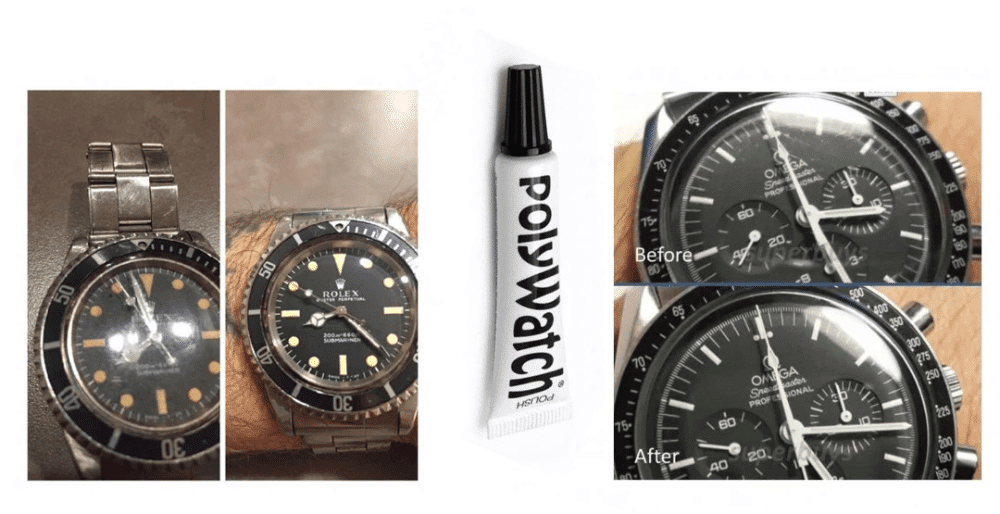
Acrylic responds best to dedicated acrylic polish. The most common product is Polywatch. It is designed specifically for plastic and acrylic crystals. Therefore, it is safe and effective.
Here is a step-by-step acrylic process.
First, clean the crystal with mild soap and water. Then dry it fully.
Next, tape around the bezel. Acrylic polish can dull polished bezels. Therefore, protection matters.
Then apply a small amount of acrylic polish to the crystal. Use a microfiber cloth. Rub with firm pressure in small circles for 2 to 3 minutes.
After that, wipe the residue off and inspect. If scratches remain, repeat the process.
For deeper scratches, repeat multiple cycles rather than increasing pressure aggressively. Consequently, you remove material gradually and safely.
Finally, clean the crystal again and dry it.
Acrylic often improves dramatically after just one cycle. Therefore, it is the best “DIY-friendly” crystal type.
Acrylic Warning: Avoid Heat And Power Tools
Acrylic can melt under heat. Therefore, avoid rotary tools and buffing wheels.
Even if you think you are careful, heat builds quickly. Consequently, the crystal can warp.
So, keep acrylic polishing slow and manual.
Mineral Glass: Possible, But Limited At Home

Mineral glass is harder than acrylic. Therefore, scratch removal becomes more difficult.
You can reduce light marks. However, deep scratches often remain. Consequently, many mineral crystals require replacement for a perfect result.
Why Mineral Glass Is Hard To Polish
Mineral glass requires stronger abrasives. Therefore, simple polishes do little.
Additionally, mineral glass is often coated. If you polish aggressively, you may remove the coating unevenly. Consequently, the crystal can look cloudy.
So, the goal with mineral glass should be realistic. Improve light scratches. Do not chase serious damage.
Mineral Glass Scratch Removal Options
Some owners use cerium oxide to polish mineral glass. Cerium oxide is a glass polishing compound. Therefore, it can slowly cut mineral glass.
However, the crystal scratch removal process requires patience.
First, remove the strap to avoid a mess. Then tape the bezel.
Mix cerium oxide powder with a small amount of water to create a paste.
Apply the paste with a microfiber cloth or felt pad. Rub gently in small circles. Keep the paste moist.
Check progress frequently. If you rub dry, you can cause uneven haze. Therefore, add a few drops of water when needed.
After polishing, rinse and wipe carefully.
This method can improve light scratches. However, it may take significant time. Consequently, many owners decide replacement is easier.
Mineral Glass Warning: You Can Create Distortion
If you polish unevenly, you can change the surface shape. Therefore, you may create a distortion that looks worse than the scratch.
So, avoid concentrating on polishing in a single small spot. Instead, blend across a wider area.
Sapphire Crystal: Scratch Removal Is Rarely Practical At Home
Sapphire is extremely hard. Therefore, it resists scratching better than most materials.
However, sapphire can still scratch. It can also chip. Additionally, many “scratches” on sapphire are actually anti-reflective coating marks, not sapphire damage.
So, the first step is figuring out what you are seeing.
Is It A Scratch Or AR Coating Damage?
Many sapphire crystals have an anti-reflective coating, especially on the outer surface. That coating scratches more easily than sapphire. Therefore, what appears to be a scratch may be coating wear.
If the mark looks like a hazy line or a rainbow streak under light, it may be coating damage. Consequently, polishing may remove the coating rather than the scratch.
Removing the coating can improve the appearance. However, it changes the crystal’s reflection behavior. Therefore, you must decide if that is acceptable.
Can You Polish Sapphire At Home?
True sapphire scratch removal requires diamond-based abrasives. Therefore, it is difficult and risky at home.
Most consumer polishes cannot effectively cut sapphire. As a result, users rub for hours and see no change.
Even with diamond paste, you risk uneven results. Consequently, you can create distortion or uneven clarity.
So, for sapphire scratches, replacement is often the better solution.
Sapphire Chip Warning
If sapphire has a chip, do not polish it. Polishing cannot remove a chip without removing significant material. Therefore, replacement is the safe option.
General Steps That Apply To All Crystal Types
No matter the crystal, a few rules always help. Therefore, follow these every time.
First, clean the crystal before polishing. Dust can cause new scratches.
Second, tape the bezel and case edges. This prevents accidental damage.
Third, polish slowly and check often. Over-polishing creates distortion.
Fourth, use a microfiber cloth. Paper towels can scratch.
Finally, stop when improvement becomes marginal. Chasing perfection often makes things worse.
When Crystal Replacement Makes More Sense
Polishing is not always the answer. Therefore, know when to replace.
Replace the crystal when:
- The scratch is deep and catches a fingernail
- The sapphire is chipped
- The mineral glass has multiple deep scratches
- The crystal has distortion or cloudiness
- The watch has water resistance issues, and the gasket is old
Replacement can restore clarity completely. Moreover, it avoids uneven results from DIYs.
For vintage watches, acrylic replacement can change authenticity. Therefore, you may prefer polishing the original if possible.
How To Prevent Future Crystal Scratches
Scratch removal feels good. However, prevention saves time.
If you wear the watch daily, keep it away from door frames and rough surfaces. Also, avoid stacking it next to metal objects.
If you store watches together, separate them. Watches in a drawer often scratch each other. Therefore, use soft pouches.
For tool watches, consider a protective film during heavy activity. It looks less elegant, but it works.
Finally, clean crystals regularly. Dirt creates micro-abrasion over time. Consequently, cleaning helps clarity and reduces wear.

Final Thoughts
Removing scratches from a watch crystal depends on knowing your material. Acrylic polishes easily and often looks brand new again. Mineral glass can improve, but the results remain limited. Sapphire rarely polishes well at home, and replacement usually makes more sense.
Therefore, the simplest approach is the smartest. Identify the crystal type. Use the correct method. Protect the case. Polish slowly. Stop early.
When you respect these steps, you can restore clarity without damaging the watch. Consequently, the watch looks sharper, wears better, and feels more enjoyable again.