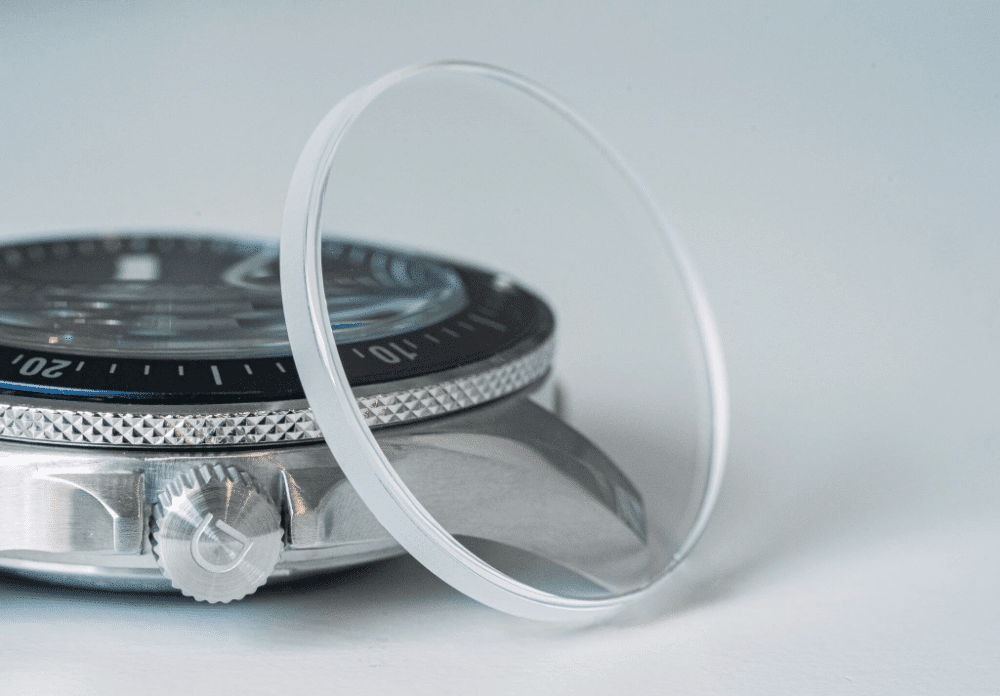
A scratched watch crystal can change the entire look of a watch. Even when the case, dial, and bracelet remain in good condition, a marked crystal can make the watch look tired, cloudy, or poorly maintained. However, not every crystal scratch requires replacement. In many cases, the right polishing method can dramatically restore clarity and improve the watch’s appearance.
That said, watch crystal polishing depends heavily on the material. Acrylic, mineral glass, and sapphire all react differently to abrasives and polishing compounds. Therefore, a method that works beautifully on one crystal type may fail on another.
Before polishing any watch crystal, you need to understand what material you are working with. Acrylic crystals polish easily. Mineral glass resists scratches better, but it also becomes harder to restore. Sapphire offers excellent scratch resistance, yet polishing it requires specialized abrasives and often makes replacement the more practical choice.
This guide explains the differences among acrylic, mineral, and sapphire crystals, the polishing methods that work best for each, and when replacement makes more sense than restoration.
Why Watch Crystal Material Matters
A watch crystal protects the dial, hands, and movement from dust, moisture, and impact. However, it also sits at the most exposed point of the watch. As a result, it constantly comes into contact with desks, door frames, tools, sleeves, and other hard surfaces.
Because each crystal material has a different hardness level, each one scratches and restores differently.
| Crystal Type | Scratch Resistance | Polishing Difficulty | Best Repair Option |
|---|---|---|---|
| Acrylic | Low | Easy | Polish |
| Mineral Glass | Moderate | Difficult | Polish light marks or replace |
| Sapphire | Very High | Very difficult | Replace in most cases |
This table shows the basic trade-off. Acrylic scratches easily, but it also restores easily. Sapphire rarely scratches, but once it does, polishing becomes difficult. Meanwhile, mineral glass sits between the two.
Therefore, crystal polishing starts with identification.
How To Identify The Crystal Type
Before you reach for polish, identify the crystal. Many modern watches list the crystal material in their specifications. However, vintage watches and older models may require closer inspection.
Acrylic crystals often feel warmer and softer than glass. They may also have a slightly domed shape, especially on vintage watches. In addition, acrylic usually produces a softer, less sharp reflection.
Mineral glass feels harder and cooler. It appears clearer than acrylic, but it does not have the same sharp, premium reflection as sapphire.
Sapphire crystals usually look extremely clear and crisp. They often reflect light at sharp angles, and many luxury watches use sapphire for its durability.
If you are unsure, do not guess. Instead, research the exact watch model or consult a watchmaker. An incorrect assumption can lead to poor results, especially if the crystal has coatings or an unusual structure.
Acrylic Watch Crystal Polishing
Acrylic is the easiest watch crystal material to polish. Many vintage watches use acrylic because it resists shattering, keeps production costs reasonable, and allows easy restoration.
Although acrylic scratches more easily than glass or sapphire, that softness creates an advantage. Polishing compounds can remove or blend scratches quickly by smoothing the surface.
Why Acrylic Responds Well To Polishing
Acrylic behaves like a plastic surface. When you polish it, fine abrasives level the scratched area and restore transparency. Therefore, light-to-moderate marks often disappear with simple hand polishing.
This makes acrylic ideal for collectors who enjoy vintage watches. Instead of replacing the crystal every time it picks up surface marks, you can often restore it with basic tools.
Best Products For Acrylic Crystals
Common acrylic polishing products include:
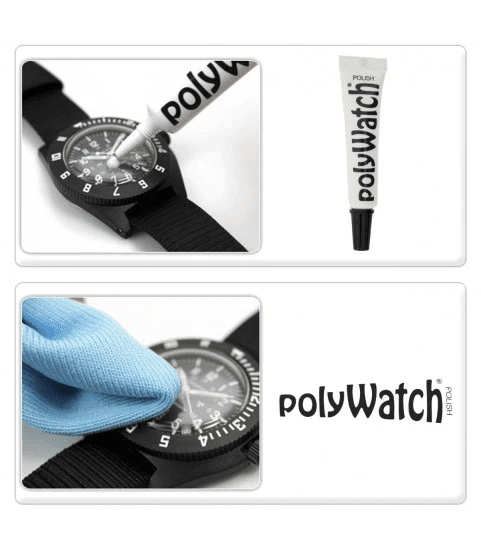
- PolyWatch
- Novus plastic polish
- Fine plastic polishing compounds
- Microfiber cloths
- Cotton polishing pads
These products work best on surface scratches, haze, and light scuffs. However, deep gouges may remain visible after polishing.
Basic Acrylic Polishing Method
Start by cleaning the crystal with a soft cloth. Then, protect the surrounding bezel or case with masking tape if needed. After that, apply a small amount of plastic polish to the crystal.
Use a microfiber cloth and polish in small circular motions. Apply moderate pressure, but do not press aggressively. After a few minutes, wipe the crystal clean and inspect the result.
If scratches remain, repeat the process. However, avoid excessive polishing around raised edges or domed surfaces, because uneven pressure can distort the crystal’s shape.
Mineral Glass Watch Crystal Polishing
Mineral glass offers better scratch resistance than acrylic. Therefore, many affordable and mid-range watches use it. However, once mineral glass scratches, it becomes much harder to restore.
Unlike acrylic, mineral glass does not polish quickly with standard plastic compounds. It requires harder abrasives and more patience.
Why Mineral Glass Is Harder To Restore
Mineral glass has greater hardness than acrylic. As a result, light polishing compounds usually have little effect. To remove scratches, you need abrasives strong enough to cut glass.
For light surface marks, a glass polishing compound may reduce visibility. However, deep scratches often remain. Consequently, replacement is often the better option when mineral glass sustains major damage.
Best Products For Mineral Glass
Useful products may include:
- Cerium oxide glass polish
- Diamond polishing paste
- Felt polishing pads
- Rotary tools are used at low speed
- Microfiber cloths
Cerium oxide can work on certain glass surfaces, but results vary. Diamond paste can cut harder surfaces more effectively, yet it also requires careful control.
Basic Mineral Glass Polishing Method
First, clean the crystal thoroughly. Then, mask the case and bezel to protect surrounding surfaces. Next, apply a small amount of glass polish to a felt pad or microfiber cloth.
Polish patiently and inspect frequently. If you use a rotary tool, keep the speed low and avoid heat buildup. Excess heat can damage gaskets, coatings, or nearby components.
In many cases, mineral crystal polishing takes far longer than acrylic polishing. Therefore, compare replacement costs before spending too much time on restoration.
Sapphire Watch Crystal Polishing
Sapphire is the premium crystal choice for many modern watches. It resists scratches extremely well and keeps a clear, sharp appearance for years. However, that same hardness makes sapphire very difficult to polish.
Most everyday materials cannot scratch sapphire. Therefore, when a sapphire crystal does show a scratch, the mark may actually come from another very hard material. In some cases, the mark may sit on the anti-reflective coating rather than the sapphire itself.
Why Sapphire Is Difficult To Polish
Sapphire is extremely hard. Standard polishing compounds do not cut it effectively. Therefore, watchmakers usually need diamond-based abrasives to polish sapphire.
Even then, polishing takes time, skill, and specialized equipment. Moreover, improper polishing can create uneven optical distortion, heat damage, or coating problems.
For this reason, many watchmakers recommend replacing a scratched sapphire crystal instead of polishing it.
Best Products For Sapphire Crystals
Sapphire polishing may require:
- Diamond paste
- Diamond polishing films
- Felt laps or precision polishing pads
- Controlled rotary equipment
- Professional crystal polishing systems
However, these products do not guarantee a perfect result. Because sapphire polishing removes material slowly, deep scratches may prove impractical to eliminate.
Anti-Reflective Coating Issues
Many sapphire crystals feature an anti-reflective coating. Some watches apply this coating only to the underside, while others apply it to the outer surface as well.
This detail matters because an outer AR coating can scratch more easily than sapphire. Therefore, what looks like a sapphire scratch may actually be coating damage.
If you polish the crystal, you may remove part of the coating, creating an uneven appearance. As a result, the crystal may look worse after polishing.
Therefore, inspect coated sapphire crystals carefully before attempting any repair.
When To Polish And When To Replace
Polishing makes sense when the damage remains shallow, and the material responds well. However, replacement often makes more sense when scratches run deep or the material resists polishing.
| Crystal Type | Polish When | Replace When |
|---|---|---|
| Acrylic | Light to moderate scratches | Deep cracks or heavy distortion |
| Mineral Glass | Very light marks | Deep scratches or chips |
| Sapphire | Minor coating marks only, with caution | Deep scratches, chips, or coating damage |
In general, acrylic should be polished first. Mineral glass depends on damage severity. Sapphire often deserves replacement unless a skilled professional handles the work.
Common Mistakes To Avoid
Many watch owners damage crystals further by using the wrong method. Therefore, avoid these common mistakes:
- Using metal polish on acrylic
- Polishing sapphire with plastic polish
- Using high-speed rotary tools near gaskets
- Ignoring anti-reflective coatings
- Pressing too hard on domed crystals
- Skipping masking tape around the case
- Polishing dirty crystals without removing grit first
Additionally, never polish over loose dirt or sand. These particles can create new scratches during the process.
Safe Crystal Polishing Tips
A careful process produces better results. Start with the least aggressive method, then increase intensity only when necessary.
Follow these practical tips:
- Identify the crystal material first
- Clean the crystal before polishing
- Mask the case and bezel
- Use the correct compound for the material
- Work slowly and inspect often
- Avoid heat buildup
- Stop if the crystal looks uneven or cloudy
Most importantly, do not chase perfection at the cost of damage. A small remaining mark often looks better than an over-polished or distorted crystal.
Final Thoughts
Watch crystal polishing can restore clarity and improve a watch’s appearance, but the correct method depends entirely on the crystal material.
Acrylic crystals polish easily and often respond beautifully to simple plastic polishing compounds. Therefore, they remain the most repair-friendly option. Mineral glass offers better scratch resistance, yet it becomes harder to restore once scratched. Sapphire provides the best everyday durability, but it rarely polishes easily and often requires replacement when damaged.
Ultimately, successful crystal restoration starts with understanding the material. Once you know whether the watch uses acrylic, mineral glass, or sapphire, you can choose the safest approach and avoid costly mistakes.
A polished crystal can make a watch look cleaner, sharper, and more enjoyable to wear. However, smart restoration means knowing when to polish, when to stop, and when to replace the crystal entirely.