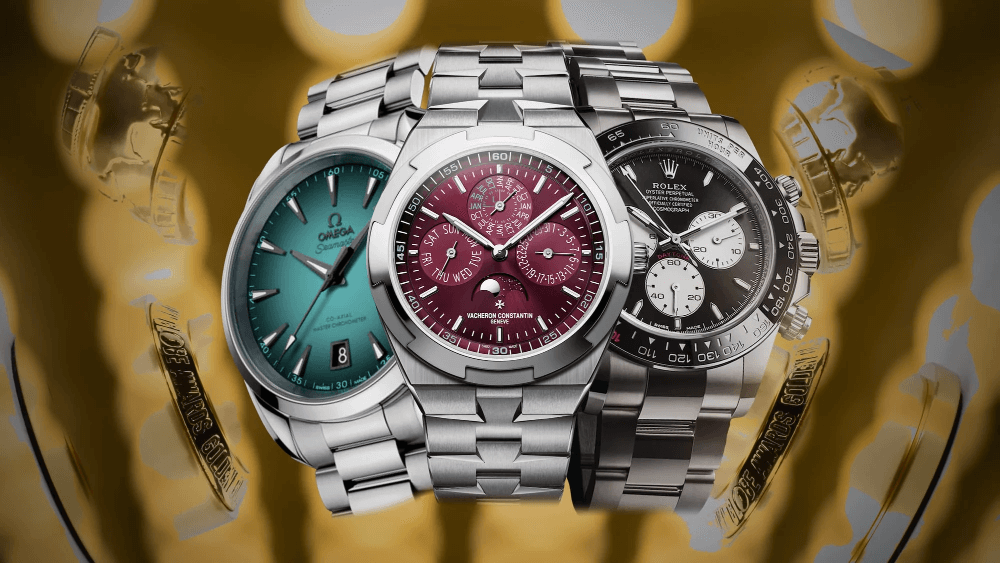
When Swatch announced a collaboration with Audemars Piguet, the watch world immediately paid attention. After all, Swatch had already transformed the industry with the MoonSwatch and later expanded its collaborative playbook through the Blancpain Scuba Fifty Fathoms collection. Therefore, many collectors assumed the next partnership would follow a similar formula.
Instead, Swatch and Audemars Piguet delivered something almost nobody expected.
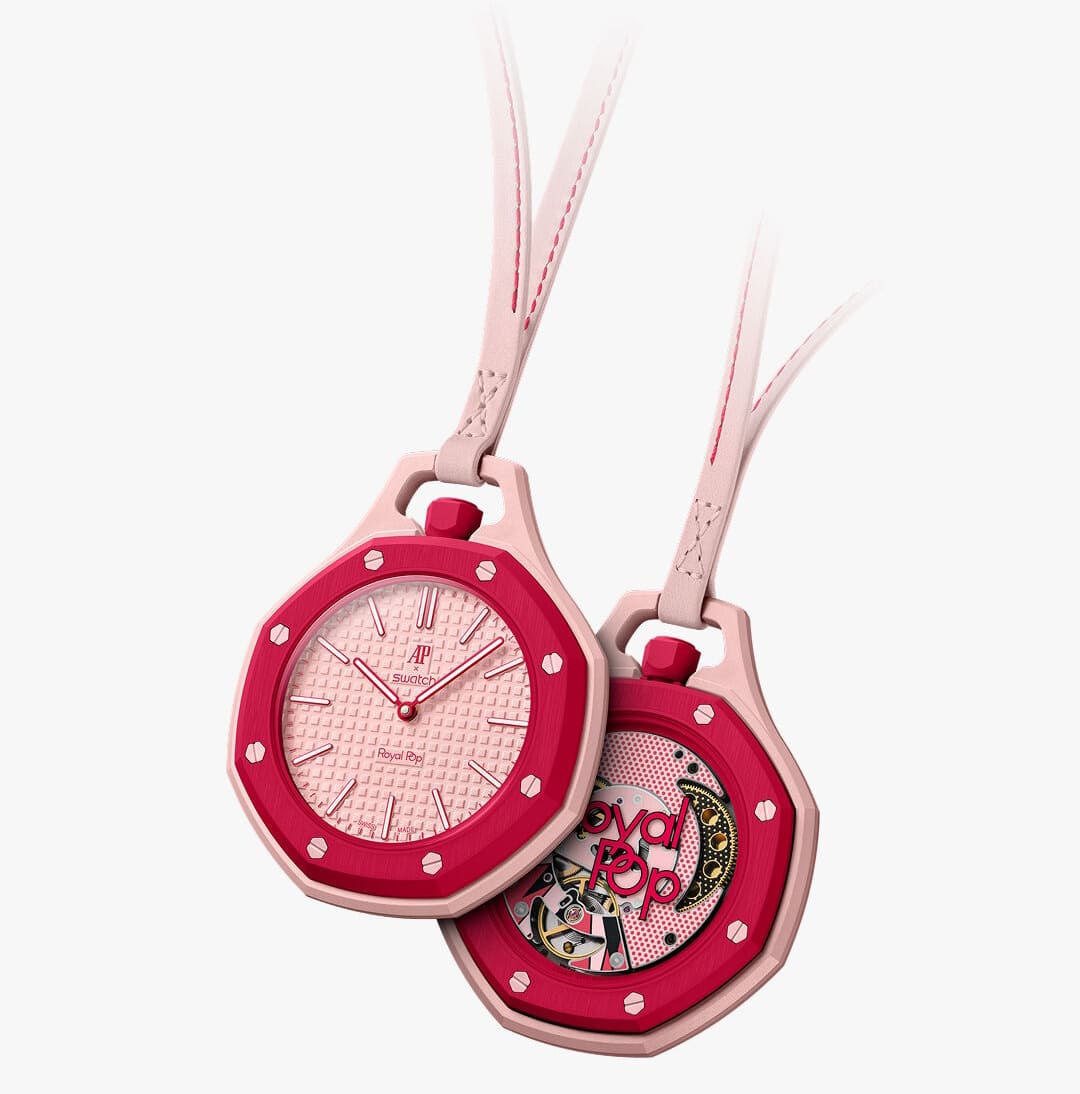
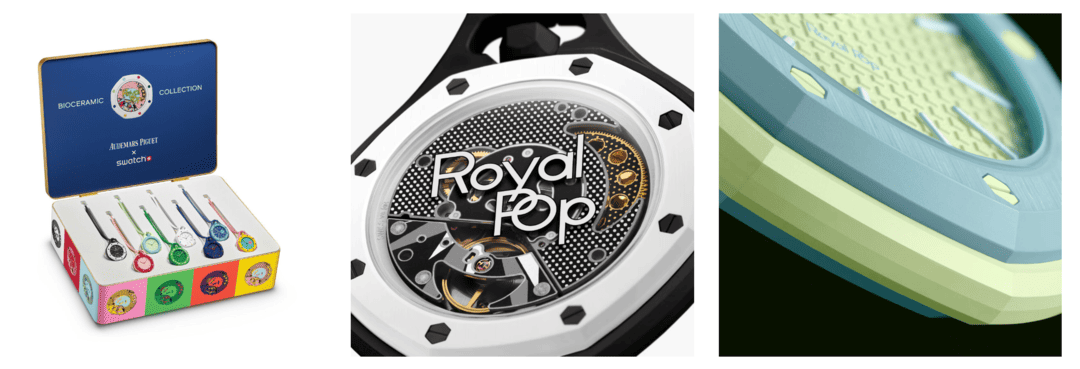
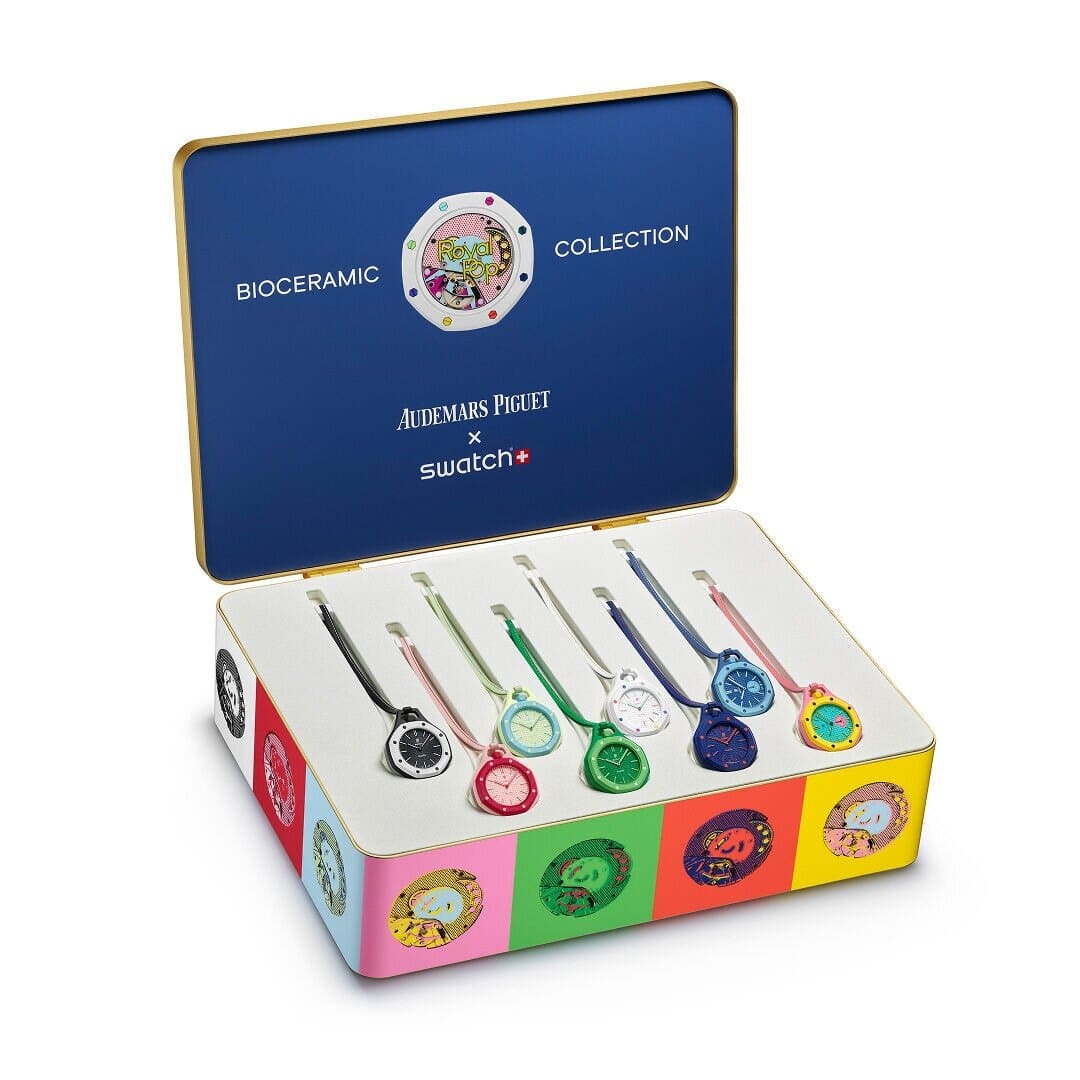
Rather than releasing a Royal Oak-inspired wristwatch, the two Swiss brands introduced the Royal Pop Collection, a series of colorful Bioceramic pocket watches inspired by both the iconic Audemars Piguet Royal Oak and Swatch’s experimental POP watches from the 1980s. The result was bold, unconventional, and instantly controversial.
Some collectors praised the collaboration for its creativity and willingness to take risks. Others criticized it for what they viewed as unnecessary gimmickry and potential brand dilution. Consequently, the Royal Pop has become one of the most polarizing watch releases in recent years.
So why has the Swatch x Audemars Piguet Royal Pop divided watch fans so dramatically?
What Exactly Is The Royal Pop?
The Royal Pop Collection consists of eight Bioceramic pocket watches that combine Royal Oak design elements with the modular philosophy of Swatch’s original POP watches. The collection launched in both Lépine and Savonnette configurations and features a newly developed hand-wound version of Swatch’s SISTEM51 movement.
Key features include:
| Feature | Royal Pop |
|---|---|
| Case Material | Bioceramic |
| Movement | Hand-wound SISTEM51 |
| Power Reserve | 90 Hours |
| Variants | 8 Models |
| Format | Pocket Watch |
| Price | Approximately $400-$420 |
| Availability | Selected Swatch Stores |
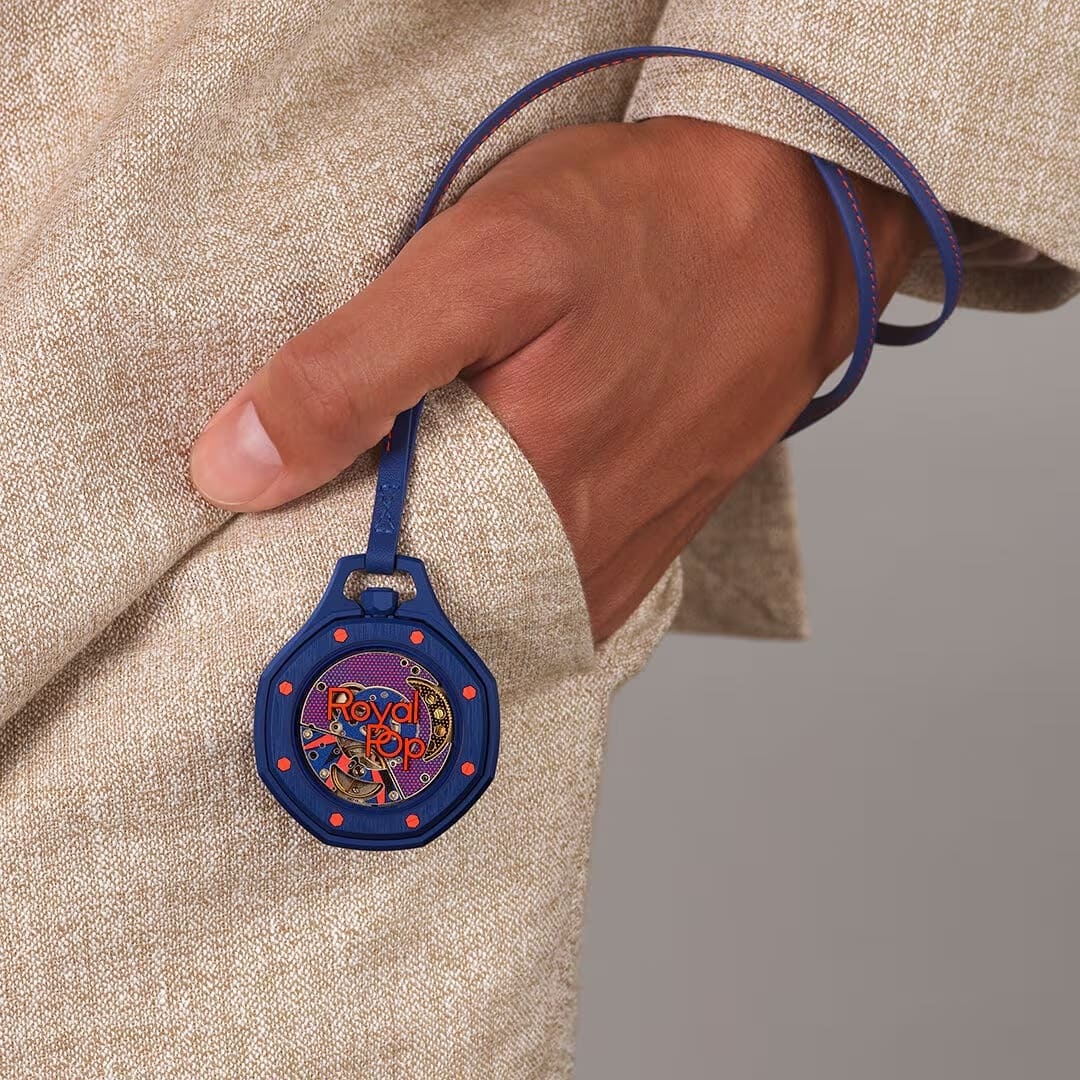
Perhaps most importantly, these are not wristwatches. Instead, owners can wear them around the neck, attach them to accessories, display them as desk clocks, or carry them traditionally as pocket watches.
That design choice immediately sparked debate.
Why Many Collectors Love The Royal Pop

Despite the criticism, the Royal Pop has attracted plenty of supporters.
It Avoids The Obvious
Many expected Swatch to create a simple Bioceramic Royal Oak. While that approach would almost certainly have generated enormous sales, it would also have felt predictable.
Instead, Swatch and Audemars Piguet chose a completely different direction.
The Royal Pop combines two historical products from both brands: the Royal Oak and the Swatch POP. Consequently, the collection feels more like a genuine creative collaboration rather than a simple logo-sharing exercise.
For many enthusiasts, that originality deserves credit.
It Introduces AP To New Audiences
A standard stainless-steel Royal Oak starts at around the price of a luxury automobile. Therefore, most watch enthusiasts will never realistically own one.
The Royal Pop changes that equation.
For roughly $400, buyers can purchase a watch that carries authentic Audemars Piguet design DNA. Although it obviously does not replace a Royal Oak, it allows younger collectors to engage with the AP brand in a new way.
Supporters argue that this accessibility ultimately benefits the industry by attracting new enthusiasts.
The Mechanical Movement Is Legitimately Interesting
Unlike many fashion-oriented collaborations, the Royal Pop contains a genuinely noteworthy movement.
Swatch re-engineered the SISTEM51 into a hand-wound caliber specifically for this project. The movement features a Nivachron balance spring, a 90-hour power reserve, and a visual winding indicator integrated into the mainspring barrel.
Consequently, many collectors appreciate the fact that the watch offers more than just colorful aesthetics.
Why Many Collectors Hate It
While supporters celebrate the Royal Pop’s creativity, critics remain equally vocal.
It Isn’t The Watch People Wanted
The biggest complaint may be the simplest one.
Many enthusiasts hoped for a Royal Oak-inspired wristwatch.
Instead, they received a colorful pocket watch with a lanyard.
For collectors who envisioned a “MoonSwatch for AP,” the Royal Pop felt disappointing from the moment it was revealed. The watch community spent days speculating about a Bioceramic Royal Oak, and expectations quickly became unrealistic.
As a result, some criticism stems from unmet expectations rather than the product itself.
Brand Dilution Concerns
Whenever a luxury brand collaborates with a mass-market company, questions about exclusivity inevitably emerge.
Audemars Piguet occupies one of the highest tiers of modern watchmaking. Therefore, some collectors worry that placing AP branding on a $400 product weakens the exclusivity that defines the brand.
This debate has appeared repeatedly since the MoonSwatch launch. However, critics argue that AP faces greater risk because it has historically maintained tighter control over accessibility and production.
For traditional collectors, exclusivity remains part of the appeal.
Some Collectors Dislike The Design
The Royal Pop does not aim for subtlety.
Bright colors, lanyards, modular wearability, and Pop Art-inspired aesthetics dominate the collection. Therefore, collectors who prefer traditional watchmaking often find the design difficult to embrace.
Many enthusiasts admire the Royal Oak because of its elegant industrial design. Consequently, transforming that language into a playful pocket watch feels jarring to some observers.
The reaction largely depends on whether one views the Royal Pop as serious horology or creative artistic expression.
The Pocket Watch Factor

One of the most fascinating aspects of the Royal Pop debate centers on the choice of format.
Pocket watches occupy a tiny segment of the modern watch market. Therefore, launching a major collaboration as a pocket watch rather than a wristwatch represents a genuinely bold decision.
Supporters argue that the unusual format demonstrates confidence and creativity.
Critics argue that Swatch and AP overcomplicated a concept that could have succeeded more easily as a traditional wristwatch.
However, the pocket watch format also connects directly to historical watchmaking traditions. Furthermore, it differentiates the Royal Pop from previous Swatch collaborations. Consequently, the format itself has become one of the collection’s defining features.
The Hype Machine Strikes Again
Regardless of opinion, the launch generated extraordinary attention.
Long lines formed outside Swatch stores worldwide. In some locations, crowd-control issues forced temporary closures. Additionally, resale prices surged immediately after release.
This response highlights an important reality.
Swatch has become exceptionally skilled at creating cultural moments rather than simply launching products.
The MoonSwatch demonstrated this strategy first. The Blancpain collaboration reinforced it. Now, the Royal Pop has expanded it even further.
Therefore, even critics must acknowledge the effectiveness of the marketing.
Is The Royal Pop Good For Audemars Piguet?
This question sits at the heart of the controversy.
Short-term attention is obvious. Millions of people who rarely think about Audemars Piguet suddenly discussed the brand.
However, luxury brands depend on long-term perception.
If collectors begin to view AP as less exclusive, the collaboration could have unintended consequences. Conversely, if the Royal Pop introduces a new generation to high-end watchmaking, it may strengthen the brand’s future customer base.
At this stage, the answer remains unclear.
Nevertheless, AP appears confident that the collaboration broadens awareness without threatening the Royal Oak’s prestige. The fact that the Royal Pop exists as a pocket watch rather than a direct substitute for the Royal Oak may help maintain that distinction.
What The Royal Pop Says About Modern Watch Collecting
Perhaps the most interesting takeaway has little to do with the watch itself.
The Royal Pop reveals how modern collecting continues evolving.
Today’s enthusiasts want different things. Some prioritize heritage and exclusivity. Others value creativity and accessibility. Meanwhile, younger buyers increasingly embrace collaborations, limited releases, and unconventional designs.
Therefore, the Royal Pop functions almost like a mirror reflecting the modern watch community.
The divided reaction does not necessarily mean the watch failed. Instead, it demonstrates how diverse today’s collector landscape has become.

Final Thoughts
The Swatch x Audemars Piguet Royal Pop may be the most controversial watch collaboration since the original MoonSwatch.
Supporters see a clever, creative project that unexpectedly combines two iconic Swiss brands. Critics see a product that prioritizes hype over traditional watchmaking values.
Both perspectives contain valid arguments.
What nobody can deny, however, is that the Royal Pop generated conversation. The collaboration challenged expectations, sparked debate, and brought unprecedented attention to a pocket watch in an era dominated by wristwatches.
Whether history remembers the Royal Pop as a brilliant experiment or a misguided detour remains to be seen. However, one thing is certain: Audemars Piguet and Swatch achieved exactly what they set out to do.
They made the entire watch world talk.