Replacing a watch battery looks simple, yet it can go wrong quickly. One slip of a case knife, one poorly fitted case wrench, or one rushed movement can leave a visible scratch across the case back or lugs. Therefore, the goal is not only to install a new battery. The goal is to open, service, and close the watch cleanly without leaving evidence that the case was opened.
Many quartz watches allow straightforward battery replacement. However, different case backs require different tools and techniques. Snap-on case backs, screw-down backs, screw-fastened backs, and notched waterproof backs each need a specific approach. Consequently, choosing the correct tool matters more than applying force.
This guide explains how to replace a watch battery without scratching the case. It covers the tools you need, the safest opening methods, common mistakes, and the final checks that help protect the watch after the battery change.
Why Scratches Happen During Battery Replacement
Most scratches happen before the old battery even comes out. Usually, the damage comes from using the wrong tool or working without proper support.
For example, a small household screwdriver may seem useful for prying open a snap-back case. However, it can slip easily and gouge the back of the case. Likewise, a poorly adjusted wrench can jump out of the notches on a screw-back case, leaving crescent-shaped marks.
Additionally, scratches often occur when the watch moves during opening. If the case slides on the table, the tool loses alignment. Therefore, a stable work surface and case holder can prevent many problems.
Professionals use proper case openers, soft bench pads, and controlled pressure because these tools reduce slipping and protect the finish. In contrast, improvised tools create unnecessary risk.
Tools You Need For A Scratch-Free Battery Change
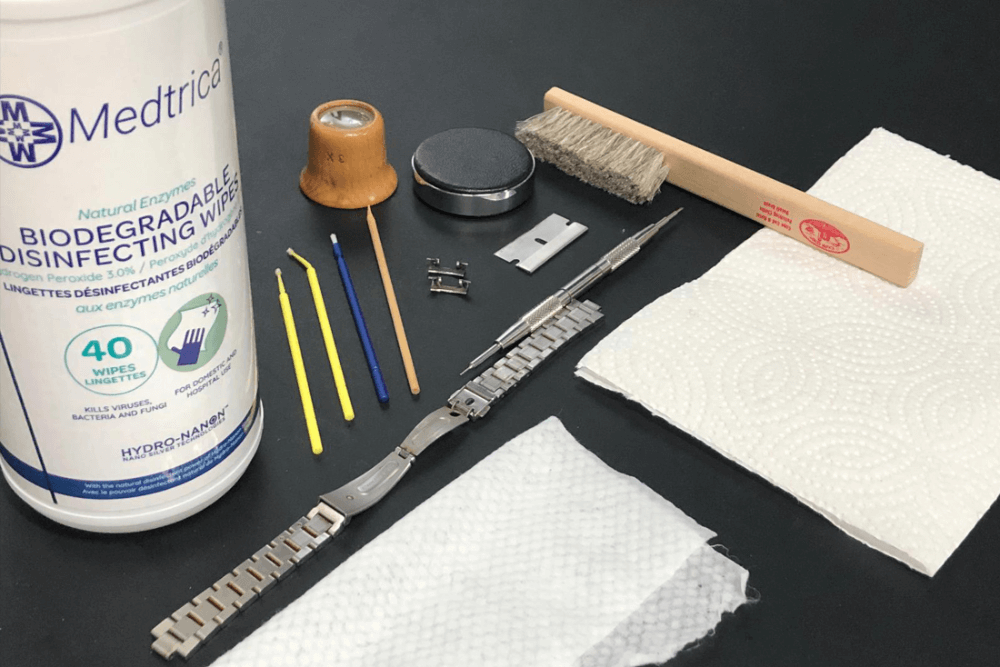
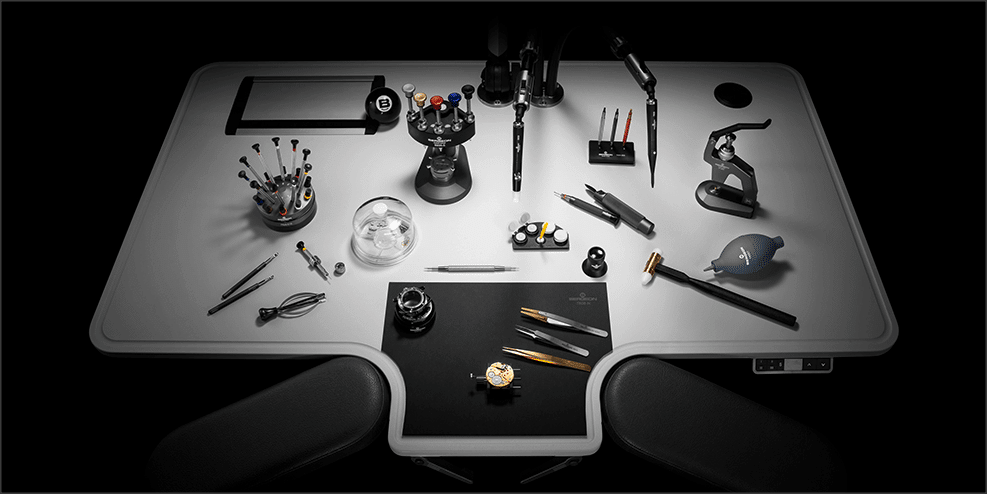
The correct tools make the job safer and cleaner. Before starting, gather everything you need so you do not rush once the case is open.
| Tool | Purpose |
|---|---|
| Soft bench mat | Protects the case and crystal |
| Case holder | Stabilizes the watch during opening |
| Case knife | Opens snap-on case backs |
| Adjustable case wrench | Opens notched screw-back cases |
| Rubber friction ball | Opens some screw backs without metal contact |
| Precision screwdrivers | Removes screw-fastened backs or battery clamps |
| Plastic tweezers | Handles the battery safely |
| Dust blower | Removes loose debris |
| Gasket grease | Helps maintain gasket condition |
| Case press | Closes snap backs evenly |
A friction ball can help with certain screw-back watches because soft rubber grips the case back without scratching it. However, it only works when the back is not too tight. For notched screw backs, an adjustable wrench or proper case opener provides better engagement.
Identify The Case Back Type First
Before opening the watch, inspect the case back carefully. This step determines which tool you should use.
Most quartz watches use one of four case back styles:
| Case Back Type | How It Opens | Best Tool |
|---|---|---|
| Snap-on back | Pry at a small lip or notch | Case knife |
| Screw-down back | Unscrews by friction or notches | Friction ball or case wrench |
| Screw-fastened back | Small screws hold the back | Precision screwdrivers |
| Notched waterproof back | Pins engage notches | Adjustable case opener |
If you choose the wrong tool, you increase the risk of slipping. Therefore, take a moment to find the opening notch, screw slots, or case back notches before applying any pressure.
Prepare The Watch And Work Area
Preparation prevents damage. First, work on a clean, flat surface with good lighting. Then place the watch face down on a soft mat or case cushion. This protects the crystal and keeps the watch stable.
Next, remove the bracelet or strap if it blocks access to the case back. This step takes extra time, but it gives you better control and reduces the risk of accidental contact with the lugs.
After that, clean the case back lightly with a microfiber cloth. Dirt and grit can act like sandpaper if the watch shifts during the process. Therefore, removing loose debris before opening the case helps prevent scratches.
Finally, secure the watch in a case holder if possible. A holder keeps the case steady and allows both hands to control the tool.
Opening A Snap-On Case Back Safely

Snap-on case backs usually have a small lip or notch where a case knife can enter. However, this area can be tiny, so patience matters.
Start by locating the notch. Then place the blade of the case knife flat against the case back, not angled toward the case side. Apply gentle, controlled pressure until the back lifts.
Do not twist aggressively. Instead, use small controlled movements. If the case back resists, stop and reassess the tool angle. A forced blade can slip across the case, leaving a deep scratch.
Additionally, avoid using pocket knives or kitchen knives. A proper case knife has the shape and rigidity required for watch cases, whereas household blades pose unnecessary risk.
Opening A Screw-Back Case Safely
Screw-back cases require grip and even pressure. If the case back has no notches and the watch is not tightly sealed, a rubber friction ball may work well. Press the ball firmly onto the case back and turn counterclockwise.
However, if the back has notches, use an adjustable case wrench. Adjust the pins so they fit securely into the notches. Then press downward evenly while turning slowly.
This step requires care. If the pins do not sit fully in the notches, the wrench can slip and scratch the back. Therefore, check alignment twice before applying torque.
For expensive watches, divers, or cases with very tight backs, professional service often makes more sense. Opening a water-resistant watch can compromise the gasket seal, and pressure testing is the only reliable way to confirm that water resistance remains intact afterward.
Removing And Replacing The Battery
Once the case back comes off, pause before touching anything. Note the battery position, battery code, retaining clip, and polarity. Many watch batteries show their reference number on the top surface.
Use plastic tweezers whenever possible. Plastic tweezers reduce the risk of shorting the battery and help prevent marks on moving parts. Some battery replacement guides specifically recommend non-conductive tweezers because metal tools and fingerprints can create problems during installation.
Remove the old battery carefully. If a small clamp holds it in place, loosen only the necessary screw. Do not remove unrelated screws or movement parts.
Next, install the new battery in the same orientation. Make sure it sits flat and securely under the contact. Then check whether the second hand starts moving. If the watch has a reset contact, follow the movement instructions before closing the case.
Inspecting The Gasket Before Closing
The gasket plays a crucial role in water resistance. Therefore, inspect it before reinstalling the case.
Look for cracks, flattening, dirt, or stretching. If the gasket looks damaged, replace it. If it remains in good condition, clean the gasket groove and apply a small amount of silicone gasket grease.
However, remember that greasing a gasket does not guarantee water resistance. It only helps the gasket seat properly. For watches rated for swimming or diving, pressure testing after opening remains the safest option.
Closing The Case Without Scratches
Closing the case can also cause damage if you rush.
For screw-back cases, align the threads carefully. Turn the case back counterclockwise slightly until you feel the threads seat. Then turn clockwise by hand before using a tool. This reduces the risk of cross-threading.
For snap-on backs, align any case back notch with the crown stem if required. Then use a case press with the correct dies. A press applies even pressure and reduces the chance of slipping. Avoid pressing with your thumbs on stubborn backs because uneven pressure can damage the crystal or case.
If the case back refuses to close, stop. Check the gasket position and alignment. Forcing the back can bend the case back or pinch the gasket.
Common Mistakes To Avoid
Most battery-replacement damage stems from avoidable mistakes. Therefore, keep these risks in mind.
- Using a screwdriver instead of a case knife
- Opening a screw-back case with poorly fitted pins
- Working without a soft mat or case holder
- Touching the battery with bare fingers
- Forgetting the gasket
- Forcing a snap-back case closed by hand
- Ignoring water resistance after opening
- Using excessive pressure instead of better alignment
Additionally, avoid replacing batteries in high-value, vintage, or water-resistant watches unless you have the right tools and experience.
When To Let A Professional Do It
DIY battery replacement makes sense for many inexpensive quartz watches. However, professional service remains the better choice in several situations.
Choose a professional if:
- The watch has significant water resistance
- The case back feels stuck
- The watch has sentimental or high monetary value
- The gasket looks damaged
- The case uses an unusual opening system
- You do not have the correct tools
A professional can replace the battery, inspect the gasket, properly close the case, and pressure-test the watch if needed. As a result, you reduce the risk of scratches, leaks, and movement damage.
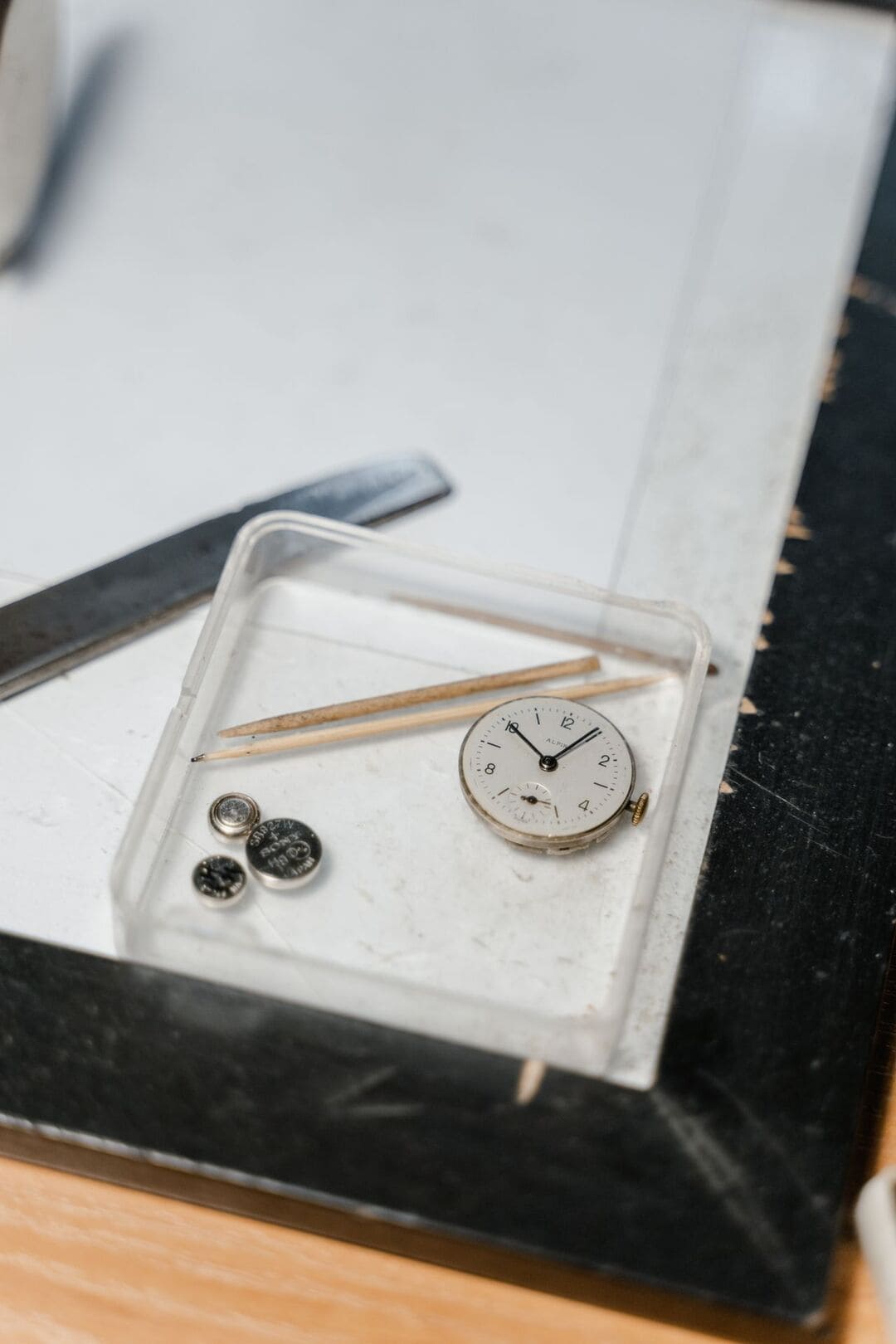
Final Thoughts
Replacing a watch battery without scratching the case comes down to preparation, tool choice, and patience. The safest process starts with identifying the case back type. Then it continues with a soft work surface, proper case support, and the correct opener.
Use a case knife for snap backs, a friction ball or wrench for screw backs, and precision screwdrivers for screw-fastened backs. Additionally, handle the battery with plastic tweezers, inspect the gasket, and close the case with controlled pressure.
Most importantly, never force the watch open or closed. If the tool slips, the back resists, or the gasket looks questionable, stop and seek professional help.
A clean battery change should leave the watch running again without new scratches, damaged seals, or unnecessary marks. With the right approach, you can protect both the watch’s function and appearance.