Starting watchmaking feels exciting. You see movements online, you watch teardown videos, and you want to try it yourself. Therefore, most beginners search for “watchmaker tool kits” and click the biggest bundle with the lowest price. That feels logical. However, cheap all-in-one kits often create more problems than progress. Tools slip, screwdrivers strip screws, and tweezers throw parts across the room. Consequently, beginners blame their hands when the real issue is the tool quality.
The best beginner setup is not the largest kit. Instead, it is a focused set of reliable essentials. Moreover, the right tools build skills faster because they reduce frustration and prevent damage. When tools fit and function correctly, watchmaking becomes calmer and more enjoyable.
This guide explains what beginners should buy first, which tools they should skip, and how to build a smart, budget-friendly toolkit that grows with skill.
Why Most Beginner Tool Kits Disappoint
Most beginner kits focus on quantity. Therefore, they include dozens of tools you will not use for months.
The bigger problem is quality. Cheap kits often include soft screwdriver blades, rough tweezers, and loose-handled tools. As a result, screw slots strip, bridges scratch, and parts fly away. These mistakes are common, but bad tools multiply them.
Cheap kits also teach bad habits. When a screwdriver slips, beginners use more force—consequently, damage increases. When a tweezer cannot grip, beginners squeeze harder. As a result, parts launch. A good tool reduces the need for force. Therefore, it naturally trains better techniques.
So, instead of buying a “complete kit,” buy a practical system.
The Beginner Watchmaker Toolkit Philosophy
A beginner toolkit should do three things.
First, it should protect the watch. Scratched plates and stripped screws end motivation fast. Therefore, precision tools matter.
Second, it should protect your confidence. When the process feels manageable, you practice more. Consequently, skills grow faster.
Third, it should support upgrades. A good toolkit evolves. Therefore, choose tools you can add to, not replace entirely.
With that in mind, the best beginner kit contains fewer tools, but better tools.
The Essentials Every Beginner Should Buy First
These are the tools you will use in nearly every session. Therefore, they deserve your budget first.
Quality Screwdrivers (This Is The First Upgrade)
Screwdrivers touch almost every screw in a movement. Therefore, bad screwdrivers cause immediate damage.
Buy a small set of watch screwdrivers in common sizes: 0.6mm, 0.8mm, 1.0mm, 1.2mm, and 1.4mm. Additionally, make sure the blades are replaceable.
Cheap screwdrivers strip screws because the blades are soft and poorly shaped. Consequently, they round off and slip. A good set holds sharp geometry longer, which protects screws and plates.
If you can only spend money on one tool category, spend it here.
Anti-Magnetic Tweezers (At Least Two Pairs)
Tweezers are extensions of your fingers. Therefore, they must grip cleanly.
Buy anti-magnetic tweezers. You will want at least one fine-point pair and one general-use pair. If tweezers are magnetic, parts cling unpredictably. Consequently, hairsprings and screws become nightmares.
Cheap tweezers also have uneven tips. As a result, they do not meet properly. That is why parts slip.
Good tweezers reduce frustration immediately.
A Movement Holder
A movement holder stabilizes the movement during work. Therefore, it prevents accidental slips and stress.
Beginners often work with the movement sitting loose on the bench. That leads to scratches, bent pivots, and panic. Consequently, a movement holder becomes a safety tool rather than just a convenience.
Buy an adjustable holder that fits common movement sizes. This allows one tool to support many practice watches.
A Case Back Opener
You cannot practice without opening cases. Therefore, you need a proper opener.
For snap-back cases, you need a case knife. For screw-down backs, you need a case-back wrench or a Jaxa-style opener.
Cheap openers slip easily. Consequently, they scratch their backs and sometimes their hands. A better opener grips securely and reduces risk.
If you plan to work on modern watches, prioritize the adjustable opener.
Loupe (3x Or 5x)
You cannot work accurately if you cannot see. Therefore, a loupe is essential.
A 3x loupe works well for general work. A 5x loupe works well for detailed inspection. Many professionals use both, but beginners can start with one.
Avoid jumping to 10x too early. Higher magnification reduces the field of view. Consequently, it increases strain and slows work.
Dust Blower And Rodico
Dust ruins movements. Therefore, cleanliness matters.
A rubber dust blower clears debris without moisture. Rodico picks up dust and holds parts during assembly. Consequently, these tools reduce contamination and mistakes.
Buy them early. They cost little but improve results fast.
Parts Trays And Small Containers
Screws disappear quickly. Therefore, parts management becomes a skill.
Buy a parts tray with a cover. You can also use small labeled containers. The goal is simple: keep parts organized and protected.
This tool reduces mistakes more than most people expect.
The “Nice To Have” Tools That Help Beginners Improve Faster

Once you have the essentials, a few additional tools increase comfort and success.
Hand Removal And Hand Setting Tools
Removing and installing hands is risky. Therefore, proper tools reduce damage.
Hand levers with dial protection prevent dial scratches. Hand-setting tools press evenly. Consequently, hands are installed straight without bending.
You can postpone these if you focus on basic movement work first. However, once you start dial-side work, buy them.
A Crystal Press
If you plan to replace crystals or press case backs, a crystal press helps. Therefore, it becomes useful for case restoration projects.
However, do not buy a press to have it. Buy it when you need it.
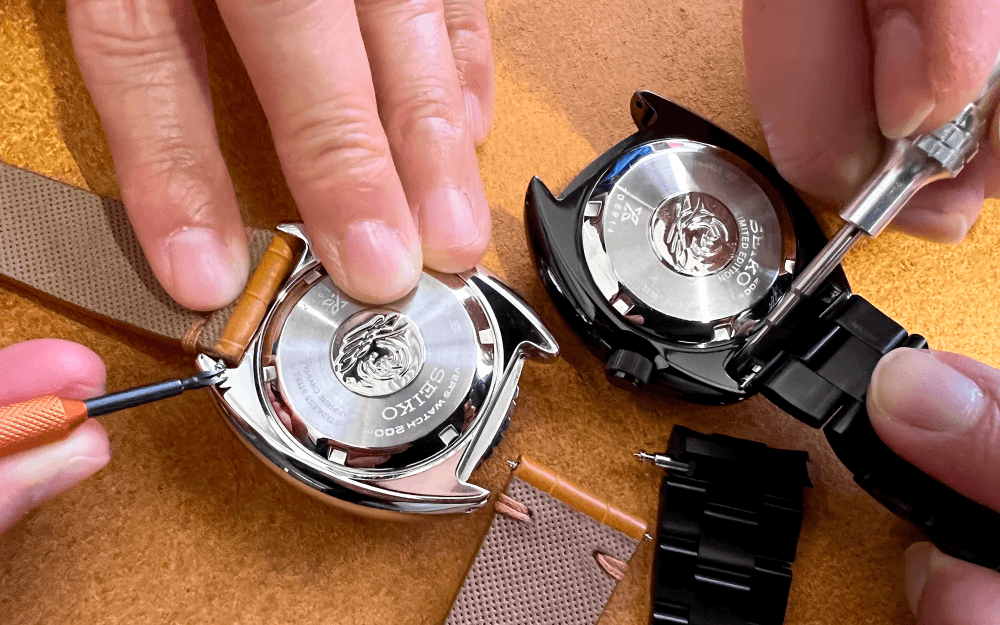
Bracelet And Strap Tools
If you change straps often, buy a quality spring bar tool. It prevents scratches and slipping. Consequently, it improves your daily routine.
This tool is more “watch owner” than “watchmaker.” However, beginners often need it anyway.
Cleaning Brushes And Pegwood
Pegwood is a watchmaking staple. Therefore, it supports cleaning without scratching metal.
A soft brush helps remove dust. Consequently, you maintain a clean workspace and cleaner movements.
Tools Beginners Should Skip (At Least At First)
This section saves money and prevents mistakes.
Cheap “All-In-One 147-Piece” Kits
These kits look impressive. However, they often include poor screwdrivers, bad tweezers, and low-grade accessories. As a result, they create damage and frustration.
You will also quickly replace the most important tools. Consequently, the kit becomes a waste of spending.
Power Rotary Tools And Dremels
Beginners often think polishing requires a rotary tool. However, rotary tools remove metal quickly. Therefore, they ruin edges, lugs, and case lines faster than you can react.
Do not use power tools until you understand finishing geometry and pressure control.
Ultrasonic Cleaners (Early On)
Ultrasonic cleaners can help, but they can also cause damage if used incorrectly. Therefore, beginners should wait.
Ultrasonic cleaning requires the correct solutions, baskets, and disassembly. Otherwise, parts can rub or get lost. Consequently, beginners often create more problems.
Start with manual cleaning and learn the basics first.
Cheap Screw Extractor Sets
Stripped screws happen. However, beginners should focus on preventing stripping rather than extracting.
A screwdriver upgrade prevents most stripping. Therefore, skip extractor kits until you actually need them.
Random “Watch Timing Machines” Without Purpose
Timing machines look exciting. However, they do not teach fundamentals early.
If you do not understand amplitude, beat error, and regulation theory, the numbers will confuse you. Therefore, learn the basics first.
Buy a TimeGrapher later, once you can reliably service a simple movement.
A Smart Beginner Buying Plan (Three Levels)
If you want a clear roadmap, follow this.
Level 1: Starter Kit (The Minimum Safe Setup)
- Quality screwdriver set
- Two anti-magnetic tweezers
- Movement holder
- Case back opener
- 3x or 5x loupe
- Dust blower and Rodico
- Parts tray
With this setup, you can open watches and practice disassembly safely.
Level 2: Skill Builder Kit
- Add hand tools
- Add dial protectors
- Add pegwood and a cleaning brush set
- Add spring bar tool
- Add better lighting
This level supports more complete servicing.
Level 3: Expansion Kit
- Add a timegrapher
- Add mainspring winders
- Add staking set (if needed)
- Add an ultrasonic cleaner (once you understand cleaning)
- Add professional polishing tools only after finishing training
This level supports true watch restoration.
Why Lighting Matters As Much As Tools
Beginners often ignore lighting. However, lighting is a hidden performance tool.
Good lighting reduces mistakes. It also reduces strain. Therefore, invest in a bright bench lamp with adjustable direction.
Once lighting improves, you need less magnification. Consequently, your posture improves, and your work becomes steadier.
So, do not spend everything on tools and forget the bench environment.
How To Avoid Overbuying
Watchmaking invites tool obsession. Therefore, beginners often buy too much too soon.
Instead, buy based on projects. Start with one practice watch. Then purchase the tools that match the next step.
This approach keeps spending aligned with learning. Consequently, you build skills and tools together.
Remember this: great watchmakers often use fewer tools than beginners expect. They use them well.
Final Thoughts
The best watchmaker tool kits for beginners are not big bundles. They are focused, reliable foundations. Therefore, prioritize screwdrivers, tweezers, a movement holder, and basic cleanliness tools first.
Skip cheap megakits, power-polishing tools, and complex machines early. Instead, build slowly and buy with purpose. Consequently, your tools will support your skill, not fight it.
Watchmaking rewards patience. The right toolkit makes patience easier. Once your tools feel precise and consistent, your hands will follow.