Vintage watches attract collectors because they combine craftsmanship, history, and distinctive design. However, vintage watch bracelets often show decades of wear. Scratches, stretched links, dull finishes, and accumulated dirt can affect both appearance and comfort. Therefore, restoration of a vintage bracelet requires careful techniques and the correct tools.
Unlike many modern bracelets, vintage bracelets often use thinner metal and a more delicate construction. Consequently, aggressive polishing or improper tools can permanently damage the bracelet. Watchmakers must therefore balance restoration with preservation.
In this guide, we explore how vintage watch bracelet restoration works. Additionally, we explain the tools watchmakers use, the polishing methods that yield authentic results, and the precautions to take when working with older metal bracelets.
Why Vintage Watch Bracelets Require Special Care
Vintage watch bracelets differ significantly from modern bracelets. Over decades of wear, small metal components experience friction and gradual deformation. As a result, many vintage bracelets develop stretched links or loose joints.
Therefore, restoration requires a careful and conservative approach. The goal is not to make the bracelet look brand new. Instead, the objective is to improve appearance and functionality while preserving the bracelet’s original character.
Additionally, many vintage bracelets feature thin metal surfaces. Consequently, excessive polishing can remove too much material and weaken the structure. Watchmakers must therefore remove scratches gently and avoid aggressive refinishing.
Furthermore, collectors often value original finishes and sharp edges. Because of this, restoration techniques should always respect the bracelet’s original design.
Common Problems Found In Vintage Watch Bracelets
Before restoration begins, watchmakers usually inspect the bracelet carefully. This inspection helps identify structural problems and determine the safest restoration approach.
Several issues commonly appear in vintage bracelets.
Surface Scratches And Wear
Daily use inevitably produces scratches across the bracelet’s surface. Over time, these scratches accumulate and dull the finish. Therefore, light refinishing may restore the bracelet’s original appearance.
Bracelet Stretch
Bracelet stretch occurs when metal links wear against each other over many years. As a result, the bracelet becomes loose and flexible.
Although polishing cannot fix structural stretch, cleaning and minor tightening may improve the bracelet’s feel.
Dirt And Contamination
Vintage bracelets often contain years’ worth of accumulated debris between the links. Dirt, skin oils, and moisture collect inside link joints and clasp mechanisms.
Therefore, deep cleaning usually becomes the first step in restoration.
Worn Finishes
Many vintage bracelets combine brushed and polished surfaces. Over time, these finishes blend and lose definition.
Consequently, careful refinishing may restore the original contrast between surfaces.
Essential Tools For Bracelet Restoration
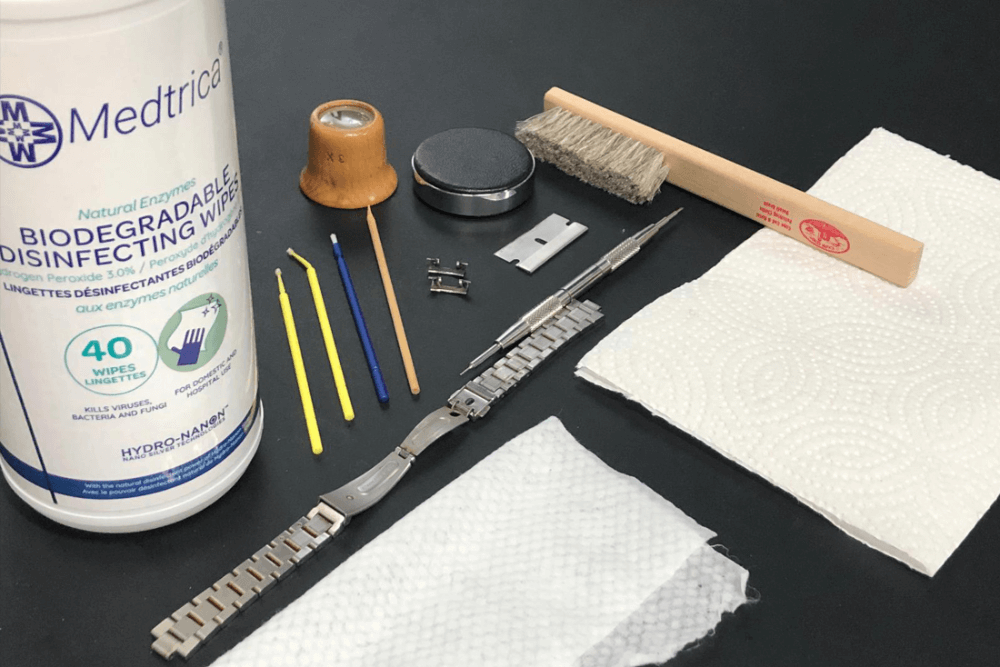
Watchmakers rely on specialized tools to safely restore vintage bracelets. These tools allow precise work while minimizing the risk of damage.
The following tools commonly appear during bracelet restoration.
| Tool | Purpose |
|---|---|
| Spring bar tool | Removing the bracelet from the watch |
| Screwdrivers | Removing bracelet screws |
| Ultrasonic cleaner | Deep cleaning between links |
| Polishing machine | Controlled polishing of metal surfaces |
| Abrasive pads | Recreating brushed finishes |
| Bracelet holder | Stabilizing the bracelet during work |
Because vintage bracelets contain many small components, these tools provide the precision required for careful restoration.
Additionally, watchmakers often use soft brushes and pegwood sticks to clean difficult areas between links.
The Cleaning Process Before Polishing
Cleaning always comes before polishing. If dirt remains on the bracelet, abrasives may drag contaminants across the metal surface, creating additional scratches.
Therefore, watchmakers typically begin restoration with a deep cleaning process.
Ultrasonic Cleaning
Ultrasonic cleaners use high-frequency sound waves to remove debris from the small spaces between bracelet links. As the cleaner vibrates the solution, microscopic bubbles dislodge dirt from difficult areas.
Consequently, ultrasonic cleaning provides far more thorough cleaning than manual brushing alone.
Manual Cleaning
After ultrasonic cleaning, watchmakers often perform additional manual cleaning. Soft brushes help remove remaining debris around clasps and link joints.
Because vintage bracelets may contain delicate components, gentle cleaning prevents damage during this stage.
Understanding Bracelet Finishes
Vintage watch bracelets often feature several different finishes. Therefore, successful restoration requires understanding these finishing styles.
Polished Surfaces
Polished bracelet sections create reflective surfaces that highlight the metal’s shine. These areas often appear on center links or clasp edges.
Watchmakers restore these surfaces using fine polishing compounds and soft polishing wheels.
Brushed Finishes
Brushed finishes produce linear grain patterns that reduce reflections and hide minor scratches. Many vintage bracelets use brushed finishes on outer links.
Restoring these finishes requires directional abrasion using abrasive pads or brushing wheels.
Mixed Finishes
Some bracelets combine brushed and polished areas. Therefore, restoration requires careful masking to protect one surface while working on another.
Maintaining these finishing contrasts remains essential for preserving the bracelet’s original design.
Polishing Methods Used In Bracelet Restoration
Polishing vintage bracelets requires a controlled and gradual approach. Watchmakers typically use several stages to refine the metal surface.
Scratch Removal
First, watchmakers remove deeper scratches using fine abrasive papers or compounds. However, they avoid overly aggressive abrasives to prevent excessive metal removal.
Additionally, they focus only on the affected areas rather than aggressively polishing the entire bracelet.
Intermediate Polishing
After removing scratches, intermediate compounds smooth the surface and reduce abrasive marks. These compounds refine the metal and prepare it for final finishing.
Final Polishing
Finally, fine polishing compounds produce the bracelet’s final shine. Soft polishing wheels distribute the compound evenly across the metal surface.
Because vintage bracelets contain small surfaces, watchmakers apply polishing compounds carefully to maintain uniform results.
Recreating Brushed Bracelet Finishes
Brushed finishes require precise technique because the grain pattern must remain consistent across the entire bracelet.
Watchmakers typically restore brushed finishes using abrasive pads or brushing wheels. These tools create controlled scratch patterns in a single direction.
Additionally, watchmakers often guide the bracelet along a straight edge to maintain consistent brushing lines.
Because uneven brushing becomes immediately visible, patience and steady hand control remain essential during this stage.
Protecting Bracelet Structure During Restoration
While polishing improves appearance, excessive polishing can weaken vintage bracelets.
Many vintage bracelets already contain thin metal links due to years of wear. Therefore, removing additional material must be done carefully.
Watchmakers follow several precautions to protect the bracelet structure:
- Avoid aggressive, abrasive compounds
- Limit polishing to necessary areas
- Inspect link thickness regularly
- Preserve original finishing transitions
These precautions help maintain the bracelet’s structural integrity while improving its appearance.
Restoring Vintage Clasps And Small Components
Bracelet clasps often require special attention during restoration. Over time, clasps may develop scratches, dirt buildup, or weakened springs.
Watchmakers typically disassemble clasps carefully before cleaning and polishing them. Additionally, they inspect clasp springs to ensure proper function.
Because clasps often feature polished logos or engraved markings, polishing must avoid damaging these details.
Consequently, restoration around engraved surfaces requires extremely light polishing.
When Restoration Should Be Limited
Although restoration can improve bracelet appearance, certain vintage bracelets should not undergo aggressive refinishing.
Collectors often prefer the bracelet in its original condition when it remains structurally sound. In some cases, heavy polishing may reduce collector value by removing original finishing details.
Therefore, watchmakers sometimes recommend minimal restoration, focusing only on cleaning and light polishing.
This conservative approach preserves the bracelet’s historical authenticity.

Final Thoughts
Vintage watch bracelet restoration requires a careful balance between improvement and preservation. Because these bracelets often carry decades of history, restoration must respect the original design and materials.
Watchmakers rely on specialized tools, controlled polishing techniques, and gentle abrasives to achieve the best results. Additionally, they focus on preserving case geometry, original finishes, and structural integrity.
By understanding how bracelet restoration works, collectors can make informed decisions about maintaining their vintage watches. Ultimately, careful restoration not only improves appearance but also helps preserve the craftsmanship and character that make vintage watches so special.