Removing and setting watch hands looks simple. You lift the hands off, you press them back on, and the watch runs again. Therefore, many beginners try it with improvised tools. However, hands bend easily, dials scratch instantly, and cannon pinions deform with very little force. Consequently, handwork becomes one of the fastest ways to damage a watch when the wrong tools or techniques are used.
Hand removal and hand setting are also high-impact tasks. If the hands sit too low, they rub. If they sit too high, they look wrong. Moreover, if they are misaligned, timekeeping feels off, and the watch can lose functional accuracy. Therefore, correct tools matter as much as skill.
This guide explains the watch-hand removal and setting tools you need for safe work. It covers the core tools, the optional upgrades, common mistakes, and best practices that prevent dial scratches and bent hands.
Why Are Hands So Easy To Damage
Hands are thin and delicate. Therefore, they bend with very little pressure.
Most hands use soft metals so they can press-fit onto posts. Consequently, any sideways force distorts the hole or the hand itself.
Hands also sit directly above the dial. That means that one slip can permanently scratch the dial surface. Moreover, even a tiny scratch stands out because it catches light.
Finally, hands interact with each other. If the hour hand sits too high, it can collide with the minute hand. If the second hand sits slightly off-center, it can rub the crystal. Therefore, the job is not just removal and replacement. It is precise positioning.
So, safe hand work requires controlled lifting, clean protection, and accurate setting.
The Two Categories Of Hand Tools
Hand tools fall into two categories: removal tools and setting tools. Therefore, you should think in pairs.
Removal tools lift hands off their posts without bending them. Setting tools press hands onto posts evenly without deforming them.
If you try to use one tool for both, you create risk. Consequently, professional watchmakers always separate these functions.
Watch Hand Removal Tools Explained
Hand removal requires a controlled lift. Therefore, these are the main tool types.
Hand Levers (Hand Removers)
Hand levers are the most common tools for removing watchmaker hands. They look like small, forked levers that slide under the hands and lift them.
They work well because they apply an even upward force. Consequently, they reduce bending compared to improvised prying.
However, hand levers must be used with dial protection. If the lever slips, it scratches the dial. Therefore, you should always protect the dial first.
Hand levers also work best when used as a pair. Use one lever on each side of the hand stack. Consequently, the lift remains even.
Presto Hand Removers
Presto removers use a clamp-like spring mechanism. Therefore, they lift their hands straight up with minimal side pressure.
This tool is extremely useful for beginners because it reduces uneven lifting. Moreover, it can remove hands quickly and consistently.
However, Presto tools still require dial protection. If the feet touch the dial, they can mark it. Therefore, you must position it carefully.
Presto removers work especially well for standard modern hands. Consequently, they are often considered a “safe upgrade.”
Specialized Second Hand Removers
Second-hand skin is the most delicate and hardest to remove. Therefore, some watchmakers use specialized tools for removing second hands.
These tools offer finer access around the pinion and reduce the chance of bending the hand tube. Consequently, they help when working on tight central stacks.
Beginners can start without this tool, but they should be aware of the risk. The second hand bends easily, so slow technique matters.
Essential Dial Protection Tools
Dial protection is not optional. Therefore, these tools belong in every hand toolkit.
Dial Protectors (Hand Protection Sheets)
Dial protectors are thin sheets that slide between the hands and the dial. Therefore, they create a barrier against scratches.
They are usually made of plastic or thin metal. Consequently, they can protect the dial surface from lever slip and tool contact.
Many watchmakers use two protectors at once. One goes near the dial center. Another covers a wider area. Therefore, the entire dial stays safe.
Plastic Film Or Tape (Secondary Protection)
Some dials scratch easily, especially lacquered or glossy surfaces. Therefore, many watchmakers add temporary protective film.
You can use a thin plastic film or low-tack tape around the central area. Consequently, you add a second safety layer.
However, you must avoid strong adhesives. They can lift dial printing or leave residue. Therefore, use only gentle, low-tack options.
Watch Hand Setting Tools Explained

Setting hands requires even downward pressure. Therefore, hand-setting tools must fit the hand tube properly.
Hand Press Tools (Hand Setters)
Hand setters are press tools with interchangeable tips. Therefore, you can select a tip that matches the hand size.
A good hand setter presses evenly. Consequently, it prevents bending and ensures the hand seats flat.
Hand setters also reduce the urge to press with fingers. Finger pressure often pushes the hand to the side. Therefore, it causes misalignment and bending.
So, a proper hand setter is essential for consistent work.
Hand Setting Punch Sets
Some watchmakers use punch sets with a holder block. Therefore, they can set hands with stability and controlled force.
This method works well on fragile hands because the punch tip stays centered—consequently, the hand seats straight with fewer attempts.
Punch sets also help when setting seconds hands. Because the second hand requires precise alignment, stability matters.
Professional Hand Press Tools
High-end hand presses offer better alignment control and pressure stability. Therefore, they are safer for frequent work.
They often include a base and vertical press action. Consequently, the hand seats more evenly than with handheld setters.
If you plan to work regularly, this tool can be a strong upgrade.
The Most Important Tool Feature: Correct Tip Size
Tip size matters more than brand. Therefore, focus on tip fit.
A tip that is too small presses on the hand surface and bends it. A tip that is too large may press unevenly and scratch nearby elements. Consequently, incorrect tips cause damage.
The tip should press on the hand tube area, not the decorative section. Therefore, it should fit cleanly around the pinion hole.
This is why interchangeable tips matter. You cannot use one tip for every hand style.
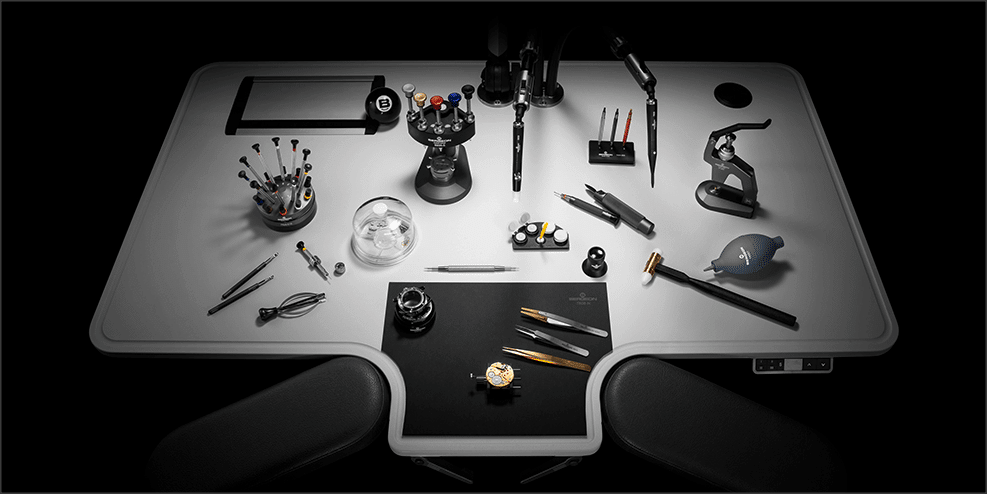
What A Safe Beginner Hand Tool Kit Looks Like
Beginners do not need every tool immediately. However, they need safe essentials. Therefore, a smart beginner kit includes:
- Dial protectors
- A pair of hand levers or a Presto remover
- Hand setter with interchangeable tips
- Loupe for alignment
- Rodico for pickup and control
- Parts tray for removed hands
This kit allows safe removal and installation of most standard handsets. Consequently, you can practice without destroying dials.
The Step-By-Step Safe Process For Hand Removal
Tools matter, but process matters too. Therefore, follow this workflow.
First, set the hands to 12:00. This makes alignment easier later.
Next, remove the movement from the case if needed. Secure it in a movement holder.
Then place a dial protector over the dial. Make sure it sits flat.
After that, use two levers or a Presto remover to lift the hands. Apply an even upward force. Do not twist.
Finally, place the hands into a covered parts tray. Hands bend easily, so storage matters.
This process prevents most beginner damage.
The Step-By-Step Safe Process For Hand Setting
Hand setting requires patience. Therefore, move slowly.
First, confirm the movement sits in a stable holder.
Then install the hour hand first. Align it exactly at 12:00 and press down evenly.
Next, install the minute hand. Align it precisely at 12:00 as well. Press evenly and check clearance.
Then install the seconds hand last. This step requires the most care. Align the tip and press straight down with a fine tip.
After setting, rotate the hands through 24 hours using the crown. Watch for rubbing and collisions. Consequently, you detect problems early.
If hands rub, remove and reset. Do not try to bend them while installed. That often makes it worse.
Common Mistakes That Cause Bent Hands And Scratched Dials
Most handwork problems come from predictable mistakes. Therefore, avoid these.
- Skipping dial protectors
- Using one lever instead of two
- Twisting hands while lifting
- Pressing hands with fingers
- Using the wrong tip size
- Installing hands out of order
- Not checking clearance across a full rotation
- Over-pressing until hands sit too low
If you avoid these, handwork becomes much safer.
When You Should Stop And Let A Professional Handle It
Some watches deserve professional care. Therefore, know when to stop.
Stop and outsource when:
- The dial is rare or fragile
- The hands are lume-filled vintage pieces
- The watch has complicated hand stacks
- The watch has collector value
- You cannot align your hands without repeated bending
- The second hand keeps deforming
Professional watchmakers have tools and experience that reduce risk. Consequently, professional work makes sense for valuable watches.

Final Thoughts
Watch hand removal and setting can be safe and repeatable when you use the correct tools and follow a disciplined process. Therefore, beginners should treat hand tools as essential, not optional.
The core toolkit includes dial protectors, quality hand levers or a Presto remover, and a hand setter with interchangeable tips. Add careful alignment habits and proper clearance checks, and you prevent the most common damage.
In watchmaking, hands are small, but the consequences of mistakes are huge. Consequently, investing in the right tools saves money, protects your watches, and builds confidence faster.