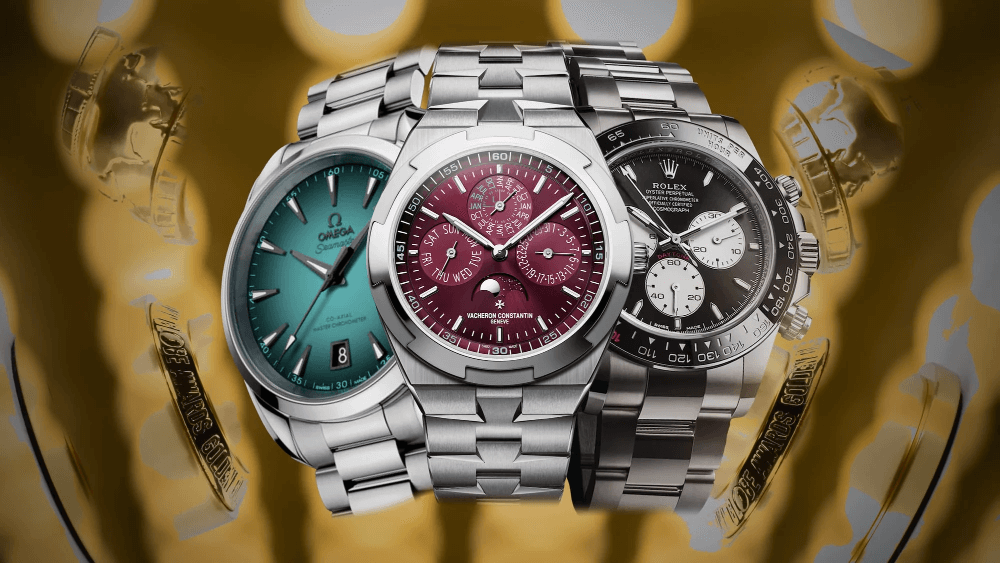
Luxury watches move with culture. They also move with confidence. Yet even with shifting tastes and rising challengers, Rolex remains the brand that sets the pace.
The numbers make that clear. Rolex has an estimated market value of $13.1B. Meanwhile, its closest high-growth rival, Cartier, sits at $4.0B. That gap says everything.
However, the story gets more interesting when you look beyond the top two. Omega, Audemars Piguet, and Patek Philippe all stay strong. Even so, none of them comes close to Rolex’s scale right now.
So, what keeps this brand on top? And why is Cartier gaining ground so quickly? Let’s break it down.
The Market Leaderboard Shows a Clear Winner
First, let’s look at the brand values as they stand:
- Rolex: $13.1B
- Cartier: $4.0B
- Omega: $3.0B
- Audemars Piguet: $3.0B
- Patek Philippe: $2.9B
- Richard Mille: $2.0B
- Longines: $1.4B
At a glance, Rolex does not just lead; it sets the pace. It dominates. In fact, Rolex is more than three times the size of Cartier. And compared to Omega and Audemars Piguet, Rolex is more than 4 times as large.
Therefore, the competition isn’t really competing at the same level. They may be fighting for second place. Rolex, however, operates in its own lane.
Rolex Wins Because the Brand Feels Untouchable
Rolex has done something rare. It turned a consistent design into a global status. That matters because status does not fluctuate as trends do. Instead, it builds slowly and becomes permanent.
Rolex also benefits from instantly recognizable silhouettes. The Submariner, Daytona, and Datejust remain cultural anchors. And because these models do not chase fashion, they stay relevant year after year.
Additionally, Rolex controls supply better than almost anyone. That strategy maintains desirability. It also sustains resale value, which boosts long-term brand confidence.
As a result, Rolex does not need to reinvent itself to stay dominant. It simply needs to keep doing what it does best.
Cartier Is Rising Fast for a Different Reason
Cartier’s growth is real. And it makes sense.
Unlike most competitors, Cartier exists in both watches and jewelry. So, the brand benefits from crossover buyers. People may come for a Love bracelet. Then they fall in love with a Tank or Santos.
Moreover, Cartier has mastered the art of luxury aesthetics. Its designs feel bold, clean, and timeless. Yet they also feel modern in a way Rolex rarely attempts.
Cartier also fits the new luxury behavior. Buyers now want strong branding and wearable elegance. Cartier delivers both. That is why it continues to expand market share and cultural presence.
Still, Rolex remains far ahead. But Cartier clearly has momentum.
Why Omega, Audemars Piguet, and Patek Stay Strong
Even though Rolex leads the market, several brands remain powerful contenders.
Omega sits at $3.0B, and it still wins in global familiarity. It also thrives through historical storytelling, especially in space and sports. Plus, Omega continues to offer strong value at its price points.
Audemars Piguet also sits at $3.0B, yet its influence often exceeds its size. The Royal Oak remains one of the most iconic designs in the industry. Moreover, AP has embraced exclusivity, thereby maintaining high demand.
Patek Philippe follows closely at $2.9B, and its prestige remains unmatched in certain circles. Collectors still treat Patek as the ultimate heirloom watch. Therefore, even without a Rolex-level scale, Patek holds a unique position.
In other words, these brands may not dominate the market. However, they dominate specific audiences.
Richard Mille Wins on Hype and Modern Identity
Richard Mille sits at $2.0B, proving an important point. Hype matters. Identity matters. And visibility matters.
Richard Mille has built a brand around boldness. It also associates itself with athletes, speed, and high-performance engineering. That approach appeals to a newer luxury buyer.
Additionally, the watches look like nothing else. So, they become instant signals. You see one, and you know exactly what it is.
Even so, Richard Mille remains niche compared to Rolex. Yet it continues to grow through cultural influence and scarcity.
Longines Shows Strength Through Volume and Value
Longines sits at $1.4B, and it plays a different game. It focuses on broad appeal. It also delivers strong heritage design at accessible luxury pricing.
That position matters because not every buyer wants a high-status watch. Many want an elegant Swiss watch that feels classic, reliable, and attainable. Longines fills that gap well.
So, while it does not compete with Rolex’s prestige, it does compete effectively in its segment.
The Biggest Takeaway: Rolex Owns the Top Tier
If you compare the numbers, Rolex stands alone. It does not just lead. It defines the category.
Rolex at $13.1B towers over every competitor on this list. And because Rolex continues to control supply, sustain demand, and maintain iconic design, the dominance is likely to continue.
However, Cartier deserves attention. At $4.0B, it represents the strongest fast-growing challenger. While it still sits far behind Rolex, it benefits from lifestyle luxury, design language, and crossover appeal.
Therefore, the luxury watch race is not flat. It is layered. Rolex owns the peak. Cartier is climbing fast. And everyone else fights for positioning in between.
Final Thoughts
Rolex remains the most dominant force in the watch market today. And even as Cartier grows quickly, Rolex still controls the conversation.
Yet the market keeps evolving. Buyers are more style-driven. They also care more about brand identity. That shift supports Cartier, Richard Mille, and other modern luxury players.
Still, Rolex continues to do what it has always done. It stays consistent. It stays desirable. And most importantly, it stays ahead.