Watches & Wonders Geneva 2026 once again proved why it remains the most important event in modern horology. Every April, Geneva becomes the center of the watch world, and this year’s edition delivered one of the most significant showcases in recent memory. Major anniversaries, technical innovation, vintage-inspired designs, and evolving market trends shaped the conversation throughout the week.
The 2026 edition gathered more than 60 watch brands across Geneva, with exhibitions, private events, collector meetups, and citywide activations transforming the city into a global horological hub. Moreover, brands used the event not only to launch watches but also to signal their future direction in an increasingly competitive luxury market.
From Rolex celebrating 100 years of the Oyster case to Patek Philippe marking the Nautilus anniversary, Watches & Wonders Geneva 2026 balanced heritage with innovation remarkably well. At the same time, several independent and smaller brands delivered some of the week’s most exciting surprises.
This review explores the biggest highlights, the most important releases, and the broader trends that defined Watches & Wonders Geneva 2026.
The Scale And Importance Of Watches & Wonders 2026
Watches & Wonders has evolved far beyond a traditional trade show. What began decades ago as the Salon International de la Haute Horlogerie now functions as a global watchmaking festival. The 2026 edition featured 66 exhibiting brands and attracted collectors, journalists, retailers, and enthusiasts from around the world.
Additionally, the event expanded further into Geneva itself. Brands hosted exhibitions, collector dinners, educational workshops, and boutique unveilings throughout the city. Consequently, Watches & Wonders now influences the entire luxury watch calendar.
Another major development involved the growing presence of independent and niche brands. Although heritage giants still dominated headlines, smaller maisons increasingly captured collector attention through technical creativity and daring design.
Rolex Dominated The Conversation Again

No brand generated more discussion during Watches & Wonders 2026 than Rolex. This year marked the centenary of the Oyster case, one of the most influential innovations in watchmaking history. Consequently, expectations surrounding Rolex releases reached unusually high levels.
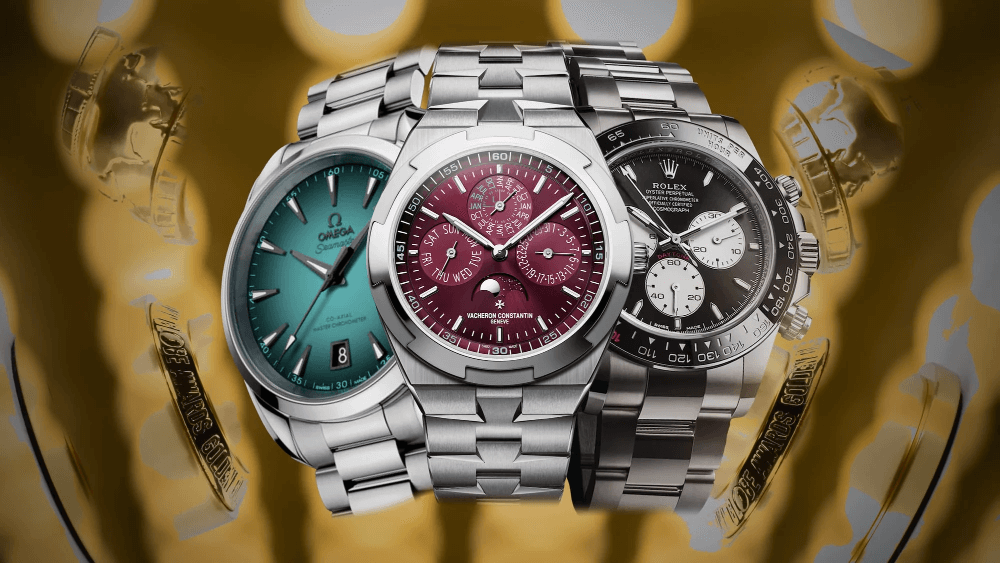
Rolex responded with a broad lineup of anniversary models, including updated Oyster Perpetual references, refined Datejust and Day-Date models, and a notable Cosmograph Daytona in Rolesium. Many releases emphasized subtle refinement rather than radical redesign. However, that conservative approach aligned perfectly with Rolex’s long-term strategy.
Additionally, Rolex continued focusing heavily on case refinement, movement precision, and incremental improvements. While some collectors hoped for more dramatic innovation, the brand reinforced its reputation for consistency and timeless design.
Importantly, Rolex also leaned heavily into heritage storytelling throughout the exhibition. Therefore, the anniversary celebration felt cohesive rather than purely commercial.
Patek Philippe Balanced Heritage And Modern Luxury
Patek Philippe arrived in Geneva with one of the strongest lineups of the year. Much of the attention focused on the Nautilus collection, which celebrated its 50th anniversary with several commemorative references.
However, Patek did not rely solely on nostalgia. The brand also showcased highly complex pieces, including astronomical complications and perpetual calendar models, reinforcing its position at the top of traditional Swiss watchmaking.
One particularly notable trend was cleaner, more restrained dial layouts. Instead of pushing oversized designs or excessive complexity, Patek emphasized elegance and wearability.
Moreover, collectors responded positively to the balance between heritage-inspired releases and technical sophistication. As a result, Patek Philippe remained one of the most talked-about brands throughout the week.
Cartier Continued Its Creative Renaissance
Cartier has quietly become one of the most exciting brands in modern watchmaking, and Watches & Wonders 2026 reinforced that momentum. The maison expanded several iconic collections while introducing fresh interpretations of historic designs.
The Santos, Tank, and Roadster families all received attention during the event. However, Cartier’s greatest strength once again came from design consistency rather than mechanical spectacle.
Additionally, Cartier leaned further into jewelry-inspired watchmaking. Gem-setting, sculptural case shapes, and artistic dials played a major role in this year’s collection strategy.
Importantly, Cartier also demonstrated that dress watches continue to matter in an industry increasingly dominated by sports models.
Jaeger-LeCoultre Focused On Technical Refinement
Jaeger-LeCoultre delivered one of the most technically impressive exhibitions of the event. The brand introduced several new Master Control Chronometre references alongside highly complicated limited editions.
One standout model featured a perpetual calendar housed in an ultra-thin case measuring just over 9mm thick. This release highlighted Jaeger-LeCoultre’s longstanding mastery of movement engineering and compact complications.
Additionally, the brand expanded its Reverso lineup with artistic enamel and engraving work that blended mechanical sophistication with decorative craftsmanship.
Rather than chasing trends, Jaeger-LeCoultre focused heavily on refinement, finishing quality, and movement architecture. Consequently, many enthusiasts considered the brand one of the event’s strongest technical performers.
Independent Brands Continued Gaining Momentum

Although major luxury groups dominated floor space, independent brands generated enormous excitement among collectors and enthusiasts.
Brands such as Ressence, Parmigiani Fleurier, H. Moser & Cie, and Trilobe delivered some of the most original concepts of the event. Meanwhile, newer entrants such as Bianchet attracted attention through lightweight tourbillon engineering and unconventional materials.
This growing enthusiasm for independents reflects a broader shift within collecting culture. Increasingly, collectors seek originality, lower production volumes, and distinct design language rather than purely mainstream prestige.
Consequently, Watches & Wonders 2026 demonstrated that the independent watchmaking scene continues to grow stronger every year.
Vintage-Inspired Design Remained A Dominant Trend
Vintage-inspired watches continued dominating the industry throughout Watches & Wonders 2026. However, brands approached heritage design more thoughtfully this year.
Rather than simply recreating historical models, many brands blended vintage proportions and aesthetics with modern materials and improved movements. Tudor’s new Monarch, for example, combined early Rolex-inspired styling with contemporary execution.
Additionally, smaller case sizes appeared far more frequently than oversized sports watches. Many brands introduced watches in the 36mm to 39mm range, reflecting changing collector preferences.
Warm dial tones, brushed surfaces, domed crystals, and integrated bracelets also remained highly visible across multiple collections.
Therefore, vintage inspiration continues shaping modern watchmaking design language.
Jewelry, Watches, and Artistic Craftsmanship Returned Strongly

Another major theme involved the resurgence of jewelry watches and artistic craftsmanship. Brands such as Piaget, Van Cleef & Arpels, Chanel, and Bulgari emphasized gem-setting, ornamental stone dials, and sculptural designs throughout the event.
This shift reflects growing demand for watches that blur the boundary between jewelry and horology.
Piaget’s revival of its 1960s-inspired sautoir designs stood out particularly strongly. Meanwhile, Van Cleef & Arpels continued exploring poetic complications and decorative storytelling through enamel and gemstone work.
Consequently, Watches & Wonders 2026 demonstrated that emotional design and artistry remain just as important as technical complexity.
Material Innovation Continued Advancing
Material experimentation remained another major focus this year. Titanium, carbon composites, tantalum, and advanced ceramics appeared throughout the exhibition.
Brands increasingly emphasized lightweight construction and wearability alongside visual innovation. Moreover, many watches combined traditional finishing techniques with modern materials in ways that felt more mature and refined than previous years.
Several brands also highlighted sustainability initiatives, recycled materials, and ethical sourcing practices.
Therefore, technical innovation in 2026 extended beyond movements alone.
The Industry Appears Increasingly Focused On Exclusivity
One broader trend became impossible to ignore throughout the event: luxury watchmaking continues moving further toward exclusivity.
Many brands emphasized limited production, precious metals, and high-complication watches. At the same time, pricing across the industry continued climbing significantly.
Consequently, some collectors expressed concern about accessibility and long-term market sustainability. However, brands clearly believe demand for ultra-luxury watches remains strong despite broader economic uncertainty.
This strategy may strengthen prestige in the short term, although it could reshape collector behavior over the coming years.

Final Thoughts
Watches & Wonders Geneva 2026 delivered one of the most balanced and compelling editions of the event in recent years. Heritage brands refined their core collections carefully, independent watchmakers pushed creative boundaries, and the industry continued exploring new materials and artistic craftsmanship.
Rolex reinforced its dominance through the Oyster centenary celebration, while Patek Philippe, Cartier, and Jaeger-LeCoultre delivered some of the strongest releases of the year. At the same time, independent brands continued proving that innovation often comes from smaller ateliers willing to take creative risks.
Perhaps most importantly, Watches & Wonders 2026 revealed an industry that increasingly values refinement over excess. Smaller case sizes, elegant proportions, thoughtful heritage inspiration, and improved wearability appeared across nearly every major collection.
Ultimately, the event confirmed that modern watchmaking remains deeply connected to both tradition and innovation. While trends evolve, the passion for mechanical craftsmanship continues to drive the industry forward.