Watch restoration requires far more than simple polishing. Skilled watchmakers rely on carefully selected abrasives, compounds, and finishing techniques to restore surfaces while preserving the watch’s original design. Therefore, understanding how these materials work becomes essential for anyone involved in watch repair or restoration.
Abrasives remove scratches, compounds refine the surface, and finishing techniques restore the case’s original texture or polish. However, improper use of these materials can easily damage a watch by removing too much metal or altering the case geometry. Consequently, watch restoration demands precision and patience at every stage.
This guide explains how abrasive grits, polishing compounds, and finishing methods work together during watch restoration. In addition, it outlines the progression that professional watchmakers follow when restoring watch cases and bracelets.
Why Surface Finishing Matters In Watch Restoration
Watch cases and bracelets contain a variety of surface finishes. Some areas feature mirror polishing, while others show linear brushing or satin finishing. These finishes do more than improve appearance. They also define the dwatch’s e-signature language
Therefore, proper restoration must preserve the original finishing style. When refinishing removes sharp edges or transitions between brushed and polished surfaces, the watch loses its original character. As a result, collectors and watchmakers often emphasize controlled material removal rather than aggressive polishing.
Moreover, every finishing step builds on the previous one. If early abrasive work creates uneven surfaces, later polishing steps cannot fully correct those mistakes. Consequently, successful restoration depends on careful progression of abrasives from coarse to fine.
What Abrasive Grit Means
Abrasive grit refers to the size of the abrasive particles used to remove material from a surface. In general, lower grit numbers indicate larger particles that remove material more aggressively. Meanwhile, higher grit numbers represent finer abrasives that refine the surface.
For example:
| Grit Range | Typical Use In Watch Restoration |
|---|---|
| 240–400 | Removing deep scratches |
| 600–800 | Smoothing surfaces after coarse work |
| 1000–1500 | Refining the surface before polishing |
| 2000–3000 | Pre-polishing surface preparation |
Therefore, restoration usually starts with the lowest grit required to remove the damage. However, experienced watchmakers avoid overly coarse abrasives whenever possible. Excessively aggressive abrasives remove metal quickly and increase the risk of altering case shapes.
Instead, professionals often begin with moderate grits and progress gradually toward finer abrasives.
Abrasive Progression In Watch Case Restoration
Proper restoration relies on a gradual progression of abrasives. Each stage removes the scratches left by the previous grit. Therefore, skipping steps usually produces uneven results.
A typical abrasive progression might include the following stages:
- Initial scratch removal using moderate grit abrasives
- Surface refinement using progressively finer grits
- Pre-polishing preparation with very fine abrasives
- Final polishing with compounds
Each step reduces scratch depth and improves surface smoothness. As a result, the polishing compounds can create a uniform finish without leaving visible marks.
Additionally, consistent sanding direction helps maintain the intended case finish. For example, brushed surfaces require linear abrasion, while polished surfaces require uniform smoothing across the entire area.
Types Of Abrasives Used In Watch Restoration

Watchmakers use several types of abrasives during restoration. Each type serves a specific purpose depending on the surface and finishing technique.
Abrasive Papers And Films
Abrasive papers provide controlled surface leveling and scratch removal. Watchmakers often use wet sanding methods with fine abrasive papers because water helps reduce heat and prevents clogging.
Additionally, abrasive films offer more uniform particle distribution. Consequently, they produce consistent scratch patterns that polish out more easily during later stages.
Abrasive Wheels
Abrasive wheels help restore surfaces quickly when mounted on polishing machines or rotary tools. However, watchmakers must carefully control pressure and speed. Otherwise, the wheels can remove too much material.
Therefore, professionals typically reserve abrasive wheels for heavier restoration tasks.
Fiber And Scotch-Type Abrasives
Fiber-based abrasives help create brushed finishes on watch cases and bracelets. These abrasives generate linear scratch patterns that replicate the satin surfaces often found on watch cases.
As a result, they play an important role when recreating factory brushing patterns.
Understanding Polishing Compounds
Once abrasives smooth the surface, polishing compounds further refine it. Polishing compounds contain extremely fine abrasive particles suspended in wax or grease carriers.
Although compounds remove very small amounts of material, they dramatically improve surface appearance.
Common polishing compounds used in watch restoration include:
| Compound Type | Typical Use |
|---|---|
| Tripoli | Initial polishing after sanding |
| White diamond | Fine polishing for stainless steel |
| Rouge | Final mirror polishing |
Each compound works best when paired with the correct polishing wheel. Therefore, watchmakers often dedicate separate wheels to each compound to prevent contamination.
Additionally, polishing compounds require controlled pressure. Excessive pressure can round sharp edges and blur case lines.
Polishing Wheels And Their Roles
Polishing compounds require polishing wheels to transfer the compound to the surface effectively.
Different wheel materials produce different finishing results.
Cotton Polishing Wheels
Cotton wheels create smooth polishing action and distribute compounds evenly. Therefore, they work well for general case polishing.
Felt Wheels
Felt wheels provide firmer polishing surfaces. Consequently, watchmakers often use them for precise polishing in small areas or around tight case edges.
Muslin Wheels
Muslin wheels deliver a softer polishing action. As a result, they work well during the final stages of finishing, where minimal material removal is required.
Selecting the correct wheel ensures that the compound performs as intended.
Finishing Techniques Used In Watch Restoration
After abrasives and compounds prepare the surface, finishing techniques recreate the watch’s original appearance.
Mirror Polishing
Mirror polishing produces a reflective surface with no visible scratches. Watchmakers achieve this finish by refining the surface with very fine abrasives and then polishing with fine compounds.
However, mirror polishing requires careful control because excessive polishing can soften case edges.
Satin Finishing
Satin finishing creates a soft matte appearance with subtle directional texture. Watchmakers achieve this effect using abrasive pads or brushing tools applied in a consistent direction.
Consistency remains critical because uneven brushing becomes immediately visible.
Linear Brushing
Linear brushing produces straight grain patterns across the surface. This technique appears frequently on watch lugs, bracelets, and bezels.
Watchmakers use abrasive sticks or pads to maintain uniform grain lines. Additionally, guides or fixtures often help keep the brushing perfectly straight.
Mixed Finishing
Many watches combine polished and brushed surfaces. Therefore, restoration often requires masking techniques to protect one finish while restoring another.
Watchmakers frequently use tape or protective shields to maintain crisp transitions between finishes.
Maintaining Case Geometry During Restoration
Although polishing improves appearance, excessive polishing can destroy case geometry. Rounded edges, softened bevels, and uneven lug shapes often result from uncontrolled restoration.
Therefore, professionals focus on preserving the original case structure. They remove only the minimum material necessary to eliminate scratches.
Additionally, experienced restorers constantly inspect the watch during the process. Frequent inspection helps detect problems before they become irreversible.
Common Mistakes In Watch Surface Restoration
Beginners often make several mistakes when working with abrasives and compounds.
These include:
- Starting with overly coarse abrasives
- Skipping abrasive progression steps
- Applying excessive pressure during polishing
- Using the same polishing wheel for multiple compounds
- Failing to preserve the brushing direction
Each of these mistakes can permanently alter the watch’s appearance. Therefore, proper technique and patience remain essential.
Professional Tools Used For Watch Finishing
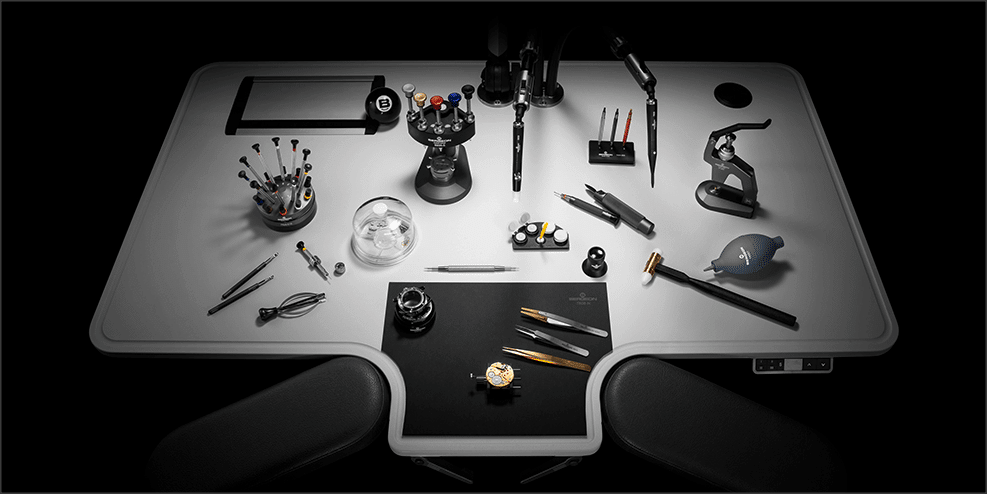
Watchmakers rely on specialized tools to perform controlled restoration work. Common tools include:
- Variable-speed polishing machines
- Rotary tools with polishing attachments
- Precision abrasive sticks
- Brushing blocks
- Masking fixtures
These tools allow precise finishing while minimizing the risk of over-polishing.
However, tools alone cannot guarantee good results. Skill and experience remain equally important.

Final Thoughts
Watch restoration blends craftsmanship with careful control of materials. Abrasive grits remove scratches, polishing compounds refine surfaces, and finishing techniques recreate the watch’s original appearance.
However, each stage depends on careful progression and precise technique. Therefore, successful restoration requires patience and attention to detail.
By understanding how abrasives, compounds, and finishing methods work together, watchmakers and enthusiasts can restore watches more safely and preserve their design integrity. Ultimately, proper finishing protects both the aesthetic value and historical character of the timepiece.