
A watchmaker loupe looks like a small tool. However, it changes everything about how you work. In watchmaking, most parts are too small to be judged with the naked eye. Therefore, magnification becomes essential for accuracy, safety, and confidence.
Yet choosing a loupe can feel confusing. You will see 2.5x, 3x, 5x, 10x, and even higher. Moreover, you will hear conflicting advice. Some watchmakers say “use 3x only.” Others use 10x daily. So what is correct?
The answer depends on the task, comfort, and optical quality. Therefore, this guide explains how loupes work, what magnification means, and how to choose the right power for each job.
By the end, you will know what to buy, what to avoid, and how to build a loupe setup that supports real watchmaking.
Why Magnification Matters In Watchmaking
Watchmaking involves precision work. Therefore, small errors turn into big problems.
A misplaced oiler can flood a jewel. A scratched pivot can cause poor amplitude. A bent hairspring can ruin timing. Consequently, seeing clearly is not optional. It is part of the craft.
Magnification also reduces strain. When you see details clearly, your hands relax. As a result, your movements become more controlled.
So, the right loupe does not just improve vision. It improves technique.
Understanding Loupe Magnification
Magnification describes how much larger the object appears. Therefore, a 5x loupe makes a part look five times larger than it does to your eyes.
However, more magnification does not always mean better. Higher magnification reduces your field of view. It also reduces the depth of field. Consequently, the image becomes more sensitive to movement.
This trade-off matters in watchmaking because you work with both hands. Therefore, stability and comfort matter as much as clarity.
So, instead of chasing maximum power, you should match magnification to the task at hand.
The Biggest Mistake Beginners Make
Many beginners buy a high-power loupe immediately. For example, they choose 10x because it seems “professional.” However, this often causes frustration.
At 10x, the field of view becomes narrow. Therefore, you lose spatial awareness. The depth of field becomes shallow. As a result, parts go in and out of focus constantly.
This can lead to headaches, neck tension, and poor posture. Moreover, it slows your work because you fight the optics instead of focusing on the task.
So, the biggest mistake is choosing magnification before learning your working distance and comfort.
The Most Common Watchmaking Loupe Powers
Most watchmakers rely on a few magnification ranges. Therefore, understanding these ranges helps you make informed choices.
2.5x To 3x: The “General Work” Range
This range offers a wide field of view and good depth-of-field control. Therefore, it feels stable.
Many professionals use 2.5x or 3x for general assembly, disassembly, and inspection. You can see enough detail while still maintaining awareness of the broader movement.
This range also helps with posture. Because you do not need to bring the movement extremely close, your neck stays more neutral.
If you want one loupe to start with, 3x is often the safest choice.
4x To 5x: The “Detail Control” Range
5x is extremely common in watchmaking. Therefore, many training programs recommend it.
At 5x, you can inspect pivots, jewels, and screw slots more clearly. You can also perform lubrication tasks with greater confidence.
However, you sacrifice some field of view. Consequently, it may feel more demanding during long sessions.
Many watchmakers keep both a 3x and a 5x loupe. Therefore, they can switch tasks as needed.
7x To 10x: The “Inspection And Problem-Solving” Range
This range works best for inspection rather than continuous work. Therefore, it becomes useful for diagnosis.
At 10x, you can check for burrs, dust, cracks in the jewels, and very fine surface damage. However, the optical challenges increase significantly.
This magnification requires steady hands and a stable bench setup. Consequently, it is best used for short periods.
So, many professionals treat 10x as a secondary loupe, not their main one.
15x And Above: The “Specialty” Range
High magnification belongs in specific situations. Therefore, it is not a purchase for beginners.
At 15x or 20x, the depth of field becomes extremely small. The image can also become dimmer, depending on lens quality. Consequently, many watchmakers use these magnifications only with strong bench lighting or microscopes.
For inspection of hairline cracks, surface corrosion, or very fine defects, these powers can help. However, they are not practical for daily work.
Magnification Vs Optical Quality: The Hidden Factor
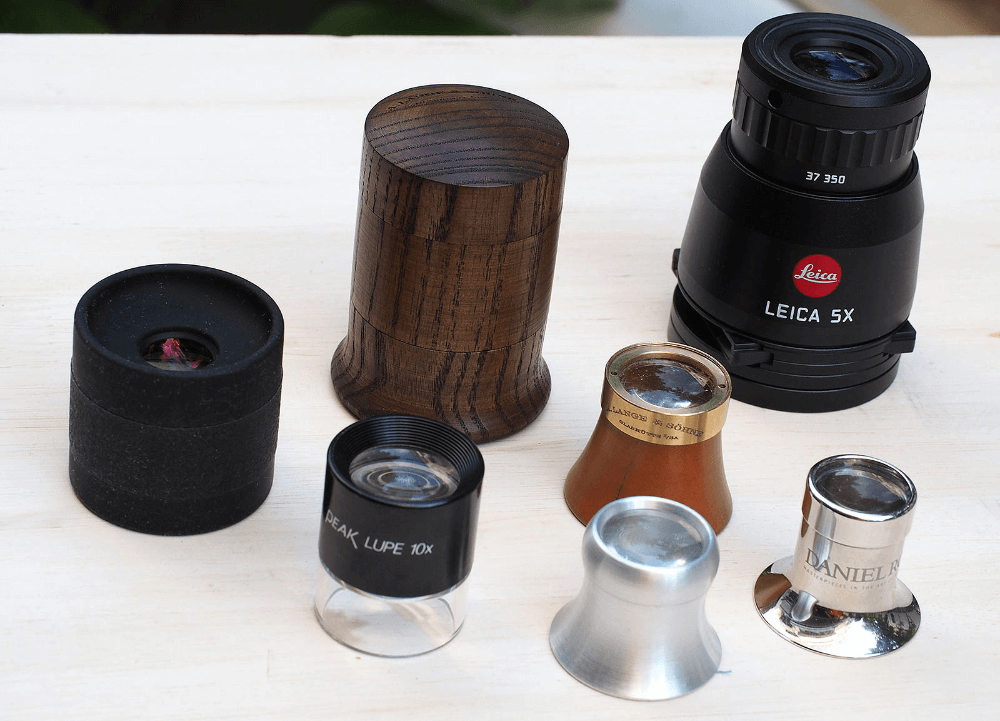
Magnification numbers matter. However, optical quality matters more.
A cheap 10x loupe may show more blur than a high-quality 5x loupe. Therefore, you may think you need more magnification when you really need better glass.
Quality loupes use better lens coatings, sharper lens geometry, and stronger clarity edge-to-edge. Consequently, they reduce distortion and eye strain.
So, when comparing loupes, do not judge only by power. Judge by clarity, comfort, and distortion.
The Importance Of Working Distance
A loupe changes how close you must hold your work. Therefore, working distance matters a lot.
Higher magnification often forces a closer working distance. Consequently, you may bend forward more, which harms your posture over time.
A good loupe allows a comfortable distance while still providing clear detail. Therefore, your neck and shoulders stay relaxed.
So, if you do long sessions, prioritize a loupe that supports healthy posture, even if it means choosing lower magnification.
How Lighting Changes Everything
Even the best loupe struggles without light. Therefore, lighting is a major factor in magnification choice.
Higher magnification needs more light. Otherwise, the image appears dim and grainy.
For example, a 10x loupe in poor lighting can feel unusable. However, in strong, focused bench lighting, it becomes sharp and enjoyable.
Therefore, if you plan to use higher magnification, upgrade your bench lighting first. This step improves every task, not just inspection.
Watchmaker Loupe Types And What They Mean For Comfort
Not all loupes sit on the eye the same way. Therefore, comfort depends on design.
Eye Loupes (Traditional Watchmaker Loupes)
Traditional eye loupes sit in the eye socket. They offer stable alignment. Therefore, they remain popular.
However, they require practice. If the loupe does not fit your eye well, strain can appear. Consequently, some users prefer strap loupes.
Strap Loupes
Strap loupes attach around the head. Therefore, they reduce pressure on the eye.
They also offer stability, especially for long sessions. However, some users feel that they reduce precision because the loupe sits slightly further from the eye.
Clip-On Loupes And Glasses Loupes
These attach to glasses. Therefore, they allow quick use.
However, alignment can shift easily. Consequently, they may not suit delicate watch work.
These options work better for inspection than assembly.
A Practical Loupe Setup For Watchmakers
Most watchmakers eventually use more than one loupe. Therefore, a “set” approach works best.
A common professional combination looks like this:
- 3x loupe for general work and movement handling
- 5x loupe for lubrication, jewel work, and careful assembly
- 10x loupe for inspection and troubleshooting
This system avoids overreliance on any one magnification. Moreover, it supports comfort over long sessions.
How To Choose The Right Magnification For Your Needs
Here is a simple decision method.
If you are new, start with 3x. It teaches you stability, posture, and rhythm. Therefore, it builds good habits.
If you already have steady hands and want more control, add a 5x. It helps with precise tasks and detail.
If you troubleshoot often or restore vintage watches, add a 10x for inspection. Therefore, you can quickly identify small defects.
If you work with extremely small components, consider a microscope rather than extreme magnification. This approach improves comfort and depth-of-field control.
Final Thoughts
Choosing the right watchmaker loupe is not about buying the loupe with the highest magnification. Instead, it is about choosing the right tool for the right task.
Lower magnification improves comfort and stability. Higher magnification improves inspection and diagnosis. Therefore, most watchmakers use a small range of loupes rather than one “perfect” loupe.
Start simple. Upgrade with purpose. And always prioritize clarity and comfort over numbers.
Once your loupe fits your eye and your workflow, your entire craft improves. Consequently, every screw, jewel, and pivot becomes easier to handle.


