Charcoal plays a quiet but essential role in traditional soldering. Yet, many beginners overlook it. Therefore, understanding charcoal for soldering can immediately improve results.
In simple terms, a soldering charcoal is a heat-resistant block made from natural charcoal. Jewelers and watchmakers place metal pieces on it during soldering. As a result, heat control improves, and oxidation decreases.
This article explains what charcoal for soldering is, how it works, and when to use it. Moreover, it helps you choose the right setup for clean and controlled soldering.
What charcoal for soldering actually is
Charcoal for soldering is not the same as cooking charcoal. Instead, it is specially prepared natural charcoal, often made from hardwood. It has a porous structure and high heat resistance.
Because of this structure, charcoal reflects heat toward the workpiece. Therefore, solder flows more evenly and efficiently.
At the same time, charcoal absorbs impurities and gases. As a result, oxidation reduces during heating.
In jewelry and watchmaking workshops, charcoal blocks have been used for generations. Even today, many professionals rely on them.
Why is charcoal used for soldering
Charcoal offers several advantages that modern soldering surfaces cannot fully replace. Therefore, it remains relevant despite new materials.
First, charcoal reflects heat. When you direct a flame at metal placed on charcoal, the heat bounces back upward. Consequently, solder reaches melting temperature faster.
Second, charcoal reduces oxidation. As it heats, charcoal consumes oxygen around the work area. Therefore, fire scale and surface discoloration decrease.
Third, charcoal supports delicate work. Its soft surface allows pins or wires to hold parts in place. As a result, complex assemblies become easier to manage.
Because of these benefits, charcoal excels in precision soldering.
How charcoal affects solder flow
Solder flow depends on temperature control and surface cleanliness. Charcoal improves both.
Because charcoal reflects heat evenly, the entire joint warms consistently. Therefore, solder flows toward the seam instead of balling up.
At the same time, reduced oxygen limits surface contamination. As a result, solder wets the metal more effectively.
This combination explains why charcoal remains popular for fine jewelry soldering.
Types of charcoal used for soldering
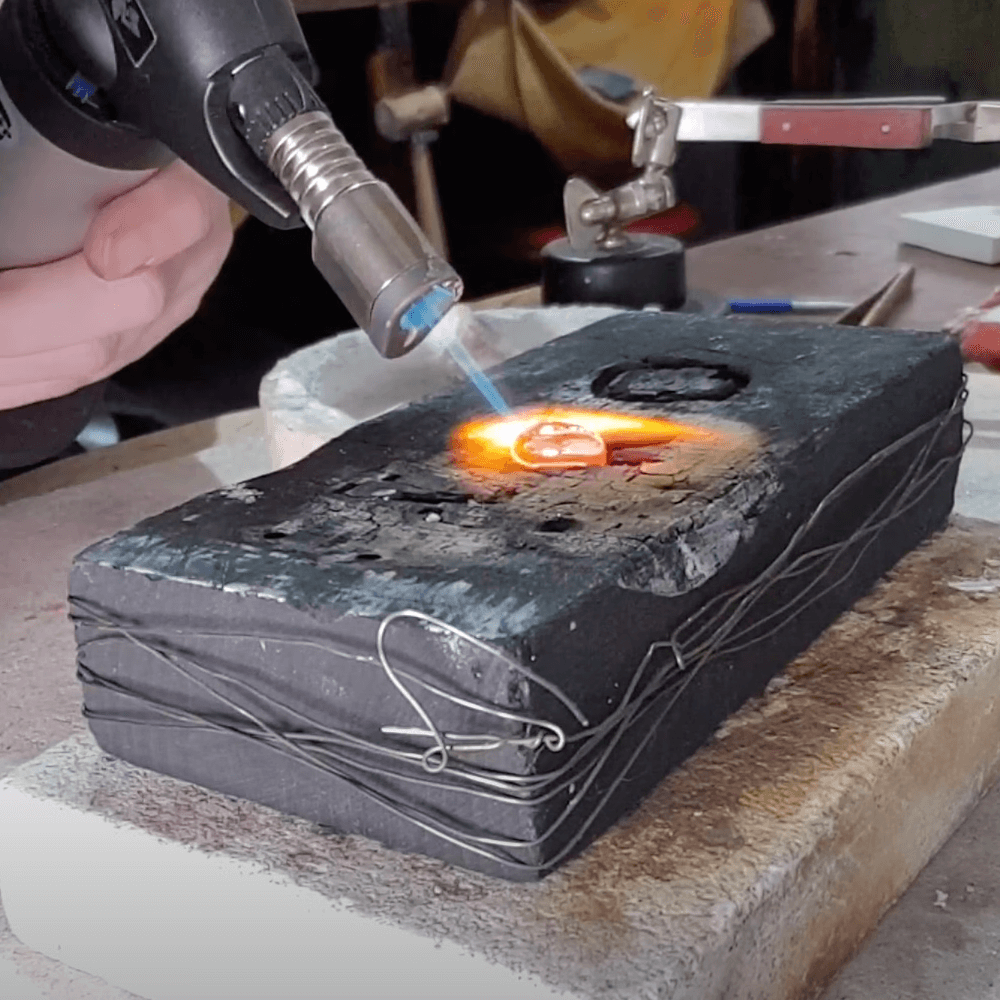
Not all charcoal blocks are identical. Therefore, choosing the right type matters.
Natural charcoal blocks
Natural charcoal blocks come from compressed or shaped hardwood charcoal. They are lightweight and porous.
They work well for most jewelry soldering tasks. Moreover, they allow easy pin placement.
You can find natural charcoal blocks designed specifically for soldering, along with suitable holders, in dedicated jewelry tool collections. These blocks offer consistent density and reliable heat performance.
Charcoal with holders
Because charcoal is fragile, many jewelers use holders. These holders keep the block stable and protect the bench.
A charcoal block with a dedicated holder improves safety and control. Therefore, it is suitable for regular workshop use.
Charcoal plates and support systems
Some setups use charcoal plates combined with metal supports. These systems elevate the charcoal and improve airflow.
For example, a holding plate designed for natural charcoal blocks keeps the charcoal steady while allowing heat to dissipate safely underneath. As a result, soldering becomes more controlled and comfortable.
Charcoal vs other soldering surfaces
Charcoal is not the only available soldering surface. However, it offers unique properties.
Charcoal vs soldering bricks
Soldering bricks resist heat well. However, they reflect less heat into space. Charcoal reflects heat more efficiently. Therefore, it often requires less flame intensity.
Charcoal vs ceramic boards
Ceramic boards last longer. However, they do not reduce oxidation. Charcoal actively limits oxygen exposure. Consequently, it helps prevent fire scale.
Charcoal vs magnesium blocks
Magnesium blocks reflect heat strongly. However, they produce bright glare and dust. Charcoal offers a softer working experience. Therefore, many jewelers prefer it for fine work.
When charcoal is the best choice
Charcoal works best in specific scenarios.
It excels when soldering small components. It also suits delicate metals like silver and gold.
Moreover, charcoal helps achieve clean joints with minimal finishing. Therefore, it is suitable for hand-fabricated jewelry and restoration work.
However, charcoal may not suit large industrial soldering jobs. In those cases, heavier refractory surfaces perform better.
How to use charcoal for soldering
Using charcoal correctly improves both results and safety.
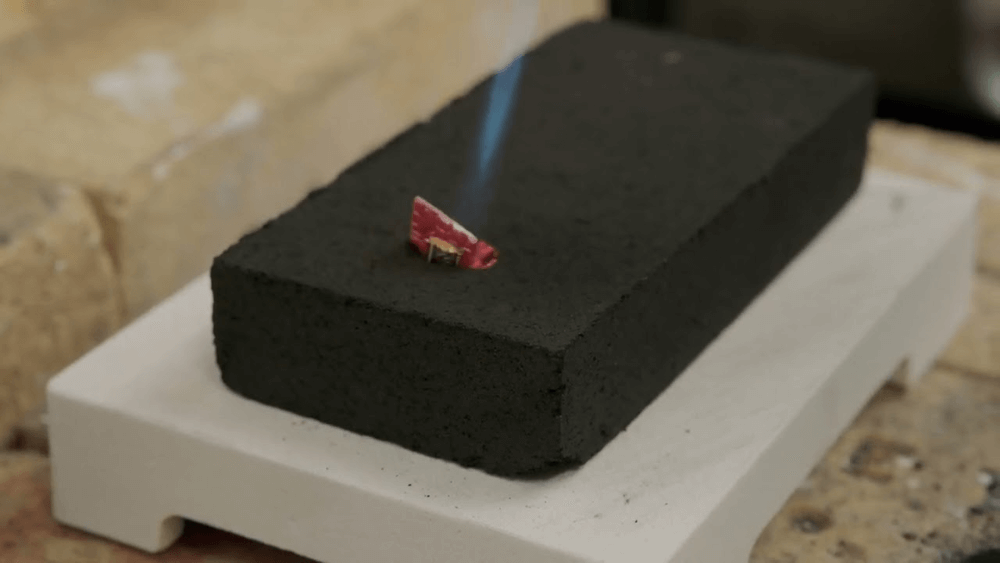
First, place the charcoal block in a stable holder or plate. This prevents movement during heating.
Next, position your metal pieces directly on the charcoal. If needed, push small pins or wires into the surface to secure parts.
Then, apply flux as usual. After that, heat gradually.
Because charcoal reflects heat, avoid overheating. Instead, watch the solder carefully and remove the flame once it flows.
Finally, allow the charcoal to cool naturally. Sudden cooling may crack it.
Caring for charcoal blocks
Charcoal requires basic care.
Over time, solder and flux residue build up. Therefore, lightly scrape the surface when needed.
Also, rotate the block periodically. This spreads wear evenly. Eventually, charcoal blocks wear out. When deep grooves appear, replacement makes sense.
Because charcoal is affordable, replacing it often improves consistency.
Common mistakes when using charcoal
Beginners often misuse charcoal. However, these mistakes are easy to avoid.
One mistake involves excessive flame. Because charcoal reflects heat, too much flame can quickly overheat metal. Another mistake involves unstable placement. Without a holder, charcoal may shift unexpectedly.
Finally, some users soak charcoal in water. This weakens the structure and causes cracking. Dry use works best.
Charcoal in watchmaking applications
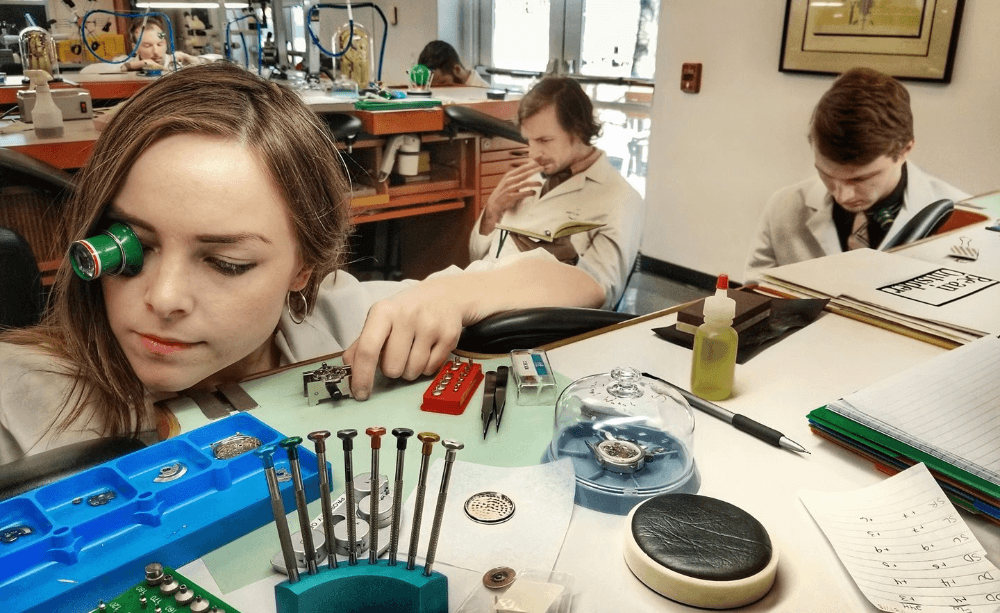
Watchmakers also use charcoal. It supports the precise soldering of small steel and brass parts.
Because watch components are tiny, heat control matters greatly. Charcoal helps limit thermal spread.
Therefore, it suits tasks such as hand-fabrication of clasps or vintage restoration work.
Is charcoal still relevant today?
Despite modern materials, charcoal remains relevant.
It offers simplicity, control, and tradition. Moreover, it works without electricity or a complex setup.
Therefore, many professionals keep charcoal on their bench even when other tools are available.
Choosing the right charcoal setup
When selecting charcoal, consider your workflow.
If you solder frequently, choose a charcoal block with a holder. This improves stability. If you work on delicate pieces, select fine-grain natural charcoal. It allows better pin placement.
If bench safety is a concern, use a dedicated holding plate designed for charcoal blocks. This reduces heat transfer to your work surface.
Matching charcoal type to the task improves results.
Final thoughts
Charcoal for soldering may look simple. However, its benefits run deep.
It reflects heat efficiently. It reduces oxidation naturally. It supports delicate assemblies with ease. Therefore, charcoal remains a trusted tool for jewelers and watchmakers alike.
By understanding how charcoal works and how to use it correctly, you gain better solder joints and cleaner results. Sometimes, the oldest tools still offer the smartest solutions.