If you have ever shopped for a mechanical watch, you have likely seen the term “ETA.” Therefore, you may have wondered what it really means. Is ETA a brand? Is it a quality rating? Or does it refer to something hidden inside the case?
In watchmaking, ETA refers to a Swiss manufacturer of watch movements. In other words, ETA builds the engine that powers the watch. Because the movement controls accuracy, reliability, and service life, ETA matters far more than many buyers realize.
This guide explains what ETA is, why it became so important, and how it affects the watch you wear today.
What does ETA mean in watches?
ETA stands for ETA SA Manufacture Horlogère Suisse. It is one of the most influential movement makers in Swiss watch history.
In simple terms, ETA designs and manufactures watch movements. Brands then install those movements inside their own watches. As a result, two watches from different brands can share the same internal mechanics while looking completely different on the outside.
It is also important to clear up confusion. In everyday language, ETA often means “estimated time of arrival.” However, in watches, ETA almost always refers to the movement manufacturer.
Why the movement matters so much
A watch is more than a case and a dial. Therefore, the movement determines how the watch performs over time.
Here is why the movement matters:
- It controls timekeeping accuracy
- It affects durability and shock resistance
- It determines service intervals and costs
- It influences resale value and long-term ownership
Because ETA movements appear in thousands of models, watchmakers around the world know how to service them. Consequently, ETA earned a reputation for practicality and dependability.
A brief history of ETA
ETA’s story connects directly to the industrialization of Swiss watchmaking.
In the past, many Swiss factories specialized in producing ébauches, or unfinished movement blanks. Over time, consolidation reduced fragmentation. Eventually, ETA emerged as a unified manufacturer supplying complete movements.
Later, ETA became part of the Swatch Group. As a result, it gained massive production scale and technical resources. This position allowed ETA to standardize designs and refine them over decades.
However, this dominance also created tension. Many independent brands relied heavily on ETA. When supply policies changed, the entire industry felt the impact. Therefore, modern alternatives began to grow.
What types of movements does ETA make?
ETA produces both mechanical and quartz movements. Each type serves a different kind of watch wearer.
Mechanical ETA movements
Mechanical movements use springs, gears, and regulated oscillation. They do not rely on batteries. Instead, they draw energy from a mainspring, either through hand-winding or automatic winding.
ETA mechanical movements are famous for robustness and consistency. As a result, they appear across entry-level luxury and high-end watches alike.
Some of the most well-known ETA calibres include:
ETA 2824-2
The ETA 2824-2 is one of the most widely used automatic movements ever made. It beats at 28,800 vibrations per hour and typically offers a power reserve of around 38 hours.
Because of its simple layout, watchmakers find it easy to service. Therefore, many brands relied on it for decades.
ETA 2892-A2
The ETA 2892-A2 is thinner and more refined than the 2824-2. For that reason, brands often use it in slimmer or more premium watches.
It also serves as a base for many modified movements. Consequently, you will find it under ‘elaborate finishing’ and ‘custom rotors’.
Valjoux / ETA 7750
The ETA 7750 is a legendary automatic chronograph movement. It uses a cam-lever system and runs at 28,800 vibrations per hour.
Although it is thick, it is extremely durable. Therefore, many tool watches and pilot chronographs rely on it.
Quartz ETA movements
ETA also manufactures quartz movements. These use a battery and a quartz crystal oscillator to regulate time.
Quartz movements offer higher accuracy and lower maintenance. As a result, ETA quartz calibres appear in many Swiss-made watches, from affordable models to luxury pieces.
Although enthusiasts often focus on mechanical movements, quartz ETA calibres still represent reliable Swiss engineering.
What “ETA-based” really means
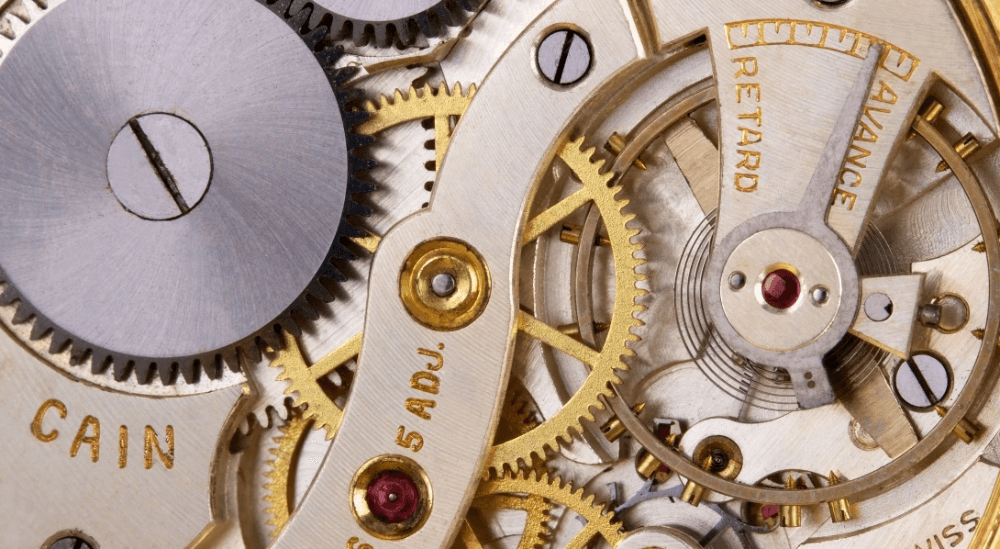
Many brands do not use an untouched ETA movement. Instead, they build upon it.
When a brand says a watch is “ETA-based,” it may mean several things:
- The brand installs the movement with minimal changes
- The brand modifies components such as the rotor or balance
- The brand adjusts the regulation for tighter accuracy
- The brand adds decorative finishing
Therefore, not all ETA watches feel the same. One brand may deliver basic performance, while another creates a highly refined experience using the same base calibre.
Does ETA mean good quality?
In most cases, yes. However, context always matters.
ETA movements benefit from decades of refinement. Moreover, their widespread use exposed design flaws early, prompting improvements over time.
Still, quality depends on several factors:
- The specific calibre
- The level of regulation
- Assembly quality
- Ongoing maintenance
So, while ETA provides a strong foundation, the final result depends on the brand’s execution.
ETA and chronometer certification
Some ETA movements receive COSC chronometer certification. This certification confirms that the movement meets strict accuracy standards under controlled testing.
However, not every ETA watch aims for certification. Many perform extremely well without it. Therefore, COSC should be seen as a bonus rather than a requirement.
Why ETA movements became harder to find
For many years, ETA supplied movements to most of the Swiss industry. Eventually, supply limitations changed that reality.
Regulatory agreements and business decisions reduced the number of ETA movements sold to third-party brands. As a result, brands searched for alternatives.
This shift explains why modern watches often use movements that resemble ETA designs but carry different names.
Common alternatives to ETA today
ETA’s influence remains strong, even when it is absent.
Sellita
Sellita is the most common ETA alternative. Its movements closely follow classic ETA architecture.
For example, the Sellita SW200-1 follows the same design logic as the ETA 2824-2. As a result, brands could transition without major redesigns.
Other movement suppliers
Depending on price and positioning, brands may also use:
- Soprod
- STP
- Miyota
- Seiko
Each offers different strengths. Therefore, ETA is no longer the only safe choice.
How to tell if a watch actually uses ETA
Marketing language can be vague. So, buyers should look deeper.
Here is a simple approach:
- Check the calibre number
- Read the technical specifications
- Look for independent reviews
- Ask the brand directly
If a brand clearly lists an ETA calibre, transparency is usually high.
When choosing ETA makes sense
ETA movements suit buyers who value long-term ownership.
Choose ETA if you want:
- Easy servicing worldwide
- Proven reliability
- Predictable maintenance costs
- Strong resale confidence
However, never buy a watch only for the movement. Instead, evaluate the entire package.
Frequently asked questions
- Is ETA a watch brand?
No. ETA manufactures movements, not complete watches.
- Are ETA movements in-house?
For most brands, no. However, Swatch Group brands may treat certain ETA variants as internal solutions.
- Is ETA better than Sellita?
Not necessarily. Both offer reliable designs. Performance depends on regulation and quality control.
- What is the most famous ETA movement?
The ETA 2824-2 and the Valjoux 7750 remain the most iconic.
Final thoughts
ETA shaped modern Swiss watchmaking. Even today, its designs influence the entire industry.
While the market now offers many alternatives, ETA still represents reliability, familiarity, and proven engineering. Therefore, understanding ETA helps you make smarter buying decisions.
A watch lasts longer than trends. So, knowing what powers truly matter.