
Watchmaking is all about precision. You can’t adjust a hairspring or oil a jewel if you can’t see what you’re doing. That’s why a watchmaker loupe is one of the first—and most important—tools in your kit.
But owning it is one thing. Using it correctly is another. Whether you’re a watch repair beginner or just need better magnification, learning how to use a it properly will improve your accuracy and reduce eye strain.
In this guide, you’ll learn techniques for better inspection, common mistakes to avoid, and which jeweler magnifying tools are worth investing in.
Let’s start with the basics.
What Is a Loupe?
A loupe is a compact magnifying device used by watchmakers, jewelers, and gemologists to inspect small details. Unlike a magnifying glass, it offers higher magnification and is held close to the eye for more precise viewing.
Loupes vary in magnification strength, lens type, shape, and construction. Some sit in the eye socket. Others clip onto glasses or fold into a pocket. Choosing the right type depends on what kind of work you’re doing.
Why Watchmakers Use Loupes
In watch repair, you’re often dealing with components smaller than a grain of rice. Screws, pivots, jewels, and engravings are nearly invisible to the naked eye. A good loupe lets you:
- Inspect parts for wear or cracks
- Check alignment of gears and hands
- Oil escapements and pivots
- Place hands with precision
- Read small text or reference engravings
A loupe is not just a magnifier—it’s an extension of your vision. But to use it properly, you need to know a few tricks.
How to Use a Loupe Correctly
Many beginners think you hold the loupe up like a monocle. That’s not quite right. Here’s how to do it the professional way.
1. Keep It Close to Your Eye
Hold the loupe about an inch from your dominant eye. It should stay steady without needing to be jammed into your face. You can use light pressure from your brow or cheek to stabilize it, but don’t rely solely on muscle tension.
Some professionals use eyeglass-mounted loupes or clip-ons for longer tasks. But for standard use, the loupe should feel natural—like an extension of your eye.
2. Bring the Object Toward the Loupe
Don’t move the loupe back and forth. Instead, move the watch or object closer to or farther from the loupe until the focus is sharp. This reduces fatigue and helps you stay aligned with the workpiece.
3. Use Both Eyes
Even though the loupe is for one eye, try to keep both eyes open. This reduces eye strain and improves focus over long sessions. It might feel strange at first, but your brain will adjust.
4. Angle for Light
Lighting is critical. Always work in a well-lit area. Position your loupe so that light falls directly onto the watch or part. Some people use LED bench lamps or ring lights for consistent results.
If you’re using a loupe with built-in LED or UV, like the LED and UV Jewellery Folding Loupe (25x & 50x), you’ll have portable light built in—very handy for gem inspection or caseback examination.
Choosing the Right Loupe for Watchmaking
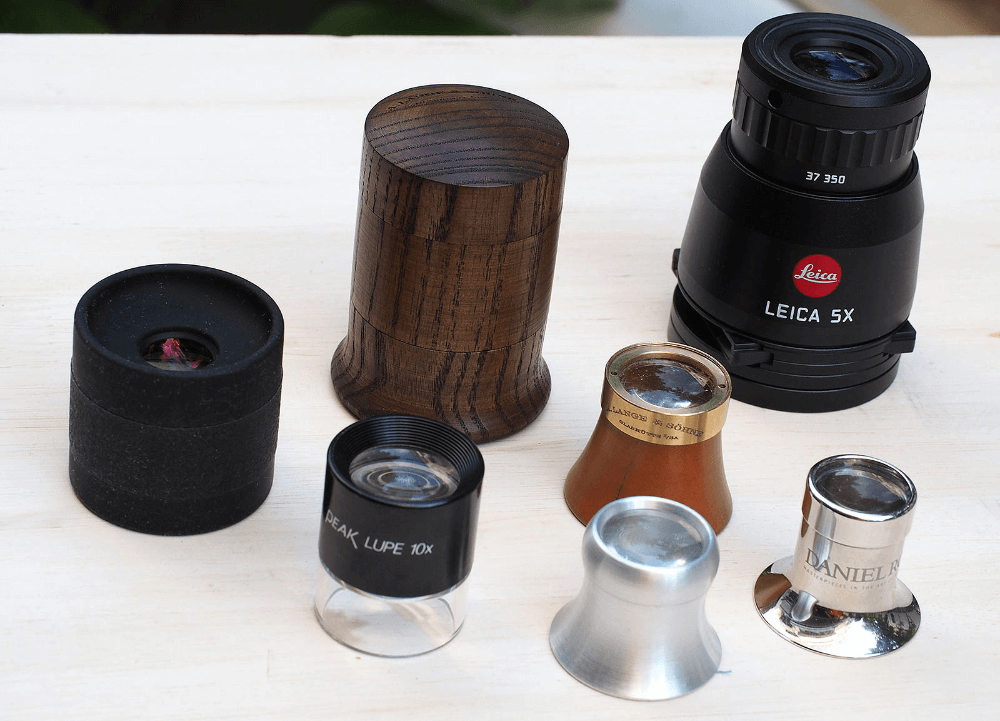
Let’s go over four top options and when to use them.
1. Bergeon 2611-TB 15 Loupe – 6.7x Magnification
This is a classic choice for watchmakers. It offers just the right magnification for detailed work without distorting field depth. The biconvex lens delivers sharp focus edge-to-edge, and the ventilation port prevents fogging.
Why it works: Ideal for long sessions, this loupe gives you detail without over-magnifying. Perfect for oiling, movement checks, and case inspection.
2. Carl Zeiss D40 Triplet Pocket Loupe – 10x
This pocket loupe uses triplet lenses to eliminate distortion and chromatic aberration. At 10x magnification, it’s more powerful than standard watch loupes. It’s small, foldable, and optically superb.
Why it works: If you need to inspect engravings, serial numbers, or movement details closely, this is a perfect jeweler magnifying tool for your pocket.
3. Horotec MSA00025-25 Eyeglass Loupe – 5x
A lightweight loupe made for quick wear. The plastic body keeps it comfortable, while the aluminum ring reinforces the lens. At 5x, it’s great for general inspection.
Why it works: Use this for strap changes, quick checks, or general watchmaking when high magnification isn’t required.
4. LED and UV Folding Loupe – 25x and 50x
This is more specialized. It includes built-in LED and UV light and offers extremely high magnification. While not practical for movement assembly, it’s great for authenticating gemstones, lume checks, or laser-etched logos.
Why it works: Best for verifying authenticity or inspecting very fine detail under controlled lighting.
Common Loupe Mistakes to Avoid
Even the best loupe won’t help if used wrong. Avoid these beginner errors:
- Holding the loupe too far away: Reduces clarity and strains your eye.
- Closing one eye: Leads to faster fatigue.
- Poor lighting: Makes details harder to see and magnifies shadows.
- Choosing the wrong magnification: Too high, and you lose depth; too low, and you miss key flaws.
- Moving the loupe instead of the object: Always move the item toward the loupe.
Practice using your loupe in different conditions and with various watch parts. You’ll find what feels most natural over time.
When to Use Each Loupe Type
Choosing the right loupe depends on your task. Here’s a quick reference:
| Task | Recommended Loupe |
|---|---|
| Oil application | Bergeon 2611-TB 15 (6.7x) |
| Gemstone or caseback check | LED & UV Folding Loupe (25x/50x) |
| Engraving and number read | Carl Zeiss Triplet (10x) |
| Quick visual inspection | Horotec 5x Loupe |
Don’t stick to one loupe for everything. Rotate based on what the job needs. It saves time and improves accuracy.

Final Thoughts
A loupe isn’t just a magnifier—it’s a precision tool. Learning how to use a loupe the right way sets the foundation for everything you do in watchmaking or jewelry work. Whether you’re checking pivots, reading engravings, or inspecting crystals, a clear view makes all the difference.
For top performance, go with trusted options like the Bergeon 2611-TB 15, the Carl Zeiss Triplet 10x, the Horotec 5x, or the LED & UV Folding Loupe.


