
Prestige in watchmaking has never been a single idea. Instead, it has always evolved alongside culture, wealth, and identity. Today, no comparison illustrates this evolution more clearly than Richard Mille Vs Patek Philippe. Both brands occupy the highest tiers of the market, yet they represent radically different philosophies of what prestige should look like on the wrist.
Patek Philippe builds prestige through continuity. It asks collectors to value history, lineage, and restraint. Richard Mille, by contrast, builds prestige through disruption. It asks collectors to value modern engineering, extreme performance, and immediate visibility. Therefore, when people debate which brand feels “more prestigious,” they often debate worldviews rather than mechanics.
To understand the contrast properly, we must treat both brands as cultural signals. Patek Philippe represents inherited authority—prestige that accumulates over time. Richard Mille represents constructed dominance—prestige that announces itself through innovation and audacity. Neither approach exists by accident, and neither succeeds without clarity of purpose.
Time As Authority Vs Time As Momentum
Patek Philippe’s prestige begins with time itself. Founded in 1839, the brand anchors its identity in longevity, survival, and continuity. Because it has operated across generations, Patek frames its legitimacy as earned through endurance. Consequently, time becomes its strongest asset.
Richard Mille takes the opposite stance. Founded in 2001, the brand treats youth as an advantage rather than a weakness. Instead of saying “we have always been here,” Richard Mille says “we arrived to change everything.” As a result, prestige flows not from age but from acceleration.
This difference shapes how each brand relates to history. Patek Philippe protects it. Richard Mille challenges it. Therefore, Patek prestige feels settled and authoritative, while Richard Mille prestige feels kinetic and confrontational.
Design Language: Discretion Vs Declaration
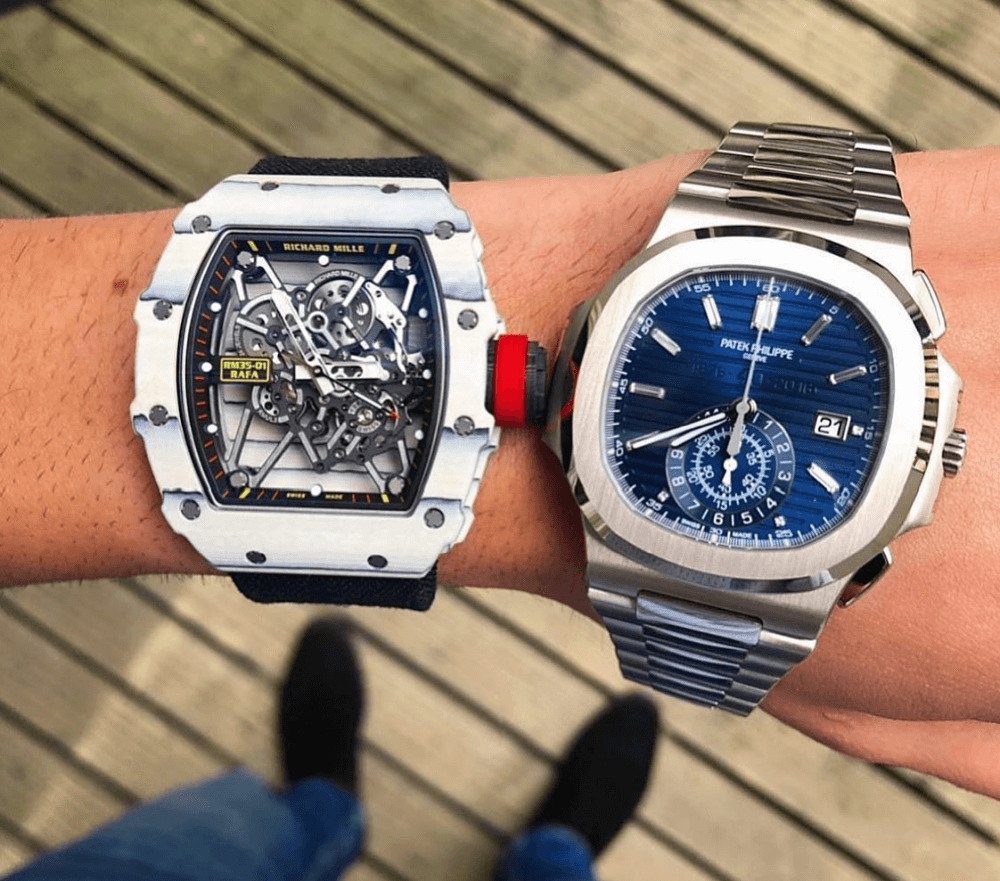
Design reveals philosophy faster than marketing ever could. Patek Philippe designs reward proximity. Many of its watches appear understated at a distance, yet reveal complexity through detail, finishing, and proportion. Because of that, Patek prestige often feels private. It functions as a quiet acknowledgment between people who already understand.
Richard Mille reverses this dynamic entirely. Its watches announce themselves instantly. Bold tonneau cases, skeletonized movements, and high-contrast materials ensure recognition from across the room. As a result, Richard Mille’s prestige operates in public space.
This contrast matters. Patek says, “Notice if you know.” Richard Mille says, “Notice whether you know or not.” Therefore, the wearer’s relationship with attention becomes part of the prestige equation.
Craft Defined Differently
Both brands obsess over craftsmanship, yet they define it in opposing ways.
Patek Philippe locates craft in tradition. Hand-finishing, classical complications, and conservative evolution form the foundation of its prestige. Because of that approach, mastery means preservation. The watchmaker becomes a steward of accumulated knowledge rather than an experimental engineer.
Richard Mille locates craft in innovation. It pushes the boundaries of materials science, structural engineering, and manufacturing processes. Consequently, mastery means experimentation. The watchmaker becomes a problem-solver, often working at the edge of what technology allows.
Thus, Patek prestige feels artisanal and archival, while Richard Mille prestige feels technical and competitive. One celebrates memory. The other celebrates progress.
Materials As Message
Material choice reinforces this philosophical divide.
Patek Philippe often favors precious metals and traditional alloys. Gold, platinum, and restrained steel serve as canvases for finishing rather than statements themselves. Because these materials age gracefully, they support the brand’s longevity.
Richard Mille, however, treats material as narrative. Carbon composites, titanium alloys, sapphire cases, and experimental laminates become part of the iWatch. As a result, the material itself communicates ambition and modernity.
In this way, Patek asks you to value what has already proven itself. Richard Mille asks you to value what might redefine limits next.
Cultural Placement And Celebrity Strategy
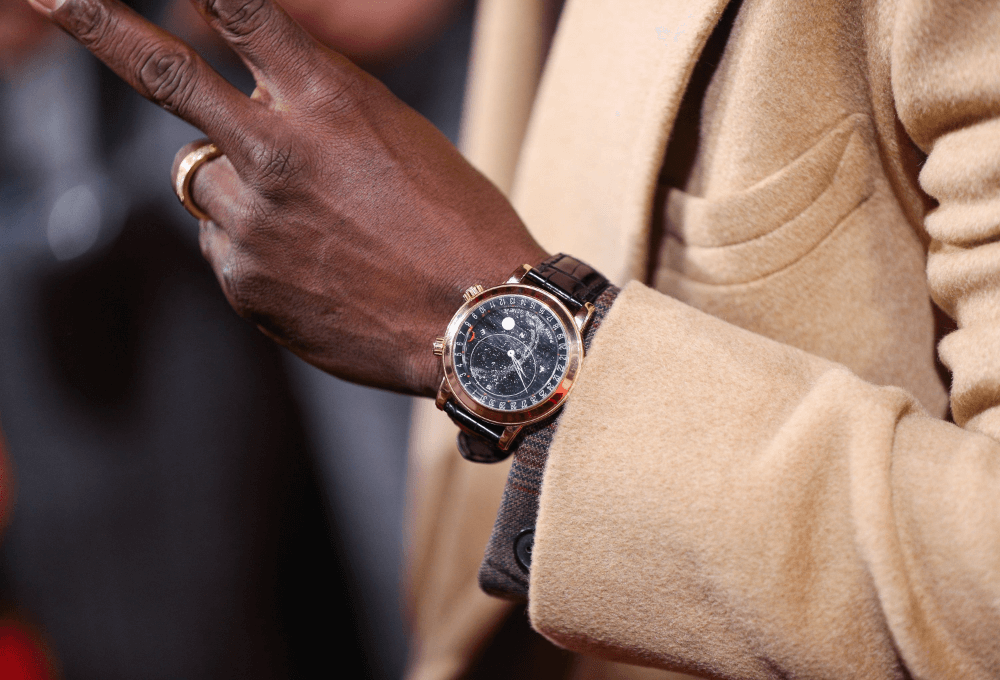
Patek Philippe and Richard Mille also diverge sharply in how they position themselves culturally.
Patek Philippe rarely ties itself to contemporary celebrity in overt ways. Instead, it associates with family, continuity, and personal milestones. Its messaging suggests that true prestige unfolds slowly and quietly. Consequently, Patek ownership often aligns with legacy thinking rather than momentary relevance.
Richard Mille embraces modern celebrity culture unapologetically. Elite athletes, musicians, and public figures wear Richard Mille watches visibly, often during performance. As a result, prestige becomes linked to physical achievement, competition, and cultural heat.
This strategy reinforces immediacy. Richard Mille prestige lives in the now. Patek Philippe prestige lives across generations.
Scarcity And Access: Two Emotional Experiences
Both brands limit production, yet the emotional experience differs dramatically.
Patek Philippe scarcity feels procedural. Allocation, waiting lists, and long-term relationships create a sense of earned access. Because of that structure, acquisition often feels ceremonial. Patience becomes part of the prestige.
Richard Mille scarcity feels confrontational. Extreme pricing, limited output, and radical design filter buyers aggressively. As a result, ownership signals both financial capability and personal boldness.
In one case, scarcity rewards conformity to tradition. In the other, scarcity rewards risk appetite.
What Each Watch Says About Its Owner
Prestige ultimately lives in perception. Therefore, the message each watch sends matters as much as the object itself.
A Patek Philippe often signals patience, cultural confidence, and long-term thinking. It suggests the wearer values restraint and understands legacy. Importantly, it also suggests comfort with delayed gratification.
A Richard Mille often signals dominance, modernity, and comfort with visibility. It suggests the wearer embraces contemporary success and enjoys standing apart. Additionally, it implies alignment with performance culture rather than social subtlety.
Neither signal is neutral. However, each resonates powerfully with the right audience.
Why Collectors Argue About “Real” Prestige”e
Co”lectors often argue about which brand represents “true” prestige. Yet these debates rarely resolve, because prestige depends on definition.
If prestige means historical legitimacy, Patek Philippe wins effortlessly. If prestige means modern impact, Richard Mille dominates. If prestige means quiet authority, Patek prevails. If prestige means unmistakable presence, Richard Mille leads.
Therefore, the argument persists not because one brand fails, but because both succeed too clearly.
The Role Of Wealth And Generational Identity
Wealth stage influences preference strongly. Early- or newly visible wealth often gravitates toward Richard Mille because the signal aligns with momentum and recognition. Later or consolidated wealth often gravitates toward Patek Philippe, because the signal aligns with stability and continuity.
This does not imply hierarchy. Instead, it reveals timing. Prestige evolves as identity evolves.
Interestingly, many seasoned collectors own both. They wear Richard Mille in environments that reward visibility and Patek Philippe in contexts that reward discretion. Thus, the brands complement rather than replace each other.
Why This Contrast Defines Modern Watchmaking
The existence of both brands at the top proves that modern prestige no longer follows a single script. Luxury now accommodates multiple value systems simultaneously.
Patek Philippe preserves the old prestige engine: lineage, restraint, and generational continuity. Richard Mille powers the new prestige engine: innovation, visibility, and performance-driven symbolism.
Because both engines succeed, the market remains polarized rather than hierarchical.
Final Thoughts
Richard Mille and Patek Philippe represent two opposing answers to the same question: how should success look on the wrist?
Patek Philippe answers with time, continuity, and quiet authority. It invites you to think in decades and generations. Richard Mille answers with speed, innovation, and unmistakable presence. It invites you to live in the moment and dominate it.
Neither vision invalidates the other. Instead, they define the boundaries of modern prestige.
In the end, the choice between Richard Mille and Patek Philippe reveals more about worldview than about the watches themselves. Prestige, after all, isn’t just something to buy. It’s something you believe in.


