In the world of high watchmaking, records fall often. However, only a few timepieces reclaim a throne once lost. The Patek Philippe Ref.1518 has now done exactly that. Produced in 1943 and crafted in stainless steel, this extraordinary watch recently sold for 14.19 million Swiss francs—roughly $17.6 million—once again earning the title of the most expensive wristwatch ever sold at auction.
While the headline figure commands attention, the deeper story explains why collectors pushed bidding so fiercely. Because this Ref. 1518 represents a convergence of rarity, innovation, and historical importance, it occupies a category of its own. Moreover, its return to the top reinforces a broader truth in horology: true icons endure, even when records shift temporarily.
After an intense nine-minute bidding battle in Geneva, the watch reaffirmed its dominance. Although other watches briefly surpassed its record in recent years, the Ref. 1518 has proven that its stature runs deeper than price alone.
The Patek Philippe Ref.1518 And Its Place In Watchmaking History
To understand why this watch matters so profoundly, one must consider issues of context. In 1941, Patek Philippe introduced the Ref. 1518 as the world’s first serially produced perpetual calendar chronograph wristwatch. That achievement alone reshaped watchmaking history. Before then, such complications existed almost exclusively in bespoke or experimental form.
By combining a perpetual calendar with a chronograph in a wristwatch intended for production, Patek Philippe demonstrated technical mastery and industrial confidence. As a result, the Patek Philippe Ref.1518 became a blueprint for generations of high complications that followed.
Production ran for roughly 13 years, during which Patek Philippe produced an estimated 281 examples. Most of those appeared in yellow gold, while a smaller number came in pink gold. However, stainless steel versions stand apart entirely. Only four examples of steel exist today; therefore, scarcity alone places them in a league few watches can approach.
Why Stainless Steel Changes Everything
At first glance, steel might seem less luxurious than gold. Yet in vintage Patek Philippe collecting, steel often signals extreme rarity and special intent. During the 1940s, Patek Philippe produced steel watches sparingly, usually for specific clients or unique circumstances.
In that context, a steel Patek Philippe Ref.1518 becomes far more than a mere material variation. Instead, it represents an anomaly—one that challenges conventional expectations of luxury. Collectors recognize this contradiction, and therefore, they chase it relentlessly.
Moreover, steel emphasizes the watch’s tool-like purity. The case highlights function and proportion rather than precious metal sheen. As a result, the dial, complications, and balance take center stage. Many seasoned collectors argue that steel best expresses the intellectual seriousness of the Ref. 1518.
The Dial, The Case, And The Perfect Balance
Beyond rarity, the Ref. 1518 captivates through design harmony. The dial layout achieves a near-perfect balance between information and legibility. Although the watch carries multiple complications, nothing feels crowded. Instead, every sub-dial, scale, and aperture occupies its rightful place.
The perpetual calendar clearly displays the day, date, month, and moon phase. Meanwhile, the chronograph integrates seamlessly rather than competing for attention. Because of this integration, the watch feels coherent rather than complex for complexity’s sake.
Additionally, the stainless-steel case enhances proportions. Measuring approximately 35 mm, it reflects mid-century elegance while wearing with authority. Today, many collectors praise its timelessness, especially as oversized trends fade.
A Record Once Lost, Now Reclaimed
This particular Ref. One thousand five hundred eighteen already made headlines in 2016, when it sold for a then-record sum and became the most expensive wristwatch ever auctioned. At the time, the result stunned the broader public, even seasoned collectors.
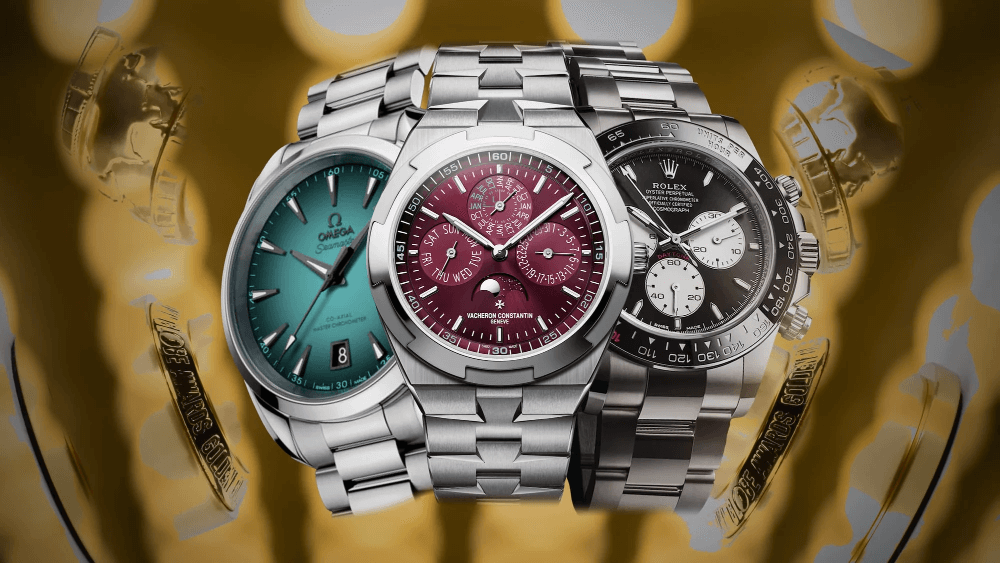
However, the record did not stand forever. In subsequent years, other iconic watches took the spotlight. Most notably, Paul Newman’s Rolex Daytona surpassed the Ref. 1518’s price, capturing mainstream attention and reshaping auction narratives.
Yet records do not always tell the full story. While the Daytona carried immense cultural weight, the Ref. 1518 retained unmatched technical and historical significance. Therefore, many insiders viewed the record shift as temporary rather than definitive.
That expectation proved accurate. When the steel Ref. 1518 returned to auction, demand surged once again.
The Geneva Auction And A Nine-Minute Battle
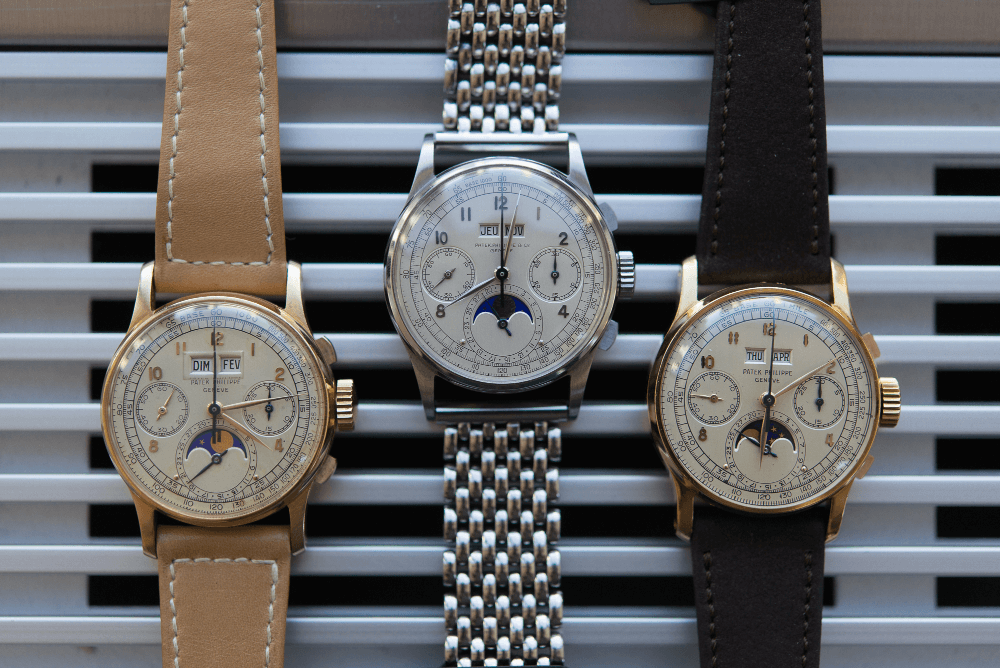
The recent auction in Geneva delivered exactly the drama collectors anticipated. From the opening moments, bidding signaled deep conviction rather than speculative curiosity. Multiple parties pursued the watch aggressively, and each bid reinforced the Ref. 1518’s symbolic weight.
Over nine intense minutes, the price climbed steadily. Importantly, bidders did not hesitate. Instead, they responded quickly, which suggested preparation and resolve. Finally, the hammer fell at 14.19 million Swiss francs.
That result did more than reset a record. It confirmed that the Ref. 1518 commands respect across generations of collectors. Moreover, it demonstrated that knowledge-driven value can outlast hype-driven moments.
Why Collectors Value The Patek Philippe Ref.1518 Above All Else
Several factors explain why collectors continue to elevate this watch above others. First, innovation plays a central role. As the first serially produced perpetual calendar chronograph wristwatch, the Ref. 1518 marks a turning point in horology.
Second, rarity amplifies demand. While many watches claim limited production, few can match the reality of four known examples in steel. That level of scarcity creates a finite horizon; no new examples will ever surface.
Third, condition and provenance often elevate individual pieces. Over the decades, these watches passed through the hands of careful owners, and the documentation remains unusually strong. Consequently, collectors trust the integrity of surviving examples.
Finally, emotional resonance matters. The Ref. 1518 represents intellectual ambition rather than ostentation. It speaks to collectors who value achievement, restraint, and history over branding alone.
The Broader Impact On The Watch Market
When a watch like the Ref. 1518 reclaims a record, ripple effects follow. Other vintage Patek Philippe references often see renewed interest. Additionally, complicated watches from the mid-20th century are gaining fresh attention as collectors reassess their historical importance.
However, the sale also reinforces selectivity. Not every rare watch benefits equally. Instead, buyers increasingly distinguish between true milestones and mere scarcity. As a result, scholarship and provenance matter more than ever.
Furthermore, the auction underscores the maturity of the watch-collecting market. Collectors now evaluate watches with criteria once reserved for fine art: innovation, influence, and cultural impact.
Steel Versus Gold: A Lesson In Collecting
The Ref. 1518 also teaches a broader lesson about collecting. Material alone does not define value. Although gold traditionally signals luxury, steel can outperform it when context demands.
In this case, steel amplifies rarity, intent, and authenticity. Therefore, collectors respond not to intrinsic material value but to narrative strength. This shift explains why other steel Patek Philippe references continue to outperform expectations.
Consequently, seasoned collectors increasingly ask not “what is it made of?” but “why does it exist?”
A Legacy That Continues To Shape Horology
Even decades after its production ended, the Ref. 1518 continues to shape how watchmakers think about complications. Modern perpetual calendar chronographs still trace their lineage back to this reference.
Moreover, Patek Philippe’s own later masterpieces—from the Ref. 2499 to contemporary grand complications—carry the DNA of the 1518. The watch did not merely succeed in its time; it established a standard.
Because of that legacy, the Ref. 1518 occupies a role similar to that of foundational works in other disciplines. It defines a category rather than competing within one.
Why This Record Truly Matters
Ultimately, the Ref. 1518’s return to the top matters because it reflects enduring values. In a fast-moving market, patience, scholarship, and historical appreciation still win.
While trends rise and fall, true milestones retain gravity. The Ref. 1518 embodies that principle perfectly. It does not rely on celebrity ownership or modern marketing. Instead, it depends on achievement.
As collectors continue to seek meaning rather than noise, watches like this will remain untouchable.

Final Thoughts
The rare stainless-steel Patek Philippe Ref. 1518 has once again proven its supremacy. By reclaiming the title of the most expensive wristwatch ever sold, it reaffirmed its place at the summit of horological history.
Yet the price tells only part of the story. More importantly, the Ref. 1518 represents innovation, restraint, and intellectual rigor. Because of those qualities, it will continue to command respect long after future records emerge.
In the end, this watch does not simply measure time. It defines it.