
When people think about Swiss watchmaking, names like Rolex, Omega, and Patek Philippe often come to mind. But behind every one of those iconic brands is another name—less flashy, yet just as important: Bergeon.
For over two centuries, Bergeon has crafted the tools that build, service, and protect the world’s finest watches. While the watch brands dazzle on the wrist, Bergeon operates behind the scenes—quietly, precisely, and consistently.
This is the story of how a small Swiss toolmaker became one of the most trusted names in horology.
Origins in the 18th Century
The Bergeon story begins in 1791, in the heart of Switzerland’s watchmaking region, the Jura Mountains. Back then, watches were handmade. The watchmakers themselves often built tools. Precision was rare. Standardization didn’t exist.
But the demand for accurate, durable watches was growing. So was the need for reliable tools. Recognizing this, a small tool shop was established to serve local horologists. Though it started modestly, the company quickly gained attention for the quality of its hand tools—files, screwdrivers, pin vises, and tweezers.
These tools weren’t mass-produced. They were made with care, tested by experts, and designed specifically for the unique needs of watchmakers.
A Family Legacy Forms
The name Bergeon became associated with the company in the 1800s, when Louis Bergeon took over the workshop. Under his leadership, the company refined its production and expanded its reach. Instead of just serving local craftsmen, Bergeon began supplying tool sets across Switzerland.
Eventually, they shipped to France, Germany, and Italy. As demand grew, the brand’s reputation followed. By the late 19th century, Bergeon tools had become a standard in European watchmaking schools.
This family-run workshop was no longer small. It was now at the center of a growing precision tools industry.
Standardizing the Watchmaking Bench
What separated it from others wasn’t just the quality of its tools—it was their focus on consistency. Watchmaking relies on repeatable precision. Every part must fit. Every tool must behave the same way.
In the early 20th century, Bergeon launched a wide range of standardized tools that transformed how watchmakers worked. These included:
- Screwdriver sets with replaceable blades
- Movement holders with modular clamps
- Dust-free case openers
- Height gauges and measuring blocks
- Polishing tools with uniform grit levels
Watchmakers now had access to tools that could be replaced or upgraded without retraining or risk. Bergeon’s catalog grew into the hundreds, covering every aspect of watch servicing.
While most tool companies focused on price, Bergeon focused on purpose.
Surviving the Quartz Crisis
The 1970s and ’80s brought the Quartz Crisis—a period when electronic watches threatened to destroy the mechanical watch industry. Swiss brands collapsed. Thousands lost jobs. Watch factories shut down.
They faced the same threat. Fewer mechanical watches meant fewer mechanical repairs. But instead of pivoting away, Bergeon doubled down. They improved their mechanical tools. They worked with horology schools to train the next generation. And they adapted tools for hybrid quartz servicing as well.
More importantly, they never cut quality. While other suppliers vanished or cheapened production, Bergeon preserved its standards. When the mechanical renaissance returned in the 1990s, Bergeon was already ready.
Swiss brands needed reliable tools to match their high-end watches—and Bergeon was still standing.
The Tools That Built an Industry
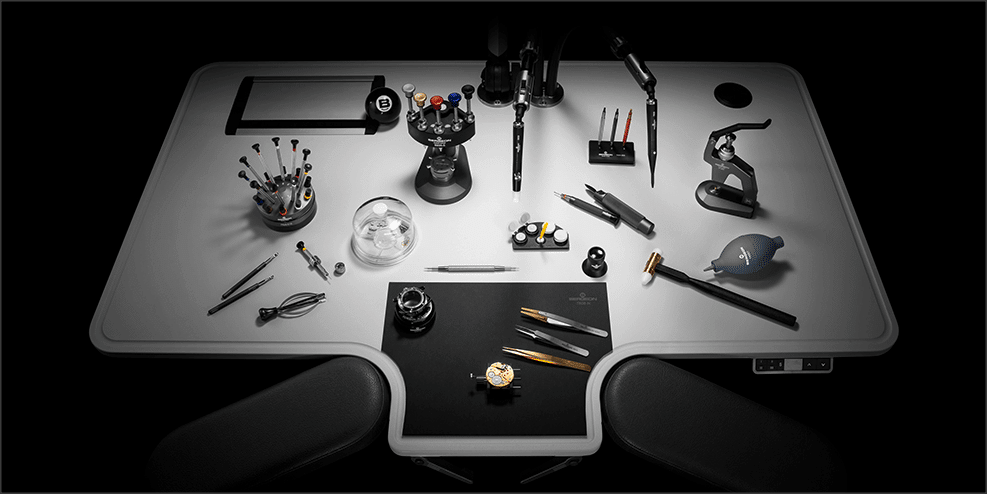
Over time, certain Bergeon tools became icons in their own right. Here are just a few examples that shaped modern watchmaking:
- Bergeon 6767 Spring Bar Tool: Used for strap changes and bracelet resizing. Its fine tip and sturdy build make it a favorite among pros and hobbyists alike.
- Bergeon 30081 Screwdriver Set: Color-coded, ergonomic, and built with hardened steel. These drivers appear in nearly every professional workshop.
- Bergeon 5395 Case Back Knife: Designed to safely open snap-back cases without damaging the lugs or distorting the case.
- Bergeon 4039 Movement Holder: A universal tool that safely secures most calibers. Trusted in repair centers across the globe.
- Bergeon 7812 Watchmaker’s Bench: This modular, height-adjustable bench is often found in professional workshops and horology schools.
Each of these tools reflects Bergeon’s philosophy: build it right, and make it last.
A Global Presence, A Local Identity
Today, Bergeon is headquartered in Le Locle, a Swiss town known for watchmaking heritage. From this small location, they exports tools to over 90 countries.
Yet they remain tightly woven into the local economy. They source materials from Swiss suppliers. They train apprentices in Le Locle. And they still test tools by hand in many cases.
That balance—global scale, local heart—sets Bergeon apart. They don’t mass-produce for volume. They engineer for precision.
Education and Partnership
Bergeon does more than manufacture. They partner with horology schools, brands, and watchmakers to create tools that solve real-world problems.
Whether it’s creating anti-magnetic tweezers, ergonomic tool handles, or loupes that reduce eye strain, Bergeon listens. Their R&D team includes former watchmakers who understand bench work. This feedback loop keeps tools evolving alongside the watches they support.
They also publish technical guides, support training videos, and offer repair manuals—resources that elevate the entire craft.
In the Digital Age, Still Mechanical
While modern watch tools now include diagnostic software and laser cutters, Bergeon still focuses on hands-on craftsmanship. That’s because watchmaking hasn’t gone fully digital. Even today’s smartwatches rely on screws, gaskets, and springs.
Bergeon embraces new methods—but only when they enhance tradition. They understand that real watchmaking involves touch, feel, and intuition. And their tools reflect that philosophy.
Why Watchmakers Still Choose Bergeon
There’s no shortage of cheaper alternatives. Many tool sets online mimic Bergeon’s designs. But professionals still choose the original—for good reason.
Bergeon’s tools last longer. They feel better in the hand. They protect the watches you work on. And they offer something hard to replicate: confidence.
When your reputation depends on flawless repairs, your tools matter. Bergeon isn’t about trends. It’s about trust.
Final Thoughts
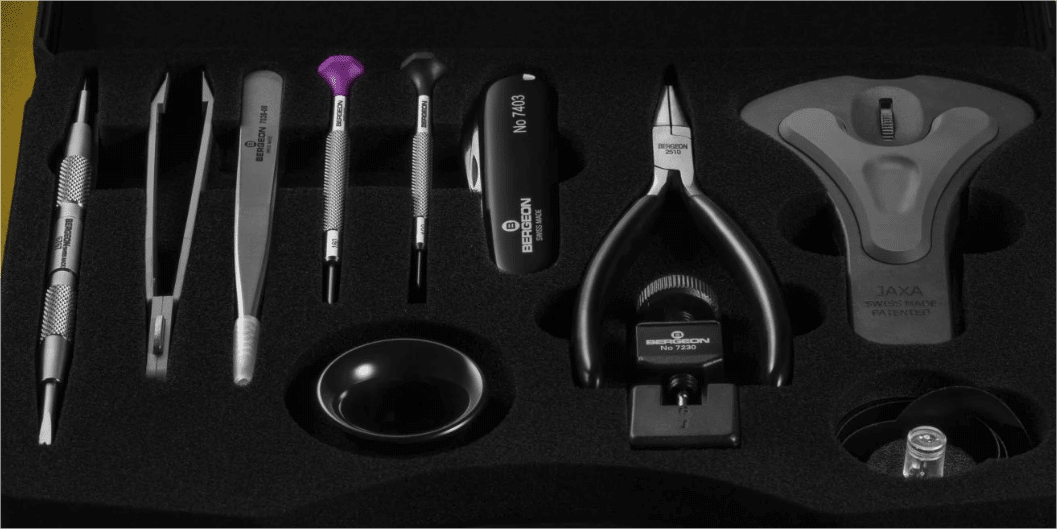
The history of Bergeon is more than dates and products. It’s the story of Swiss watchmaking itself. While brands chase spotlight, Bergeon works in silence—creating the instruments that power the industry.
From 1791 to now, they’ve served the world’s best watchmakers. They’ve weathered industry crashes and tech shifts. And they’ve never lost sight of what makes a tool great: purpose, precision, and permanence.
If you’ve ever worn a high-end watch, chances are a Bergeon tool helped build or repair it. That’s not a coincidence. That’s legacy.


